
Categories
Seller Guides, Tucson Real Estate MarketPublished July 6, 2026
When Is the Best Time to Sell a Home in Tucson? A Homeowner’s Guide to Choosing the Right Season

Data Current as of June 2026
One of the first questions we hear from homeowners is surprisingly simple:
"When's the best time to sell my house?"
It's a great question—and one that doesn't have a one-size-fits-all answer.
If you've spent any time researching online, you've probably seen articles that confidently tell you to sell in the spring. While there's some truth to that, those articles are usually written for a national audience. They don't always reflect how real estate works here in Southern Arizona.
The reality is that Tucson has its own rhythm.
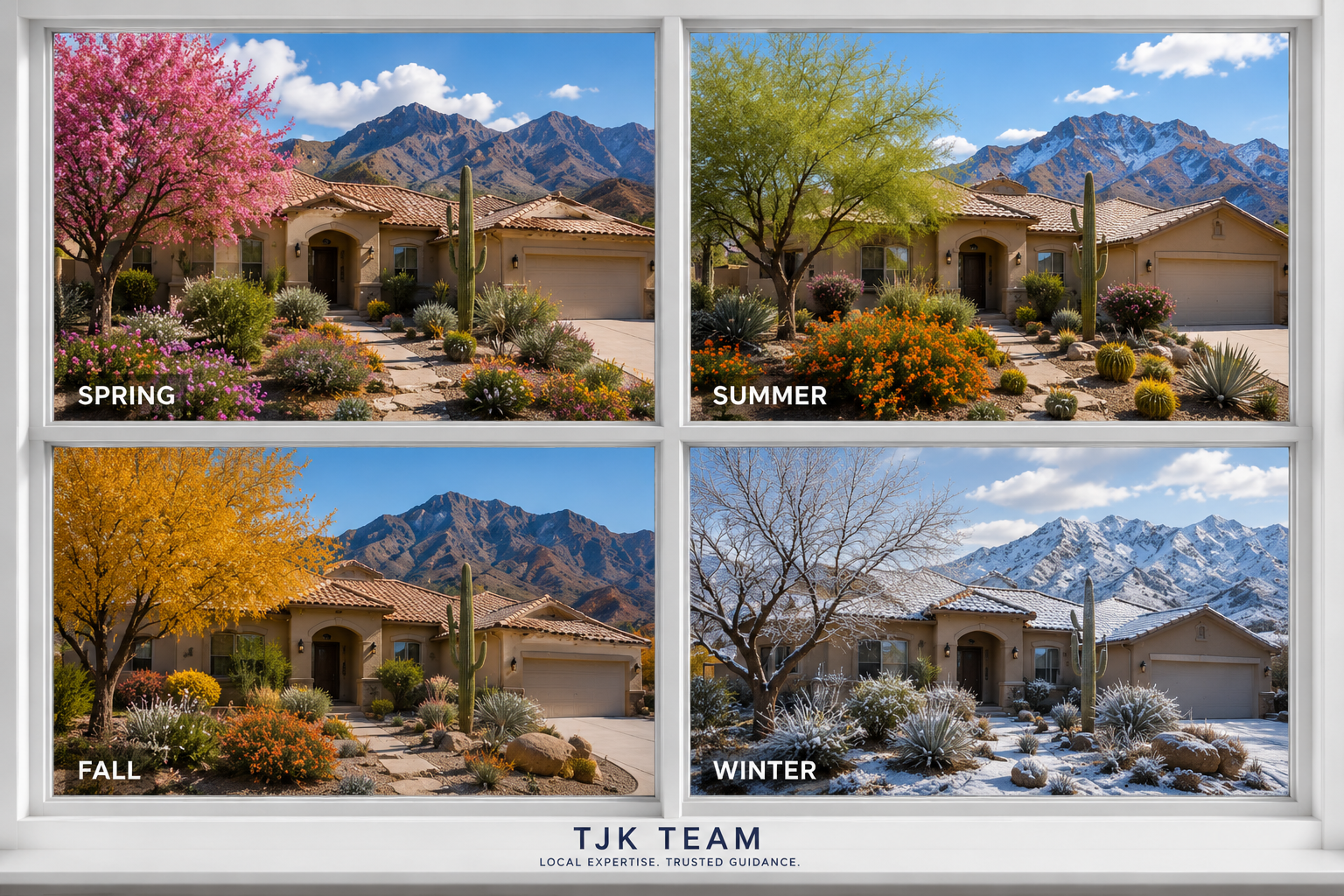
Our mild winters attract seasonal visitors and retirees. Spring typically brings a surge of buyers. Summer may be hot, but it also brings families relocating before a new school year and professionals moving for work. Fall offers pleasant weather and, in many years, fewer competing listings.
In other words, every season has something to offer.
That's why I usually encourage homeowners to think about timing a little differently.
Instead of asking:
"What's the best month to sell?"
Ask:
"When will my home, my goals, and the Tucson market be aligned?"
That's often the better question—and it usually leads to better decisions.
The truth is that successful home sales aren't determined by the calendar alone. They're the result of thoughtful preparation, realistic pricing, effective marketing, and understanding what's happening in the local market at the time you decide to sell.
Whether you're moving across town, relocating out of state, downsizing after many years, or purchasing your next home, understanding how Tucson's housing market behaves throughout the year can help you move forward with greater confidence.
My goal isn't to tell you exactly when you should sell.
It's to give you the information you need to decide what makes the most sense for your situation.
Is There Really a "Best" Time to Sell a Home in Tucson?
The short answer is...yes and no.
Historically, spring has been one of Tucson's busiest seasons for real estate activity. More buyers are typically searching for homes, the weather is comfortable, and many families hope to move before the next school year begins.
But that doesn't automatically make spring the best choice for every homeowner.
I've seen beautifully prepared homes sell successfully in every season.
I've also seen homeowners wait months for the "perfect" time to list, only to discover they could have achieved the same—or even a better—outcome by focusing on preparation instead of timing.
That's because the calendar is only one piece of the puzzle.
Your success as a seller is often influenced by several factors working together:
- How well your home is prepared
- Current buyer demand
- Available inventory
- Realistic pricing
- Professional marketing
- Your own moving timeline
Those factors often have a much greater impact than simply waiting for a certain month to arrive.
For some homeowners, listing in spring makes perfect sense.
Others may benefit from selling in the fall when competition is lower.
Some homeowners need to relocate during the summer, while others discover that Tucson's active winter market provides opportunities they hadn't considered.
There isn't a universal answer.
There is only the answer that fits your goals.
Why Tucson Doesn't Follow the Same Rules as Much of the Country
One of the biggest mistakes homeowners make is assuming that advice written for the national housing market automatically applies here.
It usually doesn't.
Tucson is different.
Our housing market isn't driven by snowstorms, frozen driveways, or six months of harsh winter weather.
Instead, we have a market shaped by factors unique to Southern Arizona.
Our climate influences when people visit.
Our outdoor lifestyle changes what buyers value.
And our steady population growth continues to bring new residents from across the country.
Winter, for example, isn't considered an "off-season" the way it is in many northern states.
In fact, it's one of the most enjoyable times of year to explore Tucson.
Seasonal visitors, retirees, and buyers considering relocation often spend the winter months touring neighborhoods while enjoying sunshine instead of snow.
Spring remains extremely active as buyers enter the market and homeowners prepare to move before summer.
Then comes summer.
Yes, it's hot.
Really hot.
But buyers don't disappear simply because temperatures reach triple digits.
Many families are relocating before the school year begins.
Professionals are moving for new jobs.
Military families continue receiving transfer orders.
Life doesn't pause because it's July.
Fall then brings another shift.
Temperatures become more comfortable, outdoor living spaces look inviting again, and many homeowners appreciate having fewer competing listings than they might have seen during the spring rush.
Every season has its own personality.
Understanding those seasonal patterns helps homeowners make decisions based on local realities instead of national assumptions.
Tucson Buyers Often Look for Different Things
Another reason timing works differently here is that buyers aren't just evaluating the home—they're evaluating how well it fits life in the Sonoran Desert.
A buyer touring homes in Tucson is often paying attention to details that might barely register in other parts of the country.
Things like:
- A well-maintained HVAC system
- Energy-efficient windows
- Covered patios
- Mature shade trees
- Desert-friendly landscaping
- Outdoor entertaining spaces
- Garage insulation
- Sun exposure throughout the day
These features can become especially important during the summer months when buyers are experiencing Tucson at its hottest.
Monsoon season can also influence how buyers look at a property.
Questions about roof condition, drainage, grading, and how the home handles seasonal storms naturally become more important when afternoon thunderstorms roll through Southern Arizona.
That's one reason local expertise matters.
Understanding what Tucson buyers tend to notice—and when they notice it—can help homeowners prepare their property more effectively before it ever hits the market.
Timing Matters—But Preparation Matters More
If there's one takeaway I'd like every homeowner to remember, it's this:
Preparation almost always beats perfect timing.
I've seen homes listed in the "ideal" season struggle because they weren't ready for the market.
I've also seen homes listed during traditionally slower periods generate excellent results because they were thoughtfully prepared from day one.
There are plenty of things you can't control.
Interest rates.
Economic headlines.
How many homes your neighbors decide to list next month.
But there are also things you can control.
You can prepare your home.
You can address deferred maintenance.
You can improve curb appeal.
You can declutter.
You can invest in professional photography.
You can price your home based on current market conditions instead of wishful thinking.
Those decisions often influence your success far more than trying to predict the "perfect" week to list your home.
Once those pieces are in place, choosing the right season becomes much easier because you're making the decision from a position of preparation instead of uncertainty.
The next question, then, becomes:
How does each season actually affect buyers and sellers here in Tucson?
Let's take a closer look.
How Each Season Affects Selling a Home in Tucson
Every season offers its own opportunities—and its own challenges.
If you're hoping to identify one clear winner, you may be surprised by the answer.
There really isn't one.
Spring generally brings the greatest number of buyers, but it also brings the most competition.
Summer comes with triple-digit temperatures, yet many of the buyers in the market are highly motivated because they're relocating for work or trying to move before school starts.
Fall often offers a nice balance of buyer activity and reduced competition, while Tucson's mild winters continue attracting seasonal residents and retirees from colder parts of the country.
Rather than thinking about one season as "good" and another as "bad," it's more helpful to understand what each season typically brings—and how that might align with your goals.
Let's walk through the year.
Spring: The Season Everyone Talks About
Ask almost any REALTOR® what the busiest time of year is, and chances are they'll say spring.
Historically, that's been true in Tucson.
As temperatures become more comfortable, buyer activity typically increases. People are more likely to spend weekends touring neighborhoods, attending open houses, and exploring different parts of town.
For many families, spring also lines up with an important deadline.
They want to purchase a home, move, and get settled before the next school year begins.
That's one reason spring often feels so active.
It's not just the weather—it's the timing in people's lives.
Spring also tends to showcase homes at their best.
Desert landscaping is often vibrant after the cooler months, outdoor living spaces become more inviting, and curb appeal naturally improves as homeowners spend more time outside preparing their properties.
Historically, MLS data has shown that more homes come onto the market during the spring months.
That's good news because more buyers are looking.
But it also means more competition.
Instead of competing against a handful of listings, your home may be one of hundreds that buyers are comparing online.
That's why preparation becomes even more important during spring.
Professional photography.
Thoughtful staging.
A realistic pricing strategy.
Addressing deferred maintenance before listing.
These details often determine which homes buyers schedule to see first—and which ones they scroll past online.
If your home is ready, spring can absolutely be an excellent time to sell.
Just remember that you're likely entering the market alongside many other homeowners with the exact same idea.
Summer: The Heat Doesn't Stop the Market
If you've lived in Tucson for any length of time, you know summer isn't exactly mild.
By July, triple-digit temperatures have become part of daily life.
It's easy to assume buyers disappear until the weather cools off.
In reality, that's rarely what happens.
Many summer buyers aren't shopping because it's convenient.
They're shopping because they need to.
Job relocations don't wait until October.
Military transfers continue year-round.
Families often want to complete their move before school starts.
Those buyers are typically working on deadlines, not weather forecasts.
One thing I've noticed over the years is that buyers touring homes during the summer pay close attention to comfort.
Does the home feel cool when they walk through the front door?
Is the HVAC system performing well?
Are there shaded outdoor spaces where someone could realistically enjoy a summer evening?
Do the windows help keep the home comfortable during the hottest part of the day?
These details often become much more noticeable in July than they might be in February.
Summer also gives sellers an opportunity to demonstrate how well their home performs during Tucson's most demanding season.
A comfortable interior, efficient cooling system, and thoughtfully designed outdoor spaces can leave a lasting impression.
Another benefit?
There are often fewer casual shoppers.
The buyers who are touring homes during the hottest months are frequently motivated by a specific timeline—and motivated buyers are the ones every seller hopes to attract.
Fall: One of Tucson's Best-Kept Secrets
Fall doesn't always receive the same attention as spring, but many Tucson homeowners are surprised by how strong this season can be.
As temperatures begin to cool, people naturally spend more time outdoors again.
Patios become gathering places.
Mountain views become easier to enjoy.
Neighborhood walks become enjoyable instead of something to survive.
Homes simply feel different.
At the same time, many homeowners who planned to sell during the spring or summer have already listed their properties.
That often means less competition for sellers entering the market in the fall.
While overall buyer activity may be somewhat lower than spring, the buyers who remain active are often serious about making a move before the holidays or early in the new year.
I've always believed fall offers one of the nicest combinations of weather, buyer motivation, and manageable competition.
It's one of those seasons that's easy to overlook—but one that's definitely worth considering.
Winter: Don't Mistake It for an Off-Season
If you're moving from another part of the country, you might assume winter is the slowest time to sell.
In Tucson, that's not necessarily the case.
Our winter market looks very different from cities dealing with snowstorms and freezing temperatures.
While much of the country is shoveling snow, people are visiting Southern Arizona to enjoy sunshine, golf, hiking, cycling, and everything else that makes this area attractive during the cooler months.
Many of those visitors are also exploring neighborhoods.
Some are planning retirement.
Others are considering relocating full-time.
Some simply want to escape colder climates.
Winter also tends to bring fewer competing listings than the spring market, giving well-prepared homes an opportunity to stand out.
Another advantage is that many winter buyers aren't just browsing.
They're often working toward a specific goal—finding the right home before returning north or beginning the next chapter of their lives.
That's one reason I never think of winter as the "slow season."
It's simply a different season.
And for the right homeowner, it may be exactly the right time to sell.
Every Season Has Advantages
One of the biggest misconceptions I hear is that homeowners need to wait for the "perfect" season before listing their home.
After helping buyers and sellers across Southern Arizona for many years, I've learned that's rarely the deciding factor.
Every season offers opportunities.
The better questions are:
- Is my home ready for the market?
- Have I completed the improvements that matter most?
- Does selling now fit my family's plans?
- What are current market conditions telling me?
- How much competition am I likely to have?
Those questions often lead to better decisions than simply looking at the calendar.
The truth is, successful home sales happen every month of the year in Tucson.
The homeowners who tend to have the best experience aren't necessarily the ones who pick the "perfect" season.
They're the ones who prepare well, price realistically, and understand how today's market fits into their own goals.
The next piece of the puzzle is understanding what the current Tucson housing market is telling us—and how today's numbers can help you make a more informed decision.
What Does the Current Tucson Housing Market Tell Us?
It's easy to get caught up in headlines.
One week you'll read that it's a seller's market.
The next week someone says buyers have all the leverage.
The truth usually falls somewhere in between.
Market statistics are incredibly valuable—but only if you understand what they're actually telling you.
One number never tells the whole story.
A median sale price doesn't describe every neighborhood.
Days on market can vary dramatically depending on price range, location, and how well a home is presented.
Inventory levels influence buyer choice, but they don't automatically determine whether your home will sell quickly.
That's why I encourage homeowners to look at the market as a whole instead of focusing on one headline or one statistic.
Current market conditions provide context.
They don't make the decision for you.
A Snapshot of Today's Tucson Market
According to current MLSSAZ and Greenlight MLS data for May 2026, the Tucson housing market looked like this:
| Market Indicator | Current Snapshot |
|---|---|
| Median Sale Price | $361,000 |
| Median Days on Market | 34 Days |
| Active Listings | 4,621 |
| Months of Inventory | 3.33 Months |
| New Listings (May 2026) | 1,747 |
Data is based on available MLS information for the specified time period and is deemed reliable but not guaranteed accurate.
At first glance, those numbers may seem like nothing more than market statistics.
But each one tells part of a larger story.
What Those Numbers Really Mean
Let's start with inventory.
With more than 4,600 active listings, buyers have options.
That's healthy for the market because it gives buyers the ability to compare homes, neighborhoods, and price points before making a decision.
For sellers, however, it reinforces the importance of standing out.
Today's buyers have choices.
That means preparation, pricing, photography, and presentation matter more than ever.
The median days on market tells a similar story.
Homes are still selling—but they're not all selling overnight.
Well-prepared, competitively priced homes often attract attention quickly, while homes that are overpriced or not presentation-ready may spend more time on the market.
The median sale price provides helpful context, but it shouldn't be viewed as a prediction for your home's value.
Every neighborhood—and sometimes every street—can perform differently.
That's why local knowledge is so important when pricing a home.
Don't Chase the "Perfect" Market
One of the biggest mistakes I see homeowners make is waiting for what they believe will be the perfect market.
Maybe prices will go higher.
Maybe inventory will fall.
Maybe interest rates will change.
The reality is that none of us can predict exactly what the market will do next.
Trying to perfectly time the market often creates more stress than success.
Instead, I encourage homeowners to focus on the things they can actually control.
Those include:
- Preparing the home before listing
- Completing deferred maintenance
- Improving curb appeal
- Decluttering and organizing living spaces
- Investing in professional photography
- Pricing realistically based on current market conditions
- Remaining flexible as buyer activity changes
Those decisions frequently have a greater impact on the outcome of a sale than waiting another month in hopes that conditions improve.
Historical Trends Tell an Important Story
When you look at historical MLS data over multiple years, one thing becomes very clear.
Spring often generates the greatest overall activity.
More homes are listed.
More buyers are searching.
More transactions take place.
But that doesn't mean spring delivers every advantage.
Some months experience faster sales.
Other months see less competition.
Some periods favor buyers.
Others create opportunities for sellers.
That's why I always caution homeowners against trying to identify one "magic month."
There usually isn't one.
Markets are constantly changing.
Inventory shifts.
Buyer demand changes.
Economic conditions evolve.
The homeowners who tend to have the best experience are usually the ones who prepare well and make decisions based on current conditions—not assumptions.
Season-by-Season at a Glance
| Season | Buyer Activity | Seller Competition | What Sellers Should Know |
|---|---|---|---|
| Spring | ⭐⭐⭐⭐⭐ | ⭐⭐⭐⭐⭐ | Highest buyer activity, but also the most competing listings. Preparation becomes especially important. |
| Summer | ⭐⭐⭐⭐ | ⭐⭐⭐ | Motivated buyers remain active, particularly families relocating before school starts and professionals moving for work. |
| Fall | ⭐⭐⭐⭐ | ⭐⭐ | Comfortable weather and fewer competing listings often create attractive opportunities for prepared sellers. |
| Winter | ⭐⭐⭐ | ⭐⭐ | Seasonal visitors, retirees, and relocation buyers keep Tucson's winter market more active than many people expect. |
The Calendar Is Only Part of the Equation
After looking at the data, one conclusion becomes pretty clear.
No season wins every category.
Spring may bring the most buyers.
Fall may bring less competition.
Winter attracts seasonal residents.
Summer continues to serve families working within relocation deadlines.
Each season offers something different.
That's why I believe the better question isn't:
"What's the best month to sell?"
It's:
"Given today's market—and my own goals—is now the right time for me?"
For many homeowners, that question leads to a much more confident decision.
Because at the end of the day, real estate isn't just about market statistics.
It's about helping people move forward with the next chapter of their lives.
The final piece of the puzzle is understanding what you can control—and how thoughtful preparation often matters more than trying to predict the future.
Smart Ways to Think About Timing Your Home Sale
By now, you've probably noticed a common theme throughout this guide.
The "best" time to sell isn't determined by the calendar alone.
It's determined by how well your home, your goals, and current market conditions come together.
That's good news.
Because while none of us can control what the market will do next month, there are plenty of things we can control.
Those are the things I encourage homeowners to focus on first.
Focus on Preparation Instead of Perfection
It's natural to wonder whether waiting another month might bring more buyers or slightly higher prices.
Sometimes it might.
Sometimes it won't.
The truth is, most homeowners see a greater return from preparing their home well than they do from trying to predict the market.
Before listing your home, consider investing your time in things that buyers consistently notice:
- Completing deferred maintenance
- Freshening paint where needed
- Improving curb appeal
- Decluttering and organizing living spaces
- Deep cleaning
- Preparing for professional photography
These improvements often make a stronger first impression than simply waiting for another season.
Remember That Real Estate Is Local
National housing headlines can be helpful—but they rarely tell the whole story.
A report discussing the housing market in Chicago, Boston, or Seattle doesn't necessarily reflect what's happening here in Southern Arizona.
Tucson has its own market dynamics.
Our winter buying season is stronger than many parts of the country.
Our summer market stays active because of relocation buyers.
Our outdoor lifestyle influences what buyers value.
That's why local knowledge matters.
Looking at Tucson-specific market trends alongside national news gives homeowners a much more accurate picture of what's happening.
Consider Your Own Timeline
One question I often ask homeowners is this:
"If the market stayed exactly the same for the next six months, would now still be the right time for you to move?"
It's an interesting question because it shifts the focus away from trying to predict the future.
Sometimes the answer is yes.
Sometimes it's no.
Every homeowner's situation is different.
Maybe you're relocating for work.
Maybe you're downsizing after the kids have moved out.
Maybe you're hoping to be closer to family.
Or maybe you're simply ready for your next chapter.
Those personal reasons are just as important as any market statistic.
A successful move should support your life—not the other way around.
Focus on the Things You Can Control
There are plenty of things outside your control.
Interest rates.
Economic headlines.
How many homes your neighbors decide to list next month.
None of us knows exactly what those things will look like.
What you can control is how well your home is prepared.
You can:
- Price your home realistically.
- Present it professionally.
- Address maintenance concerns before listing.
- Make it easy for buyers to imagine themselves living there.
- Work with professionals who understand the Tucson market.
Those decisions often have a greater influence on your success than trying to identify the perfect week to put a sign in the yard.
Key Takeaways
| If your priority is... | Consider... |
|---|---|
| Reaching the largest pool of buyers | Listing during the spring market when activity is often highest. |
| Reducing competition from other sellers | Fall or winter may provide opportunities with fewer competing listings. |
| Moving because of work or family needs | Sell when your timeline makes sense instead of waiting for a specific season. |
| Maximizing your chances of success | Focus on preparation, pricing, presentation, and understanding current market conditions. |
The calendar matters.
It just isn't the only thing that matters.
Frequently Asked Questions
Is spring always the best time to sell a home in Tucson?
Historically, spring has been one of Tucson's busiest selling seasons because buyer activity often increases during the cooler months. However, that doesn't automatically make it the best choice for every homeowner. Your home's condition, your timeline, inventory levels, and current market conditions all deserve consideration.
Can I successfully sell my home during Tucson's summer heat?
Absolutely.
Summer buyers are often relocating for work, moving before a new school year, or working within deadlines that don't change because of the weather. A comfortable, well-prepared home with a strong HVAC system and thoughtful presentation can make an excellent impression.
Does Tucson's housing market slow down during the winter?
Not the way it does in many colder parts of the country.
Tucson continues attracting seasonal residents, retirees, and relocation buyers throughout the winter, making it a much more active season than many homeowners expect.
Should I wait for home prices to increase before selling?
Trying to predict future market conditions is difficult.
Many homeowners benefit more from focusing on factors they can control—preparing their home, pricing it appropriately, and understanding current local market conditions—rather than attempting to time future price movements.
What's the single most important factor when deciding when to sell?
There usually isn't just one.
For most homeowners, the best decision comes from balancing several considerations, including your goals, your home's readiness, current Tucson market conditions, and your personal timeline.
Final Thoughts
If there's one thing I hope you take away from this guide, it's this:
There isn't one perfect month to sell a home.
There probably never will be.
Every season brings its own opportunities.
Every market has its own challenges.
And every homeowner has a unique set of goals that deserve just as much attention as the market itself.
The homeowners who tend to have the best experience aren't necessarily the ones who wait for the "perfect" season.
They're the ones who prepare thoughtfully, understand the local market, price their home realistically, and make decisions based on facts instead of assumptions.
That's especially true here in Tucson.
Our market doesn't always follow national trends, and that's one of the reasons local knowledge matters.
Whether you're thinking about selling next month, later this year, or you're simply starting to plan ahead, taking the time to understand your options is one of the smartest investments you can make.
Selling your home isn't just about putting a sign in the yard.
It's about moving confidently into whatever comes next.
If you're wondering what today's Tucson market means for your home—or you're simply looking for honest guidance about when the timing might be right—we'd be happy to help you understand your options.
Sometimes the best first step isn't listing your home.
It's simply having a conversation.
Contact the TJK Team at 520.222.9611 if you'd like to discuss your goals and learn what today's Tucson market could mean for your next move.
MLS Disclaimer
Data is based on available MLS information for the specified time period and is deemed reliable but not guaranteed accurate.
Educational Disclaimer
This article is intended for educational purposes only and should not be considered legal, financial, tax, or investment advice. Homeowners should consult the appropriate licensed professionals regarding their individual circumstances.

Tom Krieger
| The TJK Team - Realty Executives Arizona Territory
or another way