
Categories
Real Estate NewsPublished January 29, 2026
Will Homes Need Built-In Solar as Energy Demand Grows?

Introduction
Energy has become a more visible part of housing conversations in recent years. Headlines about artificial intelligence, data centers, and rising electricity use have prompted questions about whether homes will need to be designed differently in the future — particularly when it comes to solar power.
For homeowners and buyers, those questions can sound urgent. Will energy demand force changes in how homes are built? Will built-in solar become standard? And how much of what we’re hearing reflects long-term reality versus short-term attention?
To answer those questions clearly, it helps to step back and look at how energy systems, infrastructure, and housing design actually interact. Energy demand does affect housing — but usually in indirect, gradual ways rather than sudden design requirements.
Why Energy Demand Is Rising
Electricity demand is increasing for several reasons, and housing is only one small part of that picture. According to the U.S. Energy Information Administration, growth in data centers, cloud computing, and electrification across industries is driving higher overall electricity demand nationwide (U.S. Energy Information Administration).
One major driver is the expansion of data centers. These facilities support cloud computing, streaming, artificial intelligence, and digital services that operate continuously rather than intermittently. Unlike homes, which tend to use the most electricity at certain times of day, data centers require steady, round-the-clock power.
Electrification trends also extend beyond technology. Transportation, industrial processes, and commercial buildings are increasingly reliant on electricity, contributing to rising demand at the grid level.
Importantly, rising demand does not automatically mean shortages. It does mean that infrastructure planning, generation, and transmission become more important — and more visible.
What Data Centers Actually Change
Data centers are often grouped into energy discussions in ways that sound alarming, but their impact is more specific than headlines suggest. Research from the U.S. Department of Energy shows that data centers create consistent baseline demand rather than sharp peak demand, which affects how utilities plan generation and grid capacity (U.S. Department of Energy).
Data centers are also highly location-dependent. They tend to be built where power availability, land, cooling, and connectivity align. Residential neighborhoods are not directly competing with data centers for electricity in the way headlines sometimes imply.
Understanding this distinction helps explain why data center growth influences infrastructure planning without dictating residential building design.
The Power Grid and Housing — How They Intersect
Homes connect to a much larger energy system. When electricity demand rises, the primary pressure points are usually generation capacity, transmission lines, substations, and timing — not individual buildings.
Grid upgrades take time. Planning, permitting, and construction often span many years. The Department of Energy’s Grid Deployment Office notes that infrastructure upgrades are typically incremental and long-term rather than reactive (DOE Grid Deployment Office).
Housing design intersects with the grid through efficiency standards, load management, and optional technologies — not through sudden universal requirements.
Solar in Home Design — What Exists Today
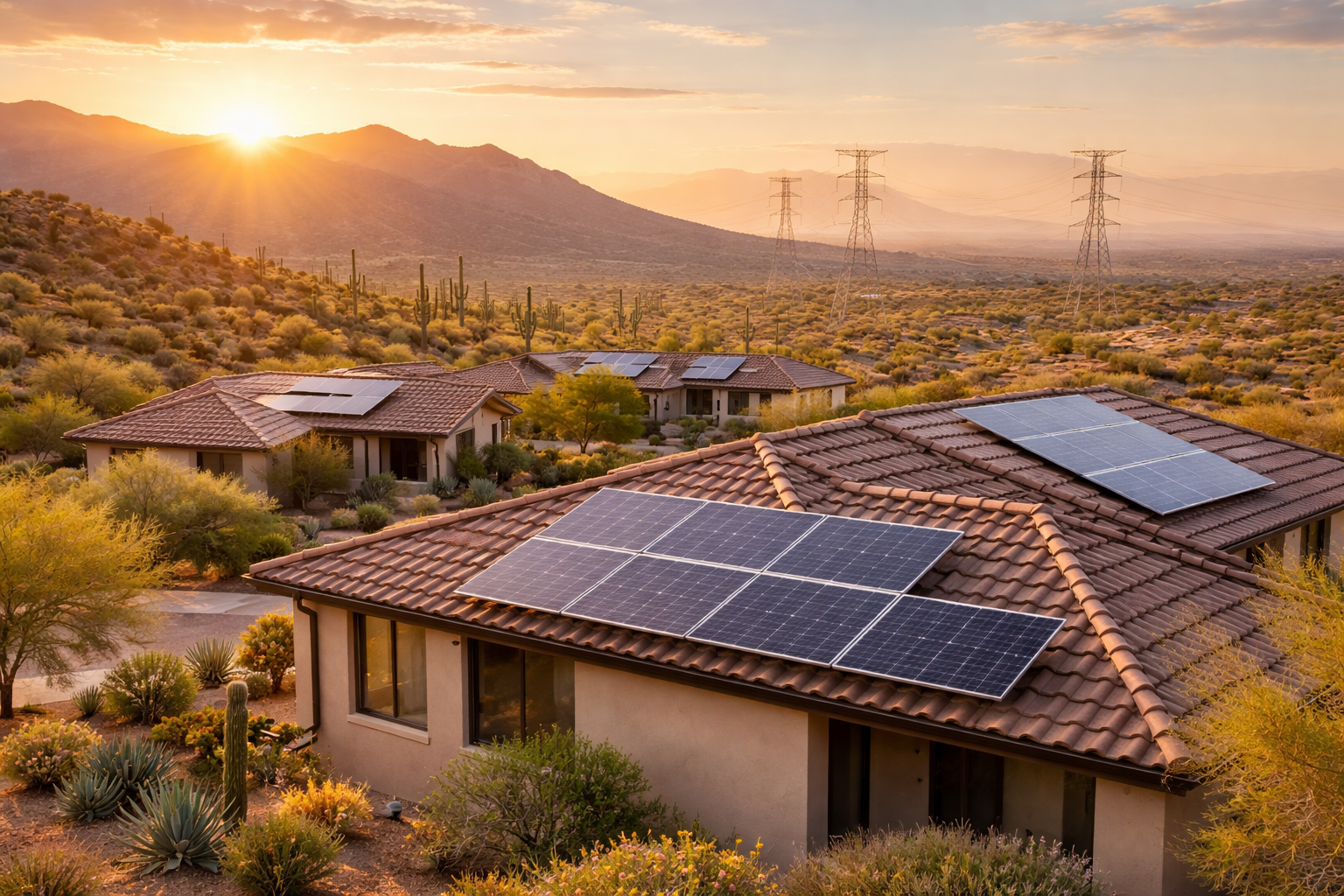
Solar already plays a role in residential construction, but that role varies widely. Some homes are built with rooftop solar installed, while others are designed to be “solar-ready,” meaning roof orientation, wiring pathways, and electrical panels can accommodate future installation.
It’s also important to distinguish between rooftop solar and utility-scale solar. Research from the National Renewable Energy Laboratory shows that utility-scale solar often delivers electricity at a lower cost per unit than individual rooftop systems (National Renewable Energy Laboratory).
Most importantly, solar does not make a home energy independent. Homes remain connected to the grid for nighttime use, cloudy days, seasonal variation, and reliability.
Why Built-In Solar Isn’t Automatically the Answer
The appeal of built-in solar is understandable, but it comes with tradeoffs. Solar systems add upfront cost, require maintenance, and involve inverter and panel replacement over time.
Roof lifespan also matters. Integrating solar into roof design can complicate future repairs or replacements. Financing structures — whether systems are owned, leased, or rolled into a mortgage — affect resale and long-term cost considerations.
Because of these variables, solar often works best as an option rather than a default. What makes sense for one homeowner may not make sense for another.
Materials Matter — Copper, Silver, and Infrastructure
Electrification and energy infrastructure depend on physical materials. Copper wiring, transformers, panels, and grid components all rely on supply chains that move more slowly than digital technology. According to the U.S. Geological Survey, expanding electrical infrastructure significantly increases demand for copper and other conductive materials, which can influence timelines and costs (U.S. Geological Survey).
These material realities help explain why energy-related changes in housing design tend to be gradual rather than immediate.
Tucson and Southern Arizona Context
Southern Arizona benefits from abundant sunlight, which makes solar an attractive option. However, sunlight alone does not determine outcomes. Grid structure, utility regulation, permitting processes, and neighborhood design all influence how solar is adopted locally. Data from the Arizona Office of Economic Opportunity shows that regional infrastructure and growth patterns shape housing and energy decisions more than national trends alone (Arizona Office of Economic Opportunity).
Local conditions tend to matter more than broad narratives when it comes to adoption.
A More Practical Way to Think About Energy and Homes
A practical approach to energy and housing emphasizes flexibility. Efficiency improvements, thoughtful design, and optional technologies allow homeowners to adapt over time without locking in permanent decisions prematurely.
Solar can be part of that strategy, but it does not need to be universal to be effective. Planning for adaptability often matters more than predicting specific technologies.
Conclusion
Rising energy demand is real, and it does influence infrastructure planning. But that influence tends to be indirect, gradual, and region-specific.
Built-in solar is one tool among many — not an inevitable requirement. Understanding how energy systems, materials, and housing design interact brings clarity to a topic that is often framed too urgently.
Questions Homeowners Often Ask
Will all new homes be required to have solar panels?
In most regions, no. Energy demand growth primarily affects utilities and infrastructure planning rather than residential design requirements. Optional and solar-ready designs remain far more common than mandatory installations.
Does solar make a home energy independent?
Not entirely. Most homes with solar remain connected to the grid for reliability, nighttime use, and seasonal variation. Battery storage can increase independence but adds cost and complexity.
Will rising energy demand make homes more expensive?
Energy demand can influence infrastructure investment and material use, but it is only one factor among many. Land, labor, regulation, and local demand continue to play much larger roles in home pricing.
Does Tucson’s sunlight change the equation?
Sunlight improves solar productivity, but grid capacity, utility structure, and neighborhood design still matter. Solar can be a strong option in Southern Arizona, but it is not automatically the right choice for every home.
Should buyers wait for future energy-efficient home designs?
Waiting for future technologies introduces uncertainty. Housing decisions tend to work best when based on personal timing, lifestyle needs, and local conditions rather than anticipated design changes.
If you’d like to talk through how energy trends and home design considerations fit into your own plans or timeline, I’m always happy to have that conversation.

Tom Krieger
| The TJK Team - Realty Executives Arizona Territory
or another way