
Categories
Tucson Real Estate MarketPublished July 16, 2026
Understanding the Difference Between HOA and Non-HOA Communities

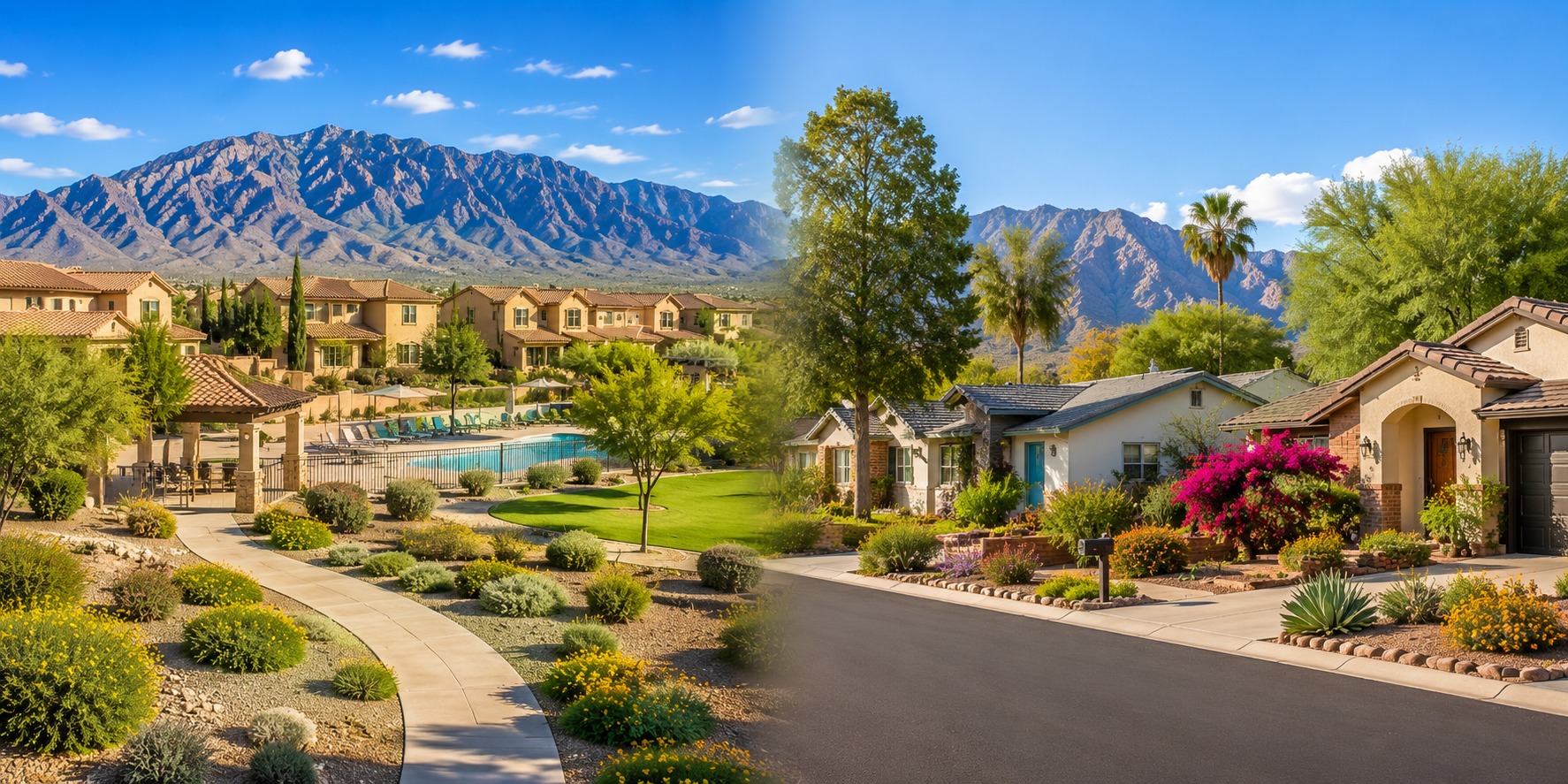
If you've been shopping for a home, you've probably come across listings that mention an HOA—or noticed that others proudly advertise "No HOA."
For many buyers, that raises an important question:
Which one is better?
The answer is that neither is automatically the right choice.
Some homeowners enjoy the structure, shared amenities, and community maintenance that often come with an HOA. Others prefer the flexibility and independence that can come with living in a neighborhood without one.
Rather than thinking of HOA and non-HOA communities as "good" or "bad," it's more helpful to understand how they differ and what everyday life may look like in each.
Choosing the right neighborhood isn't just about the home itself—it's also about finding a community that fits the way you want to live.
What Is a Homeowners Association (HOA)?
A homeowners association, commonly called an HOA, is an organization that helps manage and maintain certain aspects of a residential community.
Not every neighborhood has an HOA, but they're common in many planned communities, townhome developments, condominiums, and newer subdivisions throughout Tucson and Southern Arizona.
While every HOA is different, they often help oversee things such as:
- Common area landscaping
- Community parks
- Swimming pools
- Walking paths
- Clubhouses
- Private roads
- Neighborhood amenities
- Architectural review processes
To support these services, homeowners typically pay regular HOA dues.
The amount of those dues—and what they cover—can vary significantly from one community to another.
What Is a Non-HOA Community?
A non-HOA community is simply a neighborhood that doesn't have a homeowners association governing the community.
Without an HOA, homeowners generally have more flexibility in how they maintain and personalize their property, provided they continue to follow applicable local ordinances and regulations.
That doesn't mean these neighborhoods are less desirable.
Many Tucson neighborhoods without HOAs are well-established, beautifully maintained, and have strong community pride.
The difference is that neighborhood standards are typically maintained by individual homeowners rather than a governing association.
Benefits of Living in an HOA Community
Many buyers appreciate the convenience and shared responsibilities that HOA communities often provide.
Depending on the neighborhood, benefits may include:
- Professionally maintained common areas
- Community pools
- Parks and playgrounds
- Walking and biking paths
- Fitness facilities
- Clubhouses
- Gated entrances
- Organized community amenities
Another feature many homeowners appreciate is consistency.
HOAs often establish architectural and maintenance guidelines that help create a cohesive appearance throughout the neighborhood.
For buyers who enjoy a more structured community environment, these standards can be an attractive feature.
Because every HOA is different, it's important to understand exactly what amenities and services are included before purchasing a home.
Things to Consider About HOA Communities
Living in an HOA also means agreeing to follow the community's governing documents and rules.
Those rules vary widely from one association to another.
Before purchasing a home, buyers may want to understand topics such as:
- Monthly or quarterly HOA dues
- What those dues cover
- Architectural approval requirements
- Exterior paint guidelines
- Landscaping standards
- Parking rules
- RV or boat storage policies
- Pet restrictions
- Rental policies
- Short-term rental rules
Some buyers appreciate these guidelines because they help create consistency throughout the community.
Others may prefer fewer restrictions.
Neither approach is inherently better—it simply depends on your preferences.
Benefits of Living in a Non-HOA Community
For buyers who value flexibility, a non-HOA neighborhood may be appealing.
Without HOA approval processes, homeowners often have greater freedom when making decisions about their property.
Depending on local regulations, homeowners may have more flexibility regarding:
- Exterior paint colors
- Landscaping choices
- Parking arrangements
- Property improvements
- Outdoor structures
Many buyers also appreciate that non-HOA communities generally do not require recurring HOA dues.
Again, every neighborhood is different, and buyers should always research any applicable city or county regulations before making changes to a property.
Things to Consider About Non-HOA Communities
While non-HOA neighborhoods may offer more flexibility, they also place more responsibility on individual homeowners.
Without a homeowners association managing common areas or enforcing neighborhood standards, property maintenance is typically handled by each homeowner.
Depending on the neighborhood, buyers may notice greater variation in:
- Landscaping
- Exterior maintenance
- Home appearance
- Property improvements
For many homeowners, that's part of the appeal.
For others, a more uniform neighborhood appearance may be important.
It's simply another factor worth considering.
Questions to Ask Before Buying
Whether you're considering an HOA or a non-HOA community, asking a few questions ahead of time can help you better understand what to expect.
For HOA communities, consider asking:
- What are the current HOA dues?
- What services do those dues include?
- Are there additional assessments?
- Are there architectural approval requirements?
- What are the parking rules?
- Are rentals permitted?
- Are there pet restrictions?
- What amenities are available?
For non-HOA communities, you may want to ask:
- Are there any neighborhood improvement districts?
- What local ordinances apply?
- Who maintains shared areas, if any?
- Are there neighborhood organizations or voluntary associations?
- Are there any future development plans nearby?
The more you understand before purchasing, the fewer surprises you're likely to encounter after moving in.
HOA vs. Non-HOA at a Glance
| Consideration | HOA Community | Non-HOA Community |
|---|---|---|
| Community Rules | More structured | Generally fewer |
| HOA Dues | Usually required | Typically none |
| Shared Amenities | Often available | Varies |
| Exterior Flexibility | May require approval | Often greater flexibility |
| Common Area Maintenance | Often HOA-managed | Varies by neighborhood |
| Architectural Guidelines | Often established | Typically fewer |
| Lifestyle | Structured and community-oriented | Flexible and independent |
This table is intended as a general educational comparison. Individual communities vary.
Which Lifestyle Fits You?
Instead of asking,
"Which option is better?"
Consider asking yourself a few different questions.
Do you enjoy:
- Community amenities?
- Professionally maintained common areas?
- Neighborhood consistency?
- Shared maintenance responsibilities?
Or do you prefer:
- Greater flexibility?
- Fewer approval processes?
- More freedom to personalize your property?
- Managing your property independently?
Your answers may help point you toward the type of community that best supports your lifestyle.
Final Thoughts
After helping buyers explore communities throughout Tucson, one thing has become very clear.
There isn't a single neighborhood style that's right for everyone.
Some homeowners appreciate the convenience, amenities, and consistency that often come with HOA communities.
Others enjoy the flexibility and independence that non-HOA neighborhoods can provide.
Neither choice is automatically better.
The most important thing is understanding what each type of community offers and how those differences align with your lifestyle, priorities, and long-term goals.
Buying a home is about much more than square footage or curb appeal.
It's about choosing a place where you'll feel comfortable living every day.
Taking the time to understand the community is just as important as understanding the home itself.
Frequently Asked Questions
Are HOA communities better than non-HOA communities?
Not necessarily. Each offers different benefits and responsibilities. The right choice depends on your lifestyle, preferences, and what you're looking for in a neighborhood.
Do all HOA communities have the same rules?
No. Every homeowners association has its own governing documents, dues, amenities, and community standards. Buyers should review these documents before purchasing.
Can I make changes to my home if I live in an HOA?
Many HOA communities have architectural guidelines or approval processes for certain exterior changes. Requirements vary by association.
Are there HOA fees in every planned community?
Many planned communities have HOA dues, but the amount and services provided differ from one community to another.
How do I know if an HOA is right for me?
Think about how you prefer to live. If you value shared amenities, community maintenance, and neighborhood consistency, an HOA may appeal to you. If you prefer greater flexibility and fewer community rules, a non-HOA neighborhood may be a better fit. Always review all of the HOAS rules and regulations to ensure it aligns with your ideal lifestyle.

Tom Krieger
| The TJK Team - Realty Executives Arizona Territory
or another way