
Categories
Real Estate News, Tucson Real Estate MarketPublished March 12, 2026
How Data Centers Could Shape Tucson’s Future Real Estate Market

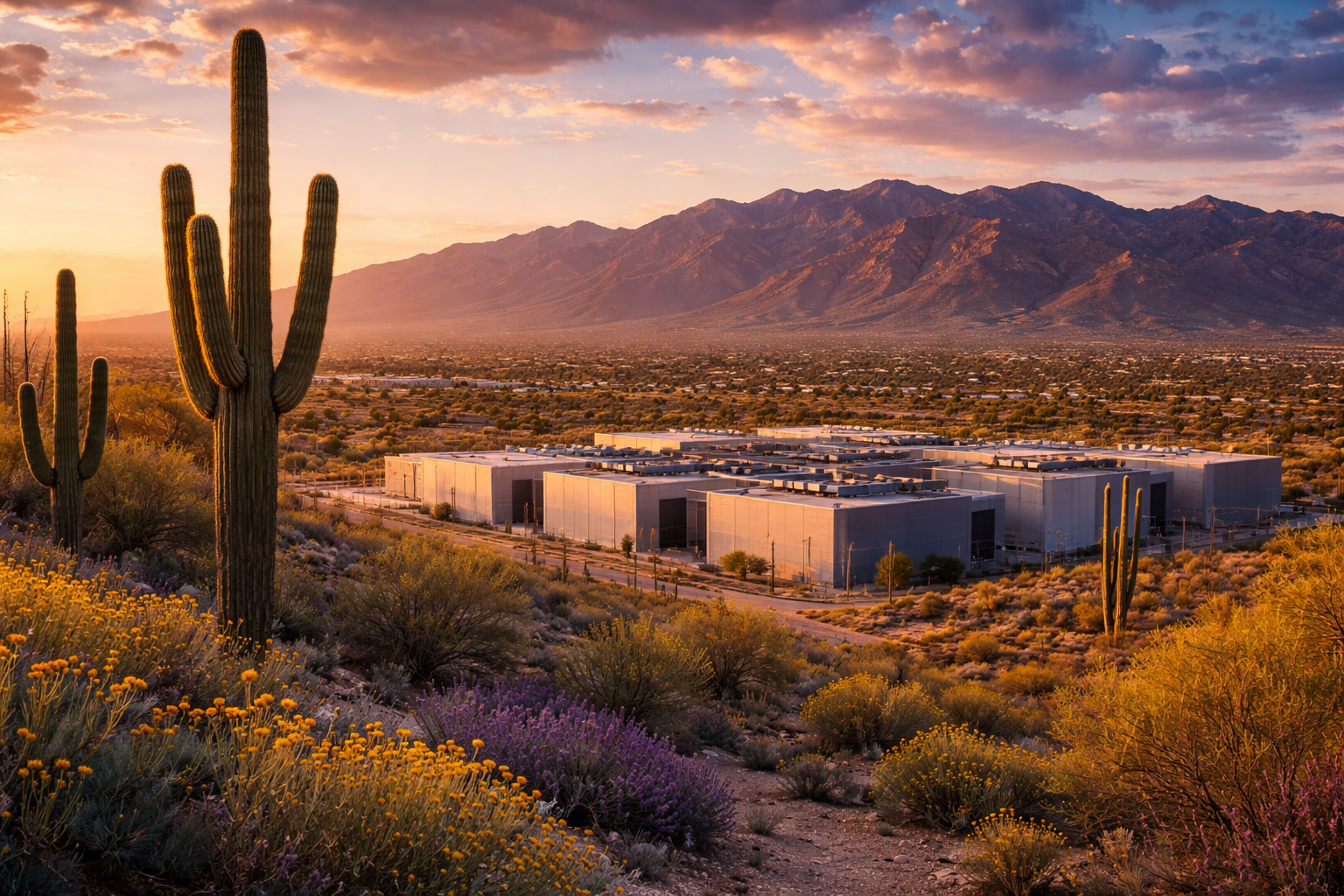
Across the country, the infrastructure that powers our digital lives is expanding quickly. From streaming services and cloud computing to artificial intelligence platforms, modern technology relies on massive facilities known as data centers.
Arizona has quietly become one of the fastest-growing regions in the country for this type of infrastructure. The Phoenix metropolitan area now ranks among the leading data center markets in North America, reflecting the rapid expansion of cloud computing and digital services across the Southwest (CBRE North America Data Center Trends Report).
As that growth continues, conversations have begun extending beyond Phoenix to other parts of the state. Communities like Tucson are sometimes mentioned as locations that could attract future technology infrastructure.
For homeowners and buyers in Southern Arizona, that raises a natural question: what does technology infrastructure have to do with real estate?
The connection may not always be obvious at first. Historically, however, large infrastructure investments often shape local economies in ways that gradually influence housing demand.
What Exactly Is a Data Center?
A data center is a specialized building that houses large numbers of computer servers. These servers store, process, and distribute the information that powers the internet and many modern digital services.
Every time you stream a movie, store photos in the cloud, use navigation apps, or access an online business platform, that information is likely being processed through a data center somewhere.
As more industries move their operations online and artificial intelligence applications continue expanding, demand for data storage and computing power has increased significantly (CBRE data center market research).
These facilities rely on extensive power systems, cooling technology, and high-speed fiber connections to support constant digital activity.
Why Arizona Has Become a Data Center Hotspot
Over the past decade, Arizona has become one of the most active regions in the country for new data center development.
One factor is available land. Data centers often require large campuses that allow room for expansion over time.
Another factor is relative stability from certain natural disasters. Compared with coastal regions that face hurricanes or flooding, parts of the Southwest provide a more stable environment for long-term infrastructure.
Arizona also offers strong power infrastructure and fiber connectivity, both of which are essential for facilities that operate around the clock.
The region’s dry desert climate can also play a role. Data centers generate significant heat, and in low-humidity environments some cooling systems can operate more efficiently. This is one reason several technology companies have expanded infrastructure across parts of the Southwest.
State economic development resources also highlight Arizona’s growing technology infrastructure investment (Arizona Commerce Authority).
Why Tucson Could Be on the Radar
While Phoenix has received much of the recent attention, cities like Tucson occasionally appear in discussions about future technology infrastructure.
Tucson offers several characteristics that may attract large-scale projects.
First, the region has available land suitable for large development sites, particularly in areas where infrastructure can support new facilities.
Second, operating costs can be lower than in larger metropolitan markets. For companies planning long-term expansion, cost efficiency often plays an important role.
Tucson is also located within a few hours of Phoenix, allowing companies to remain connected to Arizona’s growing technology ecosystem while operating in a different regional market.
The presence of the University of Arizona, which contributes research and technical talent, also strengthens the region’s innovation environment.
Tucson also sits along several major fiber-optic routes connecting Phoenix, California, and international markets through Mexico (TeleGeography global fiber network research).
Because data centers rely on high-capacity fiber networks, proximity to these digital infrastructure corridors can sometimes influence where companies evaluate expansion opportunities.
Of course, decisions about where companies build infrastructure depend on many variables, including power availability, fiber networks, permitting processes, and long-term economic planning.
How Large Infrastructure Projects Can Influence Real Estate
When major infrastructure projects arrive in a region, the impact is rarely limited to the project itself.
Large facilities often generate both direct and indirect economic activity.
For example, a data center may require engineers, technicians, and operational staff. Supporting industries—from construction and maintenance to professional services—may also expand alongside these projects.
Energy demand is also an important part of these projects (U.S. Energy Information Administration).
As economic activity grows, it can gradually influence housing demand in several ways:
- Employees relocating to the area
- Expansion of local businesses
- Growth of service industries
- Increased demand for housing and rentals
Historically, regions experiencing steady economic expansion often see corresponding growth in residential development over time. That growth tends to unfold gradually rather than overnight.
What This Could Mean for Tucson Homeowners and Buyers
For homeowners and buyers in Southern Arizona, conversations about data centers are less about predicting specific outcomes and more about understanding how local economies evolve.
Economic diversification can strengthen a region’s long-term stability. When multiple industries invest in a community, it can create a broader base of employment and opportunity.
Technology infrastructure is one example of how cities continue evolving as new industries develop.
If Tucson attracts additional technology investment in the future, it could contribute to:
- Job creation in specialized fields
- Growth in supporting industries
- Increased attention from companies evaluating Southern Arizona
Over time, these types of changes can influence how housing markets develop as communities grow.
Why Local Economic Trends Matter When Planning Real Estate Decisions
When people think about buying or selling a home, they often focus on immediate factors such as mortgage rates, housing inventory, or neighborhood conditions.
Those factors certainly matter. But long-term economic trends can also shape how communities evolve.
Infrastructure investment, university research activity, transportation development, and emerging industries all contribute to the broader picture of a region’s future.
For homeowners and buyers, paying attention to these trends can provide helpful context when thinking about:
- Long-term homeownership
- Relocation decisions
- Investment opportunities
- Neighborhood development patterns
Understanding how a city is evolving can help people make decisions that align with their personal goals and timelines.
Tucson’s Future Is Still Being Written
Tucson has long attracted people for its desert landscape, outdoor lifestyle, and distinctive communities. Over time, the region has also developed strengths in education, aerospace, defense, and research.
As the digital economy continues expanding, infrastructure like data centers has become an increasingly important part of how modern technology operates.
Whether Tucson ultimately becomes a major hub for that infrastructure remains to be seen. But the conversation itself reflects something important: Southern Arizona continues to draw attention as part of the state’s broader growth story.
If you’d like help thinking through how local growth trends may connect with your real estate plans, I’m always happy to share what we’re seeing across the Tucson housing market.

Tom Krieger
| The TJK Team - Realty Executives Arizona Territory
or another way