
Categories
Home Selling, Seller GuidesPublished February 12, 2026
I Bought My First Home at a Low Rate—What Happens When I Sell and Buy Again?

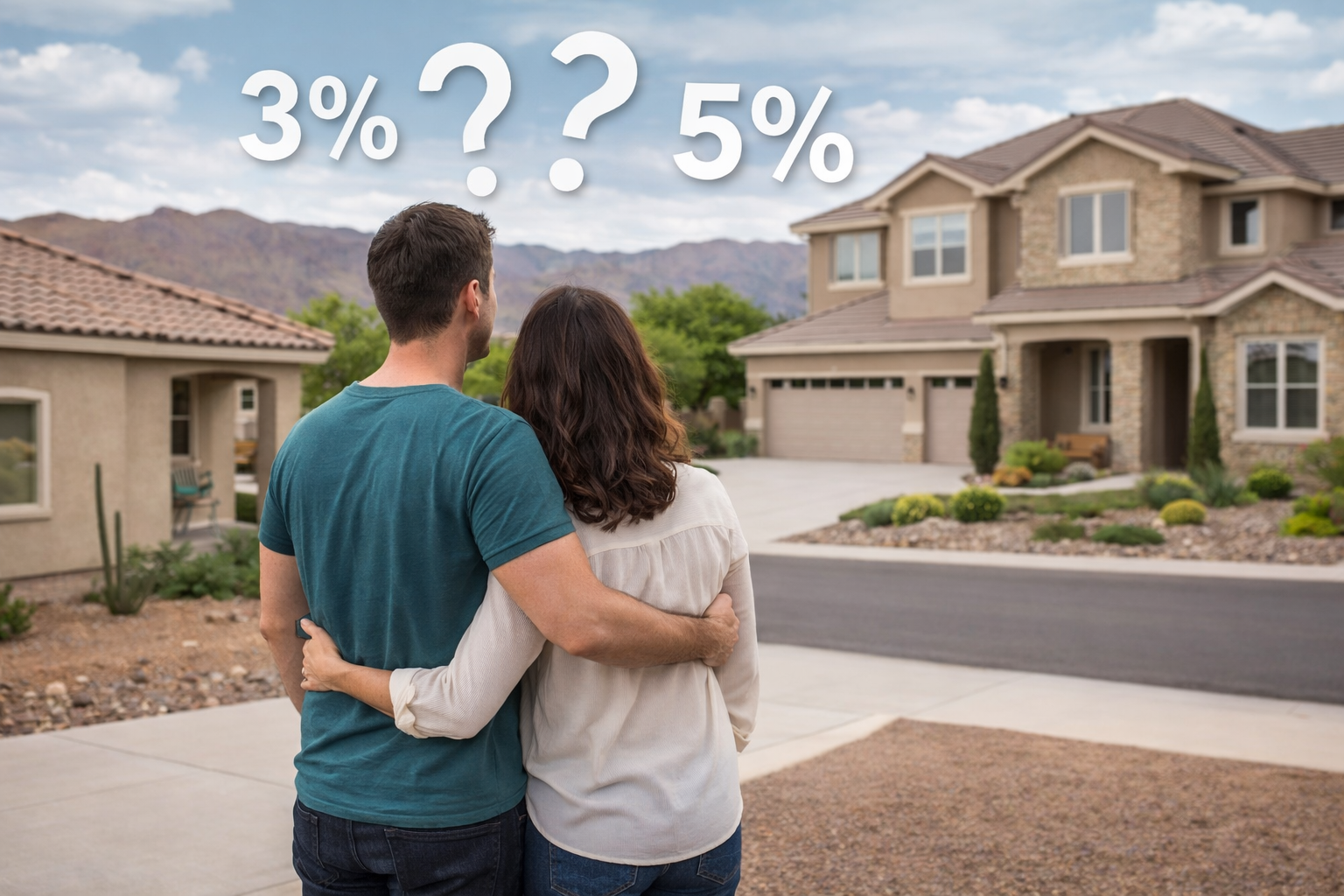
Buying your first home is a milestone. For many people, it came during a time when interest rates were historically low, monthly payments felt manageable, and the decision felt clear.
Selling that first home and buying again can feel very different.
I hear this often from homeowners across Tucson and Southern Arizona: “I did everything right the first time. Why does this move feel harder?” That question is understandable. Rates are higher. Prices have changed. And your priorities likely aren’t the same as they were the first time around.
The good news is that feeling unsure doesn’t mean you’re stuck. It usually means you’re making a more thoughtful decision.
I Bought at 3%. Now Rates Are Higher—What Does That Really Mean?
For many first-time buyers, the rate they secured is one of the strongest memories of that purchase. Seeing today’s rates can feel like a step backward, even if your financial position is stronger than it was before.
What’s important to remember is that interest rates don’t exist in isolation. They are one part of a larger picture that includes equity, income growth, lifestyle changes, and long-term plans. National mortgage rate trends published by Freddie Mac’s Primary Mortgage Market Survey and broader rate-cycle data from the Federal Reserve Economic Data (FRED) database help show how rates move in cycles over time.
In Tucson, many homeowners who bought between 2019 and 2022 benefited from both low rates and meaningful appreciation. That combination often creates flexibility when selling, even if the next loan comes with a higher rate. The comparison feels emotional because it’s personal, but the decision itself is practical.
Higher rates tend to slow decision-making, not eliminate good options. They change how you evaluate payment comfort, price range, and timing—not whether moving makes sense at all.
Selling Your First Home: What Often Goes Better Than Expected
The first time you sold nothing. You were learning everything from scratch.
This time, you already know more than you think.
Second-time sellers usually find that they understand how pricing works, feel more realistic about preparation and condition, and are less emotionally attached to every detail.
In many Tucson neighborhoods, especially established areas with limited turnover, sellers are often surprised by how competitive well-prepared homes remain. Even when the market feels slower, homes that are priced accurately and presented well tend to attract steady interest.
Another difference is equity. Even a few years of ownership can create options. Regional appreciation trends tracked by the Federal Housing Finance Agency (FHFA) House Price Index and housing market analysis from CoreLogic Home Price Insights help explain why many homeowners still have usable equity when they sel8il.
Why Home Size Feels Different the Second Time
One of the biggest shifts I see with move-up buyers is how they think about space.
The first home is often about getting enough space. The next home is about using space better.
Instead of asking how many square feet a home has, buyers now tend to ask whether the layout fits how they live today, if rooms can serve multiple purposes, and how much maintenance the space requires. Research from the U.S. Census Bureau’s American Housing Survey supports this shift toward functionality over size.
In Southern Arizona, outdoor living often becomes part of this conversation. Covered patios, yard usability, and how the home connects to the outdoors can matter more than adding another interior room.
Bigger isn’t always better. More space can mean higher utilities, more upkeep, and rooms that rarely get used. Many second-time buyers choose homes that feel more efficient rather than simply larger.
Location Decisions Tend to Carry More Weight Now
When you bought your first home, location may have been driven by affordability or availability. Now, it’s often about lifestyle.
In the Tucson area, buyers frequently weigh commute patterns that have changed, access to trails and services, proximity to family or healthcare, and the difference between established neighborhoods and newer growth areas. Regional planning data from Pima Association of Governments (PAG) and economic trend reporting from the Arizona Office of Economic Opportunity help explain why these considerations carry more weight the second time around.
Some are drawn to newer communities on the edges of town. Others prefer mature neighborhoods with character and convenience. Neither choice is better—they simply reflect different priorities.
What’s consistent is that second-time buyers are more intentional. They know what they liked and didn’t like the first time, and they’re less willing to compromise on location if it affects daily life.
New Construction vs. Existing Homes: Why This Decision Feels Harder
This question comes up frequently, especially in growing parts of the Tucson region. Data on new-home supply from the U.S. Census Bureau’s New Residential Construction reports shows how new construction availability can vary widely by market.
New construction can offer modern layouts, improved energy efficiency, and builder warranties. There’s also the appeal of being the first owner.
At the same time, buyers often discover that upgrade costs add up quickly, build timelines require patience, and location choices may be more limited.
Existing homes may offer established neighborhoods, larger lots, mature landscaping, and faster move-in timelines. They can also come with older systems, maintenance considerations, and layouts that reflect a different era.
Second-time buyers tend to evaluate this choice more carefully because they’ve lived with the results of their first decision. Experience usually leads to clearer priorities.
Cost Versus Value: A More Nuanced Conversation the Second Time
The first purchase often focuses on price. The second focuses on value.
Value isn’t just resale. It includes how long you plan to stay, how the home supports your lifestyle, and which features you’ll actually use. National renovation and resale comparisons from Remodeling Magazine’s Cost vs. Value Report help illustrate why value and cost don’t always move in the same direction.
In Tucson, where home styles and ages vary widely, buyers often balance charm with efficiency. A home that feels right may not be the newest or the biggest, but it may support daily life better than something that looks perfect on paper.
Second-time buyers are also more realistic about improvements. Instead of asking what adds the most value, they ask what they’ll genuinely enjoy using.
Adjusting Emotionally to Higher Rates Is Normal
Even when the numbers work, higher rates can feel frustrating.
Many buyers go through a period of hesitation—not because they can’t move forward, but because they need time to reset expectations. That pause is healthy. It often leads to better planning.
What helps most is focusing on what you can control: purchase price range, down payment strategy, home features that truly matter, and timing that fits your life rather than headlines.
In my experience, buyers who feel most comfortable are the ones who stop comparing their next move to their first one. The situations are different, and that’s okay.
Why Planning the Transition Matters More Than the Rate
Selling and buying again adds complexity. Timing matters more now than it did before.
Some homeowners sell first to gain clarity. Others buy first to secure the right home. Some plan an overlap. Each option has tradeoffs, and none are wrong.
What reduces stress is having a plan that fits your comfort level.
In Southern Arizona, where inventory and timelines can vary by area, planning helps you stay flexible rather than reactive. Clarity around sequencing often provides more peace of mind than trying to predict where rates will go.
The Second Move Is About Perspective, Not Perfection
Your first home taught you a lot. That experience doesn’t disappear just because the market looks different.
Selling your first home and buying again isn’t about recreating the past. It’s about using what you’ve learned to make a decision that fits who you are now.
There are usually several workable paths forward. The goal isn’t to find the perfect one—it’s to find the one that feels sustainable and comfortable for your next chapter.
If you’d like help thinking through timing, options, or how today’s market fits your situation, I’m always happy to talk it through.

Tom Krieger
| The TJK Team - Realty Executives Arizona Territory
or another way