
Categories
Neighborhood Guides, Tucson Real Estate Market, Community SpotlightsPublished May 27, 2026
Where Are the Safest Areas to Live in Tucson, Arizona? What Relocating Families Should Know in 2026

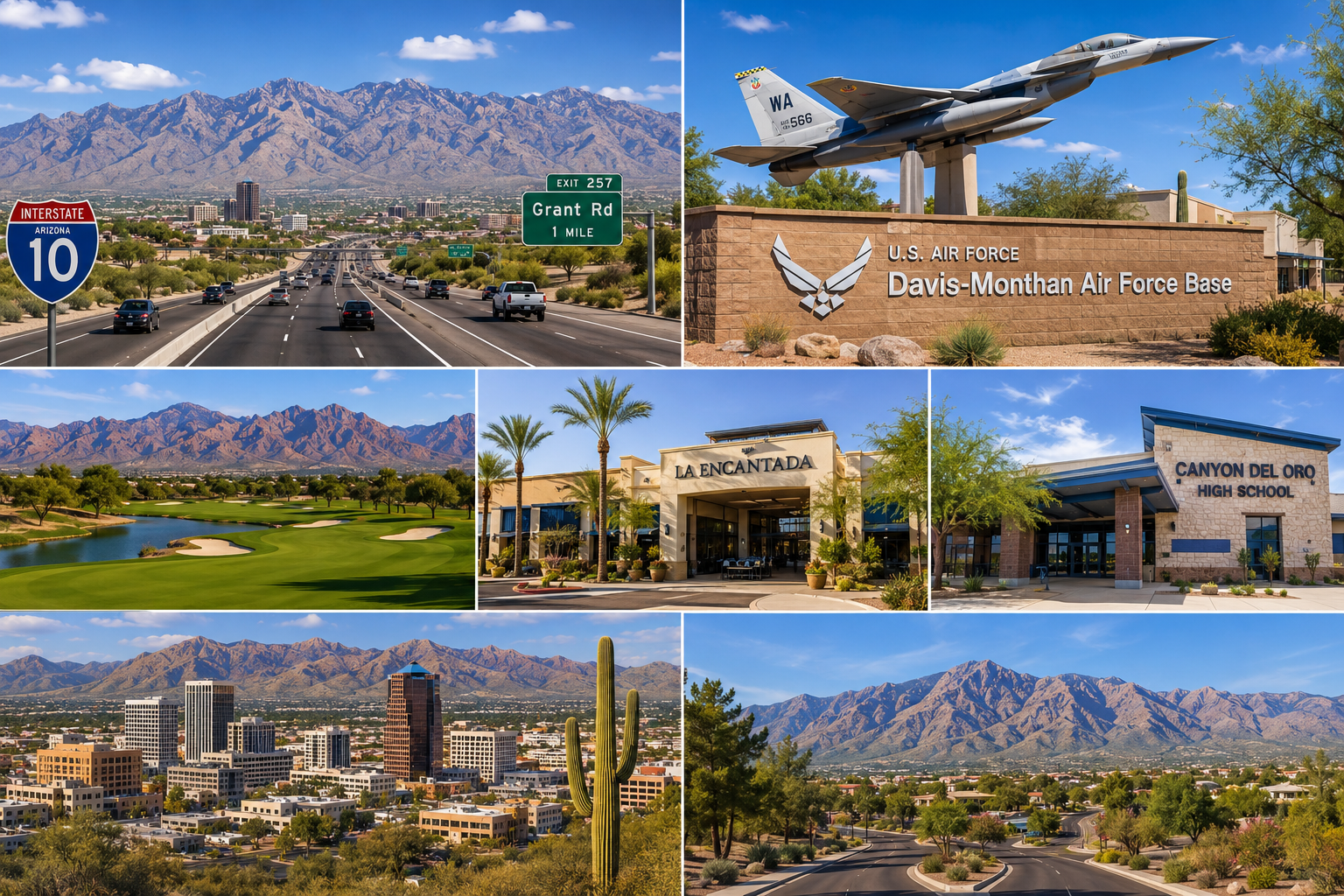
Relocating to Tucson can feel overwhelming, especially when you are trying to balance commute times, schools, neighborhood character, home prices, and overall quality of life. One of the most common questions buyers ask is: “Where are the safest areas to live in Tucson?”
The answer is more nuanced than a simple ranking list.
Safety can mean different things to different households. Some buyers prioritize shorter emergency response times, some focus on neighborhood walkability, while others care most about commute convenience, school proximity, or newer master-planned communities.
For families relocating to Tucson — including military families moving to Davis-Monthan Air Force Base — the best approach is to evaluate neighborhoods using objective public data, firsthand visits, commute patterns, and lifestyle priorities.
In this guide, we’ll walk through:
- how many relocating buyers research Tucson neighborhoods,
- what factors commonly influence neighborhood decisions,
- and which Tucson-area communities buyers frequently explore during their home search.
Important: Every buyer’s needs and comfort levels are different. We encourage all buyers to independently research crime statistics, schools, insurance costs, commute times, and neighborhood characteristics before making a housing decision.
How Should You Research Neighborhood Safety in Tucson?
The best way to evaluate Tucson neighborhoods is by using official public data, visiting areas in person, comparing commute patterns, reviewing school boundaries, and researching local amenities. Buyers should avoid relying solely on online rankings or social media opinions because neighborhood conditions, traffic patterns, and lifestyle fit can vary significantly block by block.
One of the biggest mistakes relocating buyers make is assuming there is a universal “best” or “safest” neighborhood in Tucson. In reality, most buyers narrow their search based on:
- commute needs,
- school preferences,
- housing budget,
- lot sizes,
- access to parks and trails,
- and desired lifestyle pace.
Official public resources are often the most reliable starting point:
- Tucson Police Department Crime Mapping
- Pima County GIS Maps
- Arizona Department of Transportation
- U.S. Census QuickFacts
Many relocating families also spend time driving neighborhoods during:
- weekday rush hour,
- evenings,
- weekends,
- and school traffic periods.
That real-world experience can provide context that online searches often miss.
What Areas Do Relocating Families Commonly Explore in Tucson?
Many relocating buyers begin their Tucson home search in Oro Valley, Marana, Vail, Rita Ranch, Catalina Foothills, and Sahuarita because of factors like newer housing inventory, commute access, parks, schools, and master-planned community development. However, each area offers different price points, commute patterns, and lifestyle considerations.
Below is a general comparison of communities many relocating buyers explore during their Tucson search.
| Area |
General Location |
Common Buyer Interest |
Typical Commute Considerations |
Notable Features |
|---|---|---|---|---|
| Oro Valley |
Northwest Tucson |
Families, retirees, professionals |
Access to Oracle Rd & Ina Rd |
Parks, trails, planned communities |
| Marana |
Northwest / West |
New construction buyers |
I-10 access important |
Rapid residential growth |
| Vail |
Southeast Tucson |
Families seeking newer homes |
Longer commute to central Tucson |
Vail school district popularity |
| Rita Ranch |
Southeast Tucson |
Military relocation |
Close to Davis-Monthan |
Established suburban feel |
| Catalina Foothills |
North Tucson |
Luxury and custom-home buyers |
Foothills traffic varies |
Scenic desert setting |
| Sahuarita |
South of Tucson |
Buyers seeking newer communities |
I-19 corridor commute |
Master-planned neighborhoods |
These are not rankings, and no area is universally “best” for every buyer. The right fit often depends on:
- work location,
- budget,
- school preferences,
- desired home age,
- HOA structure,
- and lifestyle priorities.
Oro Valley: What Relocating Buyers Often Like
Oro Valley is a popular Northwest Tucson community known for planned neighborhoods, trail systems, golf communities, and access to outdoor recreation. Many buyers appreciate its combination of suburban development, shopping access, and proximity to Catalina Mountain views.
Located north of central Tucson, Oro Valley has experienced long-term residential growth and infrastructure expansion through planned development initiatives from the town government and surrounding regional planning efforts.
Buyers often research Oro Valley because of:
- access to parks and recreation,
- proximity to Catalina State Park,
- newer and established residential communities,
- shopping and dining access along Oracle Road,
- and proximity to healthcare corridors.
Official resources:
Commute considerations:
- Northwest Tucson traffic patterns can vary significantly during peak commuting hours.
- Travel times to Davis-Monthan Air Force Base may be substantially longer compared to Southeast Tucson communities.
Vail and Southeast Tucson: A Frequent Choice for Families
Vail and Southeast Tucson are frequently researched by relocating families because of newer residential construction, expanding master-planned communities, and access to the Vail Unified School District. Buyers relocating to Raytheon or Davis-Monthan Air Force Base also often explore this corridor because of commute convenience.
Vail has seen major residential growth over the past several years, especially with buyers looking for:
- newer floorplans,
- larger lots,
- mountain views,
- and suburban-style neighborhoods.
The area includes a mix of:
- master-planned communities,
- semi-rural properties,
- and newer subdivisions.
Buyers often compare:
- Vail,
- Rita Ranch,
- Civano,
- and East Tucson neighborhoods during the same search process.
Official resources:
One thing many relocating buyers notice quickly is that Southeast Tucson can offer significantly different commute experiences depending on:
- proximity to I-10,
- access to Houghton Road,
- and work location.
Marana: Why It Continues to Grow
Marana has become one of Southern Arizona’s fastest-growing communities due to residential development, access to Interstate 10, newer construction neighborhoods, and expanding commercial infrastructure. Buyers often explore Marana when looking for newer homes and regional commuting access.
Marana stretches across a large geographic area west and northwest of Tucson, so neighborhood experiences can vary considerably.
Some buyers are attracted to:
- new construction inventory,
- larger subdivision layouts,
- mountain views,
- and newer retail development.
Others appreciate:
- proximity to employment corridors,
- logistics and aerospace industries,
- and transportation access.
Official resources:
Commute times can vary dramatically depending on:
- where a home is located within Marana,
- traffic along I-10,
- and destination within Tucson.
Catalina Foothills: Luxury, Views, and Established Neighborhoods
Catalina Foothills is a North Tucson area known for custom homes, elevated desert views, and established residential neighborhoods near the Santa Catalina Mountains. Buyers often explore the Foothills for architectural variety, privacy, and proximity to upscale shopping and dining.
Unlike many master-planned suburban areas, Catalina Foothills includes:
- custom homes,
- hillside properties,
- luxury communities,
- and neighborhoods developed across multiple decades.
That variety means:
- lot sizes,
- road layouts,
- HOA structures,
- and home styles can differ significantly from one subdivision to another.
Buyers relocating from larger metro areas often appreciate:
- scenic desert landscapes,
- mature landscaping,
- and proximity to hiking access.
Official resources:
Because many homes are custom-built and terrain varies substantially, buyers should also evaluate:
- insurance considerations,
- roadway access,
- and property-specific conditions.
What Military Families Should Know About Relocating to Tucson
Military families relocating to Tucson often focus heavily on commute times to Davis-Monthan Air Force Base, school options, home maintenance needs, and access to shopping or recreation. Southeast Tucson communities are commonly researched because they may reduce commute times compared to Northwest Tucson areas.
Every PCS move comes with different priorities.
Some military buyers prioritize:
- minimizing commute stress,
- avoiding major freeway congestion,
- or quick airport access.
Others focus more heavily on:
- school boundaries,
- newer homes,
- or HOA-maintained neighborhoods.
Areas commonly researched by military families include:
- Rita Ranch,
- Vail,
- East Tucson,
- Civano,
- and portions of Sahuarita.
Official relocation resource:
For buyers unfamiliar with Tucson geography, commute testing is extremely important because the metro area is spread out and mountain ranges influence traffic flow patterns.
What Else Should Buyers Evaluate Beyond Crime Data?
Most experienced buyers evaluate much more than crime statistics when choosing a Tucson neighborhood. Factors like commute reliability, flood zones, wildfire considerations, school boundaries, home age, insurance costs, and long-term lifestyle fit often influence satisfaction more than any single online ranking.
A few commonly overlooked considerations include:
Flood Zones and Drainage
Some Tucson neighborhoods have different wash systems, drainage infrastructure, or floodplain considerations. Buyers may want to review:
- FEMA flood maps,
- seller disclosures,
- and insurance requirements.
Wildfire and Desert Terrain
Foothill and desert-edge communities may involve additional landscaping, vegetation, or wildfire mitigation considerations.
Commute Patterns
A 15-mile commute in Tucson can vary substantially depending on:
- school traffic,
- freeway access,
- and seasonal population patterns.
Home Age and Maintenance
Older Central Tucson neighborhoods may offer architectural character but can involve:
- different plumbing systems,
- electrical updates,
- or roofing considerations.
HOA Structure
Master-planned communities may include:
- HOA fees,
- architectural guidelines,
- or amenity access rules.
Tucson Relocation Comparison Table
Relocating buyers often compare Tucson communities based on commute access, housing style, school districts, and lifestyle preferences rather than relying on a single “best area” ranking. Comparing these categories side-by-side can help narrow a home search more effectively.
| Area |
Common Housing Style |
Commute to DMAFB |
General Development Pattern |
Common Buyer Interest |
|---|---|---|---|---|
| Oro Valley |
Established + newer subdivisions |
Longer |
Planned suburban |
Outdoor recreation |
| Vail |
Newer subdivisions |
Shorter to moderate |
Rapid growth |
New construction |
| Rita Ranch |
Established suburban |
Short |
Residential suburban |
Military relocation |
| Marana |
Large master-planned areas |
Moderate to longer |
Fast expansion |
New communities |
| Catalina Foothills |
Custom + luxury homes |
Longer |
Established hillside |
Scenic properties |
| Sahuarita |
Master-planned communities |
Moderate |
South corridor growth |
Value-oriented buyers |
Frequently Asked Questions About Tucson Neighborhoods
What is considered the safest area in Tucson?
There is no single official ranking that determines the “safest” area in Tucson for every buyer. Most buyers evaluate neighborhoods using official crime maps, commute patterns, school access, and personal lifestyle preferences.
Is Oro Valley safer than Tucson?
Different municipalities and neighborhoods may report different types of crime statistics and development patterns. Buyers should review official public data sources directly and compare areas based on their own priorities.
Where do military families usually live in Tucson?
Many military families explore Southeast Tucson communities because of commute access to Davis-Monthan Air Force Base, although housing preferences vary widely depending on budget, schools, and lifestyle priorities.
Is Vail a good area for relocating families?
Many relocating buyers explore Vail because of newer housing inventory, suburban development, and access to the Vail Unified School District. Buyers should independently evaluate commute patterns and neighborhood fit.
How can I research Tucson neighborhoods before moving?
Buyers often use:
- official crime mapping tools,
- virtual tours,
- in-person visits,
- school district websites,
- commute testing,
- and local market guidance during their search.
Final Thoughts
The best Tucson neighborhood for your move depends on your lifestyle, commute priorities, housing goals, and personal comfort level. Most successful relocations happen when buyers combine objective research with firsthand visits and local guidance tailored to their needs.
Tucson offers a wide range of living environments:
- suburban master-planned communities,
- luxury foothill neighborhoods,
- historic central areas,
- and growing Southeast and Northwest corridors.
Instead of focusing only on “safe” or “unsafe” labels, many relocating buyers find it more helpful to compare:
- daily commute quality,
- neighborhood feel,
- home styles,
- outdoor access,
- school options,
- and long-term lifestyle fit.
If you are planning a move to Tucson or Southern Arizona, the TJK Team can help you compare areas, understand commute patterns, and navigate the relocation process with local insight and objective guidance.
Sources
- Tucson Police Department Crime Map
- Town of Oro Valley
- Town of Marana
- Town of Sahuarita
- Vail Unified School District
- Amphitheater Public Schools
- Catalina Foothills School District
- Davis-Monthan Air Force Base
- Arizona Department of Transportation
- Pima County GIS
- U.S. Census QuickFacts

Tom Krieger
| The TJK Team - Realty Executives Arizona Territory
or another way