
Published January 30, 2026
Why “Free Housing” Is Often the Wrong Way to Think About Universal Basic Income

Introduction
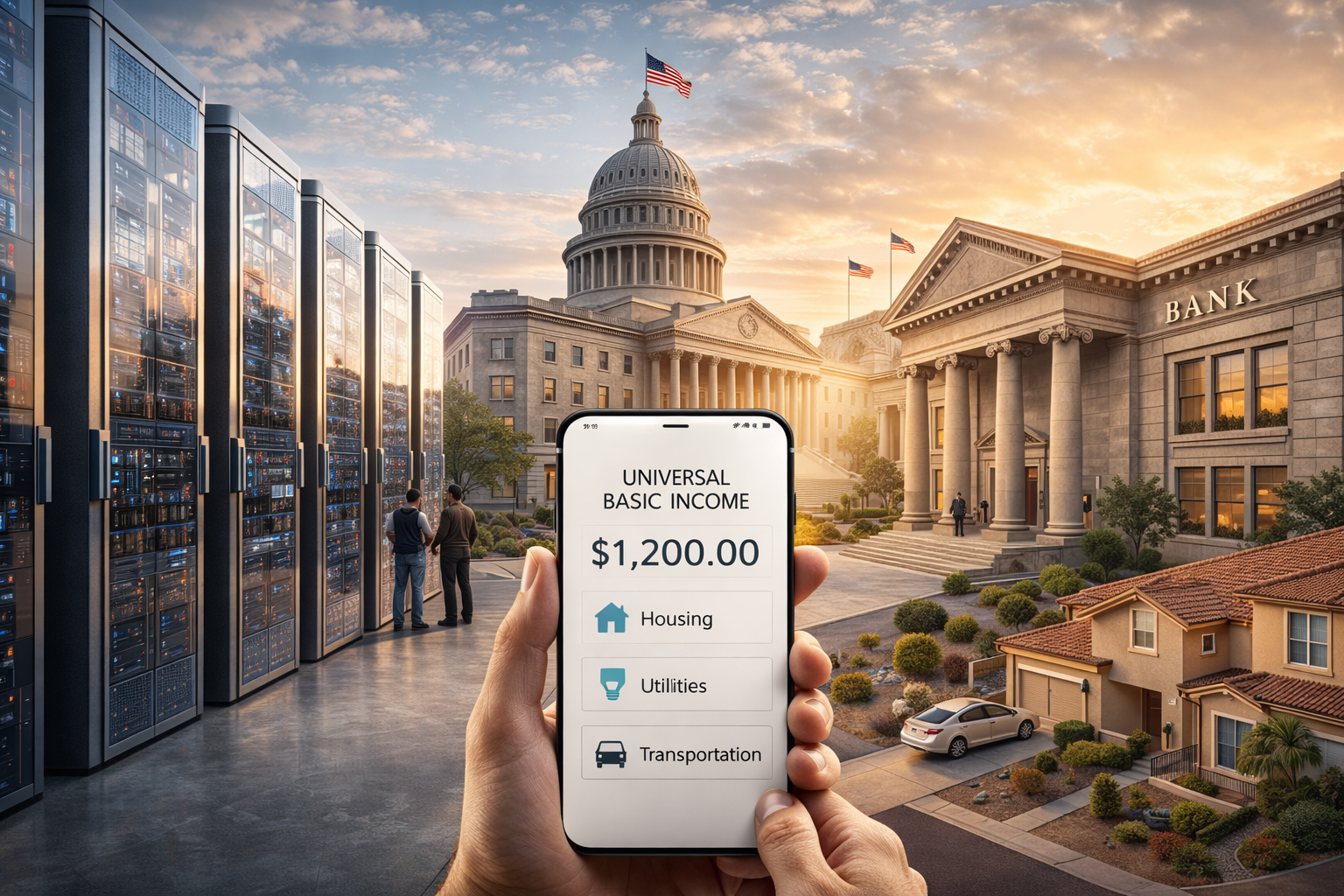
Few phrases generate as much confusion in housing conversations as “free housing.” It often appears alongside discussions about Universal Basic Income (UBI), framed as an inevitable outcome or future guarantee. In reality, this framing oversimplifies how income support programs and housing systems actually work.
For homeowners, buyers, and long-term planners, this misunderstanding can create unnecessary anxiety. Does income support mean housing markets will fundamentally change? Will ownership be replaced by new models? Or is “free housing” simply shorthand for something else entirely?
To understand how Universal Basic Income and housing actually intersect, it’s important to slow the conversation down. Most confusion comes from mixing together programs, concepts, and goals that operate very differently. Once those distinctions are clear, the idea of “free housing” becomes far less literal — and far less likely — than headlines suggest.
What Universal Basic Income Actually Is
At its core, Universal Basic Income is an income-based concept, not an asset-based one. UBI is generally defined as a recurring cash payment provided to individuals with minimal conditions attached. Its purpose is to provide baseline income stability rather than distribute goods or property (Congressional Research Service).
Income support helps households manage expenses, but it does not directly create or distribute housing, land, or other physical assets. Housing remains governed by land availability, construction costs, zoning, regulation, and local market dynamics. Even in discussions where UBI is explored as a replacement for other assistance programs, it is still framed as income support rather than housing provision (OECD).
Why Housing Gets Pulled Into UBI Conversations
Housing enters UBI discussions primarily because it is the largest expense for most households. When people think about additional income, they naturally think about rent or mortgage payments first. Over time, this mental shortcut turns income support into an assumption about housing access.
There is also historical overlap. Governments have long used housing assistance programs to address cost-of-living pressures, which makes it easy to assume that any new income program would directly change housing systems. In practice, income policy affects purchasing power, while housing policy affects supply, eligibility, and cost controls — related, but not interchangeable (U.S. Department of Housing and Urban Development).
Income Support vs. Housing Policy
One of the biggest sources of confusion is grouping all assistance programs together. In reality, they serve different purposes:
- Income support provides cash that households can use at their discretion.
- Housing vouchers or subsidies reduce housing costs for income-qualified households.
- Public or social housing involves government-supported development or ownership.
- Restricted-cost or deed-restricted housing limits resale prices or rents based on eligibility rules.
Universal Basic Income fits squarely into the first category. Housing programs occupy the others. When people talk about “free housing” in the context of UBI, they are often referring to housing assistance programs that already exist rather than outcomes created by income support alone (Government Accountability Office).
What “Free Housing” Usually Means in Practice
In real-world housing systems, “free” is rarely literal. Programs described this way typically involve tradeoffs such as income limits, long waiting lists, location constraints, resale restrictions, and ongoing compliance requirements. Restricted-cost housing is often deed-restricted to keep prices or rents below market levels, which comes at the cost of flexibility and long-term appreciation. Rental assistance programs reduce monthly costs but do not eliminate them and do not create new housing supply on their own (Urban Institute).
How Housing Markets Typically Respond to Income Support
From a market perspective, income support influences housing indirectly. When households have greater income stability, demand may increase at certain price points. However, demand alone does not change housing supply. Housing prices are shaped by land availability, construction costs, zoning, regulation, financing conditions, and local demand. Income support does not change those fundamentals. Without increased supply, additional income can increase competition rather than reduce prices (Federal Reserve).
What Universal Basic Income Is Unlikely to Change
Even if income support programs expand, private ownership does not disappear. Land scarcity remains. Construction still requires labor, materials, financing, and regulatory approval. Ownership structures persist because they are grounded in legal and physical realities, not income programs. Structural changes in housing typically require direct changes to supply, zoning, or development models rather than household income alone (National Association of Home Builders).
Tucson and Southern Arizona Context
In Southern Arizona, housing affordability already involves a mix of market-rate housing, income-qualified rentals, and targeted assistance programs. These tools operate within familiar constraints such as land availability, construction costs, and permitting timelines. Income support programs may improve household stability, but they do not override local supply conditions. Data from the Arizona Office of Economic Opportunity shows that regional growth patterns and housing supply continue to shape affordability outcomes more than income programs alone (Arizona Office of Economic Opportunity).
A More Accurate Way to Frame the Conversation
Language matters in housing discussions. When people use the phrase “free housing,” it often obscures a more precise reality: restricted access, limited supply, and conditional affordability. Using clearer terms such as income support, housing assistance, or restricted-cost housing leads to more productive conversations and better decision-making.
Conclusion
Universal Basic Income is an income concept, not a housing system. While income support can influence housing demand and household stability, it does not create housing, eliminate costs, or replace ownership structures. Programs that reduce housing costs already exist, and they come with defined limits and tradeoffs. Housing markets tend to change gradually, shaped by supply, regulation, and local conditions — not by income programs alone.
Questions Homeowners Often Ask
Does Universal Basic Income mean housing will be free?
No. UBI provides income, not housing. While additional income can help households manage expenses, it does not eliminate housing costs or guarantee access to housing.
Would UBI replace existing housing assistance programs?
Income support and housing assistance serve different purposes. Housing programs address affordability through eligibility rules and supply constraints, while income programs address household cash flow.
Could UBI lower home prices?
Income support alone does not lower housing prices. Prices are shaped by supply, construction costs, land availability, and regulation.
Would ownership models change under UBI?
Ownership models are tied to legal frameworks, financing systems, and land economics. Income support does not change those structures.
Should buyers wait for housing policy changes tied to UBI?
Waiting based on potential future programs introduces uncertainty. Housing decisions tend to work best when grounded in personal timelines, local conditions, and current market realities.
If you’d like to talk through how income support discussions intersect with housing — and how that fits into your own plans or timeline — I’m always happy to have that conversation.

Tom Krieger
| The TJK Team - Realty Executives Arizona Territory
or another way