
Categories
Buyer Guides, Tucson Real Estate MarketPublished May 22, 2026
What to Expect During the Home Buying Process in the Greater Tucson Area

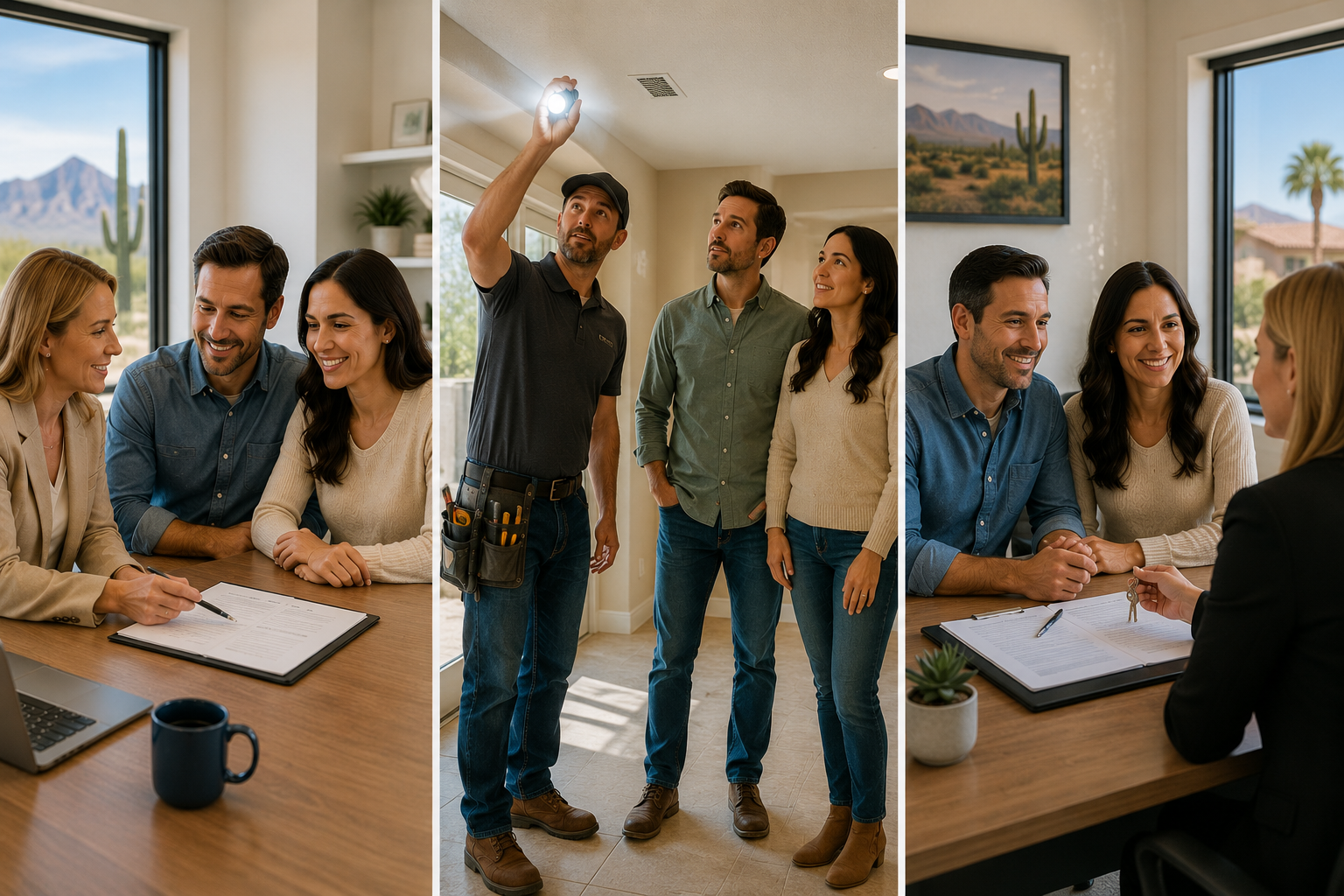
Buying a home in Tucson or Southern Arizona can feel complex if you have never gone through the process before. Between financing, inspections, escrow timelines, and negotiations, buyers often have questions about what actually happens from start to finish. Understanding the process ahead of time can help buyers feel more prepared and confident throughout the transaction.
The Greater Tucson market includes a wide variety of property types, neighborhoods, and financing scenarios, so no two transactions are exactly alike. However, most home purchases in Arizona tend to follow a similar sequence of events. Working with experienced local professionals and understanding the key milestones can help buyers navigate the process more smoothly.
Step 1: Determine Your Budget and Financing Options
Before touring homes, most buyers begin by reviewing their finances, speaking with a lender, and determining a comfortable monthly payment range. In Tucson, pre-approval is often one of the first major steps because it helps clarify price range, strengthens offers, and gives buyers a better understanding of estimated closing costs and loan expectations.
One of the first steps in the home buying process is understanding what you may be comfortable spending and how financing may affect your monthly budget. Many buyers choose to speak with a licensed lender early in the process to review loan programs, estimated payments, and qualification requirements.
A pre-approval letter can also help buyers move more quickly once they find a home they want to pursue. In competitive situations, sellers often prefer offers that include documentation showing the buyer has already started the financing process.
Typical items lenders may review include:
| Financing Preparation Item |
Why It Matters |
|---|---|
| Income documentation |
Helps verify borrowing ability |
| Credit history |
Impacts loan qualification |
| Down payment funds |
Helps determine loan structure |
| Debt-to-income ratio |
Evaluates monthly obligations |
| Estimated closing costs |
Helps buyers plan cash needs |
This information is for educational purposes only. For specific loan options and qualification details, consult a licensed lender.
Sources:
Step 2: Hire a Local Tucson Buyer’s Agent
A local buyer’s agent can help buyers understand Tucson neighborhoods, coordinate showings, explain Arizona contracts, manage deadlines, and guide negotiations throughout the transaction. Buyers often benefit from working with an experienced agent who understands local market conditions, inspection practices, and Southern Arizona transaction timelines.
Many buyers begin searching online before speaking with an agent, but having representation early in the process can help avoid confusion later. Arizona purchase contracts contain deadlines, inspection periods, disclosure timelines, and contingency provisions that buyers should understand before submitting an offer.
An experienced local agent may help buyers:
- Schedule showings
- Explain Tucson-area market conditions
- Review comparable sales
- Coordinate inspections
- Monitor contractual deadlines
- Communicate with escrow and lenders
- Negotiate repairs or credits
In Arizona, buyers may also sign a written buyer representation agreement outlining services and compensation expectations. National Association of REALTORS® guidance and Arizona MLS rules emphasize transparency and disclosure throughout the transaction process.
Buyers should also look for agents who maintain strong professional networks with licensed inspectors, contractors, lenders, title companies, and other service providers involved in the transaction process.
Step 3: Start Touring Homes in the Greater Tucson Area
Once financing and representation are in place, buyers typically begin touring homes that match their budget, location preferences, and lifestyle needs. Tucson-area buyers often compare commute times, HOA requirements, lot sizes, construction styles, and property conditions while narrowing down their options.
The Greater Tucson area includes a wide range of communities, including:
- Oro Valley
- Marana
- Vail
- Sahuarita
- Rita Ranch
- Catalina Foothills
- Downtown Tucson
- East Tucson
- Northwest Tucson
- Green Valley
As buyers tour homes, they often compare:
- Age of the property
- Roof and HVAC condition
- Solar systems
- Pool maintenance needs
- HOA restrictions
- Lot orientation and desert landscaping
- Commute access
- Nearby amenities
Because Southern Arizona properties can vary significantly in age and construction style, buyers may also encounter:
- Slab foundations
- Older electrical systems
- Polybutylene plumbing
- Septic systems
- Shared wells
- Adobe construction
- Flat roofs
These are not automatically concerns, but they are items buyers may want to evaluate carefully during inspections and due diligence.
Sources:
Step 4: Submit an Offer and Negotiate Terms
When buyers find a property they want to purchase, they typically submit a written offer that outlines price, financing terms, contingencies, timelines, and requested concessions. Negotiations may involve repairs, closing costs, occupancy dates, or competing offers depending on current market conditions.
Arizona real estate contracts generally include multiple components beyond just the purchase price. Buyers and sellers may negotiate:
- Earnest money amount
- Inspection periods
- Closing timelines
- Included appliances
- Repair requests
- Seller concessions
- Home warranty requests
Once an offer is accepted, the property may move into an Active Contingent or Pending status depending on the circumstances and MLS reporting requirements. MLSSAZ status definitions help clarify how properties are categorized during the contract process.
Typical Tucson home purchase timelines may look like this:
| Transaction Stage |
Typical Timeframe |
|---|---|
| Pre-approval |
1–7 days |
| Home search |
Varies |
| Offer negotiations |
1–3 days |
| Inspection period |
Typically 7–10 days |
| Appraisal + underwriting |
2–3 weeks |
| Final closing process |
30–45 days total |
Actual timelines can vary depending on financing type, inspections, repairs, title issues, or seller needs.
Step 5: Complete the Due Diligence and Inspection Period
The inspection or due diligence period is one of the most important phases of the Arizona home buying process. During this time, buyers typically evaluate the property’s condition, review disclosures, and determine whether they want to proceed, renegotiate, request repairs, or cancel under applicable contract terms.
This stage is where buyers often conduct:
- General home inspections
- Roof inspections
- HVAC evaluations
- Sewer scope inspections
- Pool inspections
- Pest or termite inspections
- Septic inspections
- Well inspections
Southern Arizona homes can experience significant sun exposure, monsoon weather conditions, and temperature fluctuations, which may affect roofing materials, HVAC systems, windows, drainage, and exterior surfaces over time.
Buyers should strongly consider using qualified, properly licensed inspectors and contractors when evaluating a property. Experienced Tucson agents often maintain relationships with reputable local professionals who understand regional construction styles and common Arizona property conditions.
Buyers can verify contractor licensing through the Arizona Registrar of Contractors.
It is also important for buyers to understand that inspection findings do not automatically mean a home is a “bad” property. Many inspection reports contain maintenance recommendations or deferred upkeep items that are common in resale transactions.
Step 6: Understand Appraisals and Why Timing Matters
An appraisal is typically ordered by the lender to help confirm the property’s value for financing purposes. In many transactions, buyers may benefit from completing inspections first before moving into the appraisal stage, especially if significant concerns arise during due diligence.
The appraisal process is separate from the inspection process. While inspections evaluate the property’s condition, an appraisal primarily focuses on estimated market value for lending purposes.
In some situations, ordering an appraisal before inspections are completed may create unnecessary expenses if the buyer later decides not to move forward because of inspection findings.
However, appraisal timing can vary depending on:
- Loan type
- Lender requirements
- Contract timelines
- Market conditions
- Escrow deadlines
Your lender and real estate professionals can help coordinate these timelines during the transaction process.
This information is for educational purposes only. For specific loan options and qualification details, consult a licensed lender.
Sources:
Step 7: Move Through Escrow and Final Loan Approval
After inspections and negotiations are completed, the transaction typically moves into underwriting, title review, and final escrow processing. During this period, buyers may provide updated financial documents while escrow and title companies prepare the transaction for closing.
Arizona is an escrow state, meaning a neutral third party helps coordinate:
- Title work
- Document preparation
- Earnest money handling
- Signing coordination
- Recording procedures
During this phase, buyers may receive:
- HOA information
- Insurance requirements
- Preliminary title reports
- Loan disclosures
- Closing disclosures
Lenders may also request updated financial information before final approval. Buyers often benefit from avoiding major financial changes during this stage, including:
- Opening new credit accounts
- Large purchases
- Employment changes
- Significant bank transfers without documentation
The escrow timeline may vary depending on financing, title conditions, repairs, or negotiated contract terms.
Sources:
Step 8: Final Walkthrough and Closing Day
Before closing, buyers typically complete a final walkthrough to verify the property’s condition and confirm any agreed-upon repairs or included items remain in place. Once loan documents are signed and recorded, ownership officially transfers to the buyer.
The final walkthrough usually occurs shortly before closing and may include verification that:
- Repairs were completed if applicable
- Appliances remain
- Fixtures remain
- The home is in substantially the same condition
- No major new damage has occurred
At closing, buyers generally sign:
- Loan documents
- Title documents
- Settlement statements
- Escrow paperwork
After documents are signed and officially recorded with the county, buyers typically receive access to the property according to the terms of the contract.
In Arizona, recording is commonly handled through the county recorder’s office. Pima County Recorder
Common Mistakes Tucson Home Buyers May Want to Avoid
Many buyer issues occur because of rushed decisions, incomplete inspections, financing changes, or misunderstanding contract deadlines. Buyers who stay organized, ask questions early, and work with experienced professionals may reduce avoidable delays and surprises during the transaction process.
Some common buyer mistakes include:
- Skipping inspections
- Making large purchases during escrow
- Waiting too long to schedule inspections
- Failing to review HOA documents
- Underestimating closing costs
- Not verifying contractor licensing
- Ignoring maintenance concerns
- Missing contractual deadlines
Because Arizona contracts contain multiple contingency periods and deadlines, communication and organization can play a major role throughout the transaction.
Working with experienced local professionals may help buyers stay informed and proactive during the process.
Frequently Asked Questions About Buying a Home in Tucson
How long does the home buying process usually take in Tucson?
Most Tucson-area transactions typically close within 30–45 days, although timelines may vary depending on financing, inspections, repairs, and seller needs.
Do buyers need inspections in Arizona?
While inspections are generally optional, many buyers choose to conduct inspections during the due diligence period to better understand the property’s condition.
What is earnest money?
Earnest money is a deposit submitted with an offer to demonstrate good-faith intent to purchase the property.
Can buyers negotiate repairs after inspections?
In many Arizona transactions, buyers may request repairs, credits, or other concessions after inspections depending on contract terms and inspection findings.
Should buyers use licensed contractors and inspectors?
Many buyers prefer working with qualified, properly licensed professionals when evaluating property conditions or completing repairs. Buyers can verify licensing through the Arizona Registrar of Contractors.
Is the appraisal the same as a home inspection?
No. An appraisal primarily estimates market value for lending purposes, while inspections evaluate the property’s condition.
Final Thoughts
Buying a home in the Greater Tucson area involves multiple moving parts, but understanding the overall process can help buyers feel more informed and prepared from start to finish.
From financing and showings to inspections, escrow, and closing day, each step plays an important role in the transaction. Buyers who work with experienced local professionals, stay organized, and approach the process carefully are often better positioned to navigate challenges that may arise along the way.
If you have questions about buying a home in Tucson or Southern Arizona, the TJK Team is here to help guide you through the process and connect you with trusted local resources throughout your home search.
Source Section
- Arizona Department of Real Estate — https://azre.gov
- National Association of REALTORS® — https://www.nar.realtor
- Multiple Listing Service of Southern Arizona — https://mlssaz.com
- Arizona Association of REALTORS® — https://www.aaronline.com
- Arizona Registrar of Contractors — https://roc.az.gov
- Consumer Financial Protection Bureau — https://www.consumerfinance.gov
- Pima County Assessor — https://www.asr.pima.gov
- Pima County Recorder — https://www.recorder.pima.gov

Tom Krieger
| The TJK Team - Realty Executives Arizona Territory
or another way