Categories
Market Insights, Neighborhood GuidesPublished February 9, 2026
What’s Happening in the Vail, Arizona Housing Market Right Now

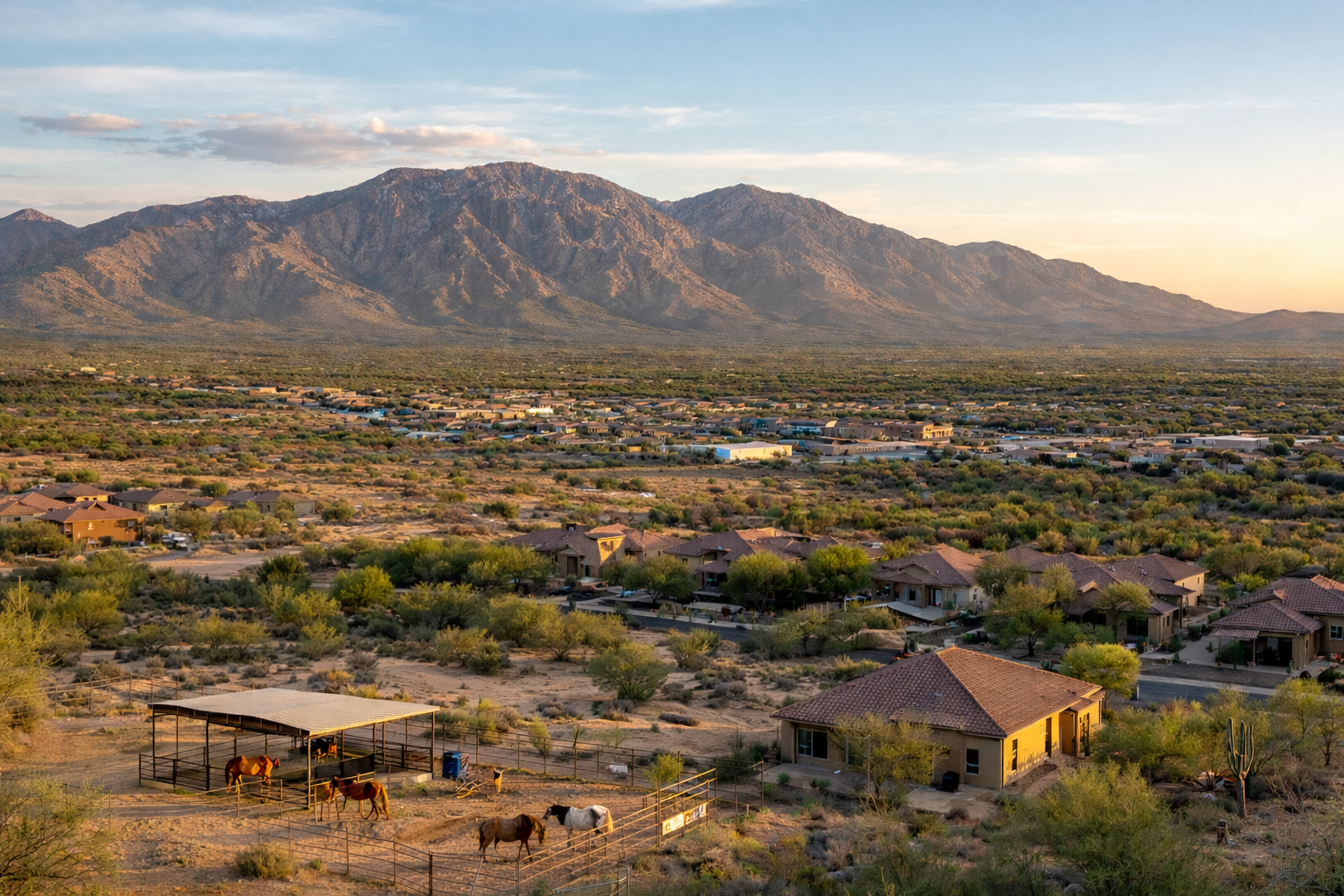
Vail, Arizona has been getting more attention over the past several years, and not just from buyers looking for more space. Homeowners, builders, and businesses are all paying closer attention to what’s happening in this growing community southeast of Tucson. At the same time, national housing headlines often don’t reflect what’s happening locally.
This overview takes a calm, data-based look at the Vail housing market right now. It also explores population growth and commercial development to help put current market conditions into a broader community context.
A Snapshot of Vail, Arizona Today
Vail is located southeast of Tucson, stretching along the I-10 corridor and extending toward the Rincon Mountains. Compared to more central Tucson neighborhoods, Vail offers newer housing, larger lots, and a more suburban layout. The area has become particularly attractive to families and buyers looking for newer construction and access to highly rated schools.
Because of its location and housing mix, Vail often behaves differently than in-town Tucson markets. New construction plays a larger role, and population growth has been a more consistent factor in shaping demand.
Housing Market Trends in Vail
According to recent MLSSAZ market data for the Vail area, home prices have remained relatively steady over the past year. The median sale price over the most recent 12-month period sits just under $390,000, showing only modest year-over-year change. This suggests that the rapid price acceleration seen earlier in the decade has largely given way to a more stable pattern.
One important factor in Vail is the mix of resale homes and new construction. Newer homes can influence overall pricing, particularly when builders adjust incentives or pricing strategies. This can make year-over-year comparisons appear flatter even while individual neighborhoods remain active.
Overall, pricing trends in Vail currently point to stability rather than decline, especially when viewed in the context of longer-term growth.
Inventory, Sales Pace, and Buyer Activity
Inventory levels in Vail have increased compared to the tight conditions seen during peak market years. Based on current MLS figures, Vail is sitting at roughly four to five months of supply, a range often associated with a more balanced market.
Homes are taking longer to sell than they did during the fastest period of activity, with median days on market now averaging in the mid-40-day range. This shift reflects a return to more typical buyer behavior, where decisions are made with greater care rather than urgency.
Many homes are selling close to, but not necessarily above, their original list price. Negotiation has become more common, particularly as buyers compare resale homes with new construction options.
Population Growth in Vail
Population growth has been one of the defining characteristics of Vail over the past two decades. According to U.S. Census data , Vail’s population increased from approximately 10,200 residents in 2010 to about 13,600 residents in 2020, representing growth of roughly 33% over that decade. That pace of growth stands out within the broader Pima County region.
- Availability of developable land
- Expansion of newer housing communities
- School district reputation
- Proximity to Tucson employment centers while offering a less urban environment
Town of Vail planning documents reflect a community that is growing through structured zoning and long-range planning. While population growth can support housing demand over time, it does not automatically translate into rising prices in the short term. Instead, it tends to influence long-term housing activity, infrastructure needs, and community services.
New Construction and Housing Supply
New construction plays a significant role in the Vail housing market. The area includes a number of master-planned and semi-planned communities, offering a range of home sizes and price points.
This steady flow of new homes helps absorb population growth while also shaping market dynamics. Buyers often compare new construction with resale homes, weighing features like warranties and modern layouts against established neighborhoods and lot characteristics.
For homeowners, the presence of new construction can create competition, but it also supports overall market activity by keeping demand local rather than pushing buyers to other areas.
Commercial Development in Vail
As residential growth has continued, commercial and infrastructure development in Vail has followed a measured, service-oriented path, focused more on supporting residents than on large destination retail.
One example of planned activity is Vail Crossings, a mixed-use project with commercial and industrial zoning located along the I-10 corridor. The site has been positioned for long-term employment, office, and service-oriented uses, reflecting planning activity tied to regional growth rather than short-term retail expansion.
In addition, recent commercial activity has included industrial and employment-related investment in the broader Vail area. A notable transaction involved The Sundt Companies, which purchased a large industrial property within the Rita Commerce Center near Vail. While not a consumer-facing retail project, this type of investment highlights growing commercial interest connected to population growth and regional infrastructure.
Town of Vail economic development and planning materials continue to emphasize aligning commercial activity with residential expansion. This approach supports convenience, employment opportunities, and services without dramatically altering the area’s overall character.
For residents, this type of development often improves livability—access to services, jobs, and infrastructure—while maintaining the lower-density feel that attracts many people to Vail in the first place.
What This Means If You’re a Vail Homeowner
For current homeowners, today’s Vail housing market reflects normalization after a period of rapid change. Prices have largely stabilized, inventory has grown, and buyers are making decisions more thoughtfully.
Monitoring the market can be useful, especially if you’re considering a move in the next few years. At the same time, short-term shifts don’t necessarily require action unless they align with personal plans.
What This Means If You’re Considering Buying in Vail
Buyers in Vail today often have more options and more time than they did a few years ago. New construction and resale homes provide different paths, and negotiations are a more regular part of the process.
Rather than focusing on timing the market, many buyers find it helpful to focus on how a home fits long-term needs in a growing community.
A Steady Perspective on Vail’s Growth
Vail continues to stand out as a growing community within the Tucson metro area. Current housing data points to stability, while population growth and measured commercial development provide important context for how the area is evolving.
Understanding how these factors work together can help homeowners and buyers make more informed decisions—without relying on headlines alone.
If you’d like help thinking through how this information applies to your own situation, I’m always happy to talk through options at your pace.
|


or another way