
Categories
Real Estate News, Tucson Real Estate MarketPublished February 19, 2026
Why Do Homes Expire Without Selling? The Real Reasons Listings Don’t Close

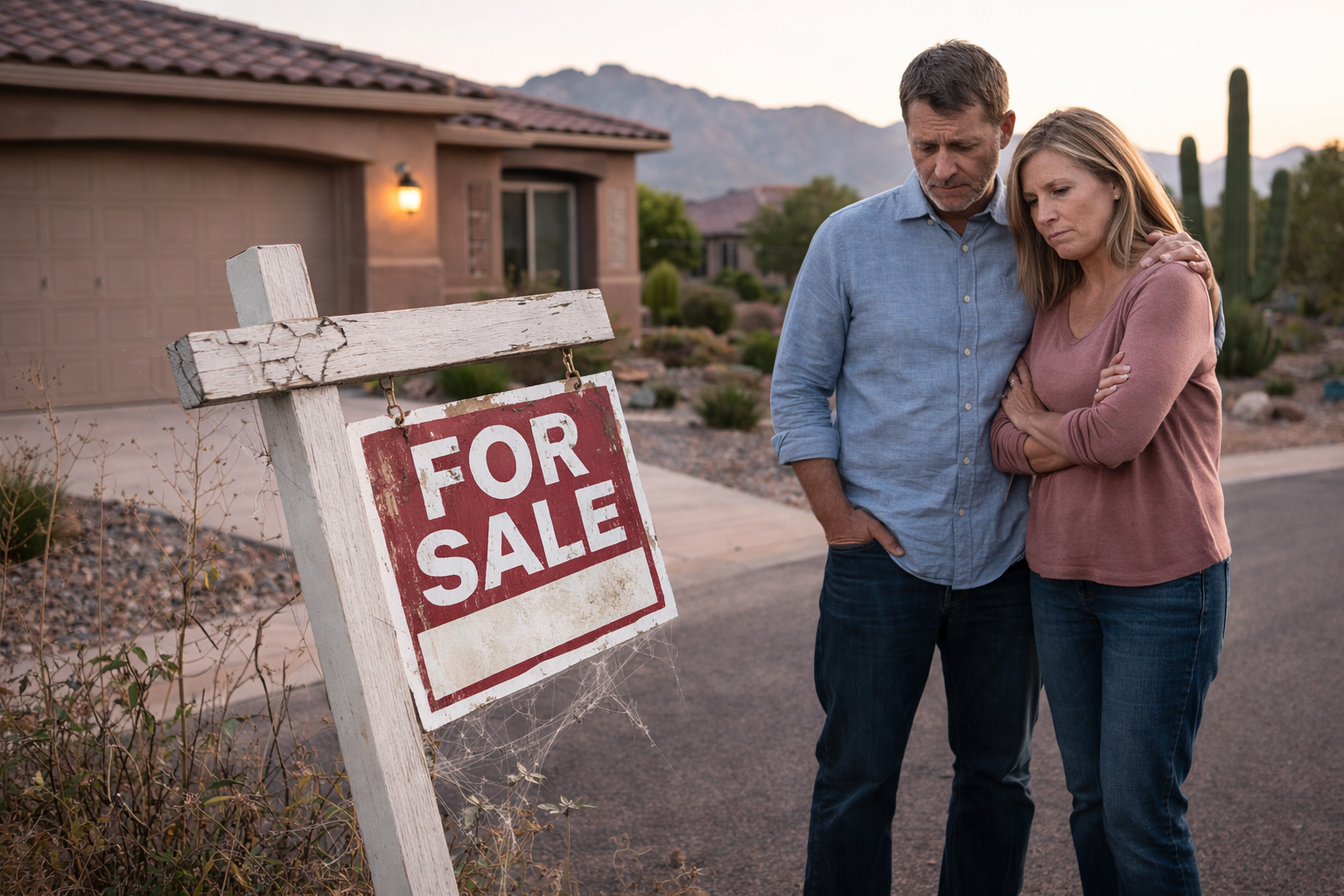
When a home doesn’t sell, it’s personal.
You prepared. You cleaned. You allowed showings. You adjusted your schedule. And then the listing expires.
It’s easy to assume something went wrong. It’s also easy to assume it was simply “the market.”
The truth is usually more layered than that.
Every year, thousands of homes across the country are listed and don’t sell before their agreement ends. According to data from the National Association of Realtors, a portion of listings each year either expire, are withdrawn, or are taken off the market before closing. You can review NAR’s annual housing statistics here: https://www.nar.realtor/research-and-statistics
If your home didn’t sell, you’re not alone. But it’s worth understanding why.
Let’s calmly break this down.
The Public Assumption: “It Must Be the Market”
When a listing expires, most homeowners point first to:
- Interest rates
- The economy
- The season
- Buyer hesitation
And yes, market conditions matter.
For example, the Federal Reserve’s interest rate increases over the past two years significantly affected buyer affordability. You can review rate trends directly through the Federal Reserve Economic Data system here: https://fred.stlouisfed.org/series/MORTGAGE30US
Higher rates reduce purchasing power. That’s real.
But here’s what experienced agents know:
Even in slower markets, homes still sell every day.
According to Realtor.com research, properties that are priced correctly and aligned with buyer expectations continue to attract offers, even when overall volume declines: https://www.realtor.com/research/
So while market conditions influence activity, they rarely tell the whole story of an expired listing.
The Industry Reality: Four Core Reasons Homes Don’t Sell
In most cases, expired listings trace back to one or more of these four areas.
Not failure. Just misalignment.
1. Pricing Misalignment
Pricing is the most common reason homes expire.
And it’s rarely intentional.
Most sellers don’t set out to overprice. Often, it happens because:
- The market shifted faster than expected
- A neighbor’s listing price was used instead of closed sales
- There was hope the “right buyer” would pay more
- The strategy was to “leave room to negotiate”
Keeping Current Matters has consistently reported that pricing ahead of the market leads to longer days on market and higher likelihood of price reductions. Their pricing research and seller strategy insights can be reviewed here: https://www.keepingcurrentmatters.com
But here’s what the data really shows.
The First 7–14 Days Matter Most
Buyer activity is strongest when a home first hits the market.
Zillow Research confirms that listings receive peak online views immediately after launch: https://www.zillow.com/research/
That early window is when buyers decide:
- Is this priced correctly?
- Should I schedule a showing?
- Is this competitive with what else I’ve seen?
If a home launches even 3–5% above where buyers perceive value, many simply move on.
And in today’s digital environment, they move on quickly.
What Happens When a Home Starts High
Here’s the typical pattern:
- Showings are light.
- Feedback suggests “priced a little high.”
- A price reduction is made.
- Buyer excitement has already cooled.
Keeping Current Matters frequently illustrates that homes priced at or just below current market value generate more competitive interest and stronger offers than those that start high and adjust later: https://www.keepingcurrentmatters.com
Buyers often interpret price reductions not as opportunity — but as confirmation they were right to wait.
That perception shift matters.
Pricing Isn’t About Optimism — It’s About Positioning
A strong pricing strategy includes:
- Studying only closed sales, not active listings
- Evaluating absorption rate (how quickly homes are selling)
- Comparing condition honestly
- Positioning slightly ahead of competing inventory — not above it
In many expired listings, pricing wasn’t dramatically wrong.
It was just slightly disconnected from buyer expectations.
And in a market where affordability is tight, “slightly off” can be enough to stall activity.
Pricing is less about squeezing out the highest number.
It’s about creating momentum early.
2. Presentation and Condition
Buyers don’t just buy square footage. They buy perception.
Professional photography, staging strategy, maintenance, and even minor repairs affect response.
Homes that appear “almost right” often struggle.
Small issues — dated lighting, worn paint, deferred maintenance — can cause buyers to hesitate, especially in a market where they already feel financially stretched.
The result?
Showings without offers.
Interest without action.
3. Exposure vs. True Marketing
Entering a property into the MLS is not a full marketing strategy.
It’s a starting point.
In today’s environment, visibility requires:
- Strong digital exposure
- Clear positioning against competing homes
- Communication with buyer agents
- Strategic relaunch tactics when adjustments are made
Simply waiting for activity is rarely enough.
If the marketing plan is passive, the results often are too.
4. Negotiation and Strategy Gaps
Sometimes a home doesn’t sell because offers fall apart.
Inspection negotiations.
Appraisal gaps.
Financing issues.
According to the National Association of Realtors, a measurable percentage of contracts each year are terminated before closing due to inspection findings or financing problems. You can review NAR’s contract data summaries here: https://www.nar.realtor/research-and-statistics/research-reports
If negotiations aren’t handled carefully, momentum can disappear late in the process.
From the outside, it looks like “it didn’t sell.”
From the inside, it may have been very close.
Public Opinion vs. Industry Perspective
Here’s where the gap often appears.
Public assumption:
“The market is bad.”
Industry analysis:
“The market shifted, and pricing or positioning didn’t adjust quickly enough.”
Public assumption:
“We just needed more time.”
Industry analysis:
“The strongest buyer activity happens early.”
Public assumption:
“Lowering the price later should fix it.”
Industry analysis:
“Price reductions after extended days on market can signal weakness to buyers.”
None of this is about blame.
It’s about understanding buyer psychology.
What an Expired Listing Actually Tells Us
An expired listing is data.
It tells us:
- How buyers reacted to the price
- How it compared to competing inventory
- Whether showings converted into offers
- How feedback aligned with condition
It also tells us timing matters.
According to Zillow Research, buyer engagement metrics peak shortly after a property is listed and gradually decline over time if pricing remains static: https://www.zillow.com/research/
That doesn’t mean a home won’t sell later.
It means strategy at launch matters more than most people realize.
An expiration isn’t a verdict on your home.
It’s feedback on alignment.
How Sellers Choose the Right Agent After an Expiration
When a listing is nearing expiration, many homeowners quietly begin researching:
- “Why didn’t my home sell?”
- “Best agent for expired listings”
- “How do I choose a new real estate agent?”
Here’s what typically matters most the second time around.
A Clear Pricing Strategy
Not just a comparable sales sheet. But a pricing explanation tied to buyer behavior, competition, and absorption rate.
Honest Feedback
If an agent avoids difficult conversations about condition or positioning, problems often resurface.
Transparent Marketing Plan
Sellers increasingly ask:
Where will my home be seen?
How will it stand out?
How will we measure activity?
Those are reasonable questions.
Negotiation Depth
Experience handling inspection issues, appraisal gaps, and financing challenges matters more in a shifting market.
A Track Record with Re-Listed Homes
Expired listings require adjustment. Not repetition.
The most important factor is not promises. It’s plan clarity.
Be cautious of:
- Guarantees
- Overly aggressive pricing claims
- Pressure-driven presentations
A calm, data-based reset usually works better.
A Practical Reset Strategy
If your listing is expiring or recently expired, here’s a steady way to approach it:
- Review showing activity and feedback objectively.
- Compare original pricing to actual closed sales during your listing period.
- Evaluate condition through a buyer’s lens.
- Study competing inventory.
- Relaunch with a clear, intentional strategy.
The second launch often performs better than the first — not because the home changed, but because the plan did.
Final Thoughts
Homes expire in every market cycle.
It doesn’t automatically mean:
- The market was impossible.
- Your home was undesirable.
- Your agent failed.
It usually means strategy and alignment didn’t fully match current conditions.
That’s information.
And information is useful.
If you’d like a clear second-look analysis of your home and the market around it, I’m happy to help you think it through.
No pressure.
Just clarity.

Tom Krieger
| The TJK Team - Realty Executives Arizona Territory
or another way