
Categories
Tucson Real Estate Market, Real Estate News, Buyer GuidesPublished March 31, 2026
Will Rising Oil Prices Increase Home Prices and Interest Rates? What Buyers Should Know

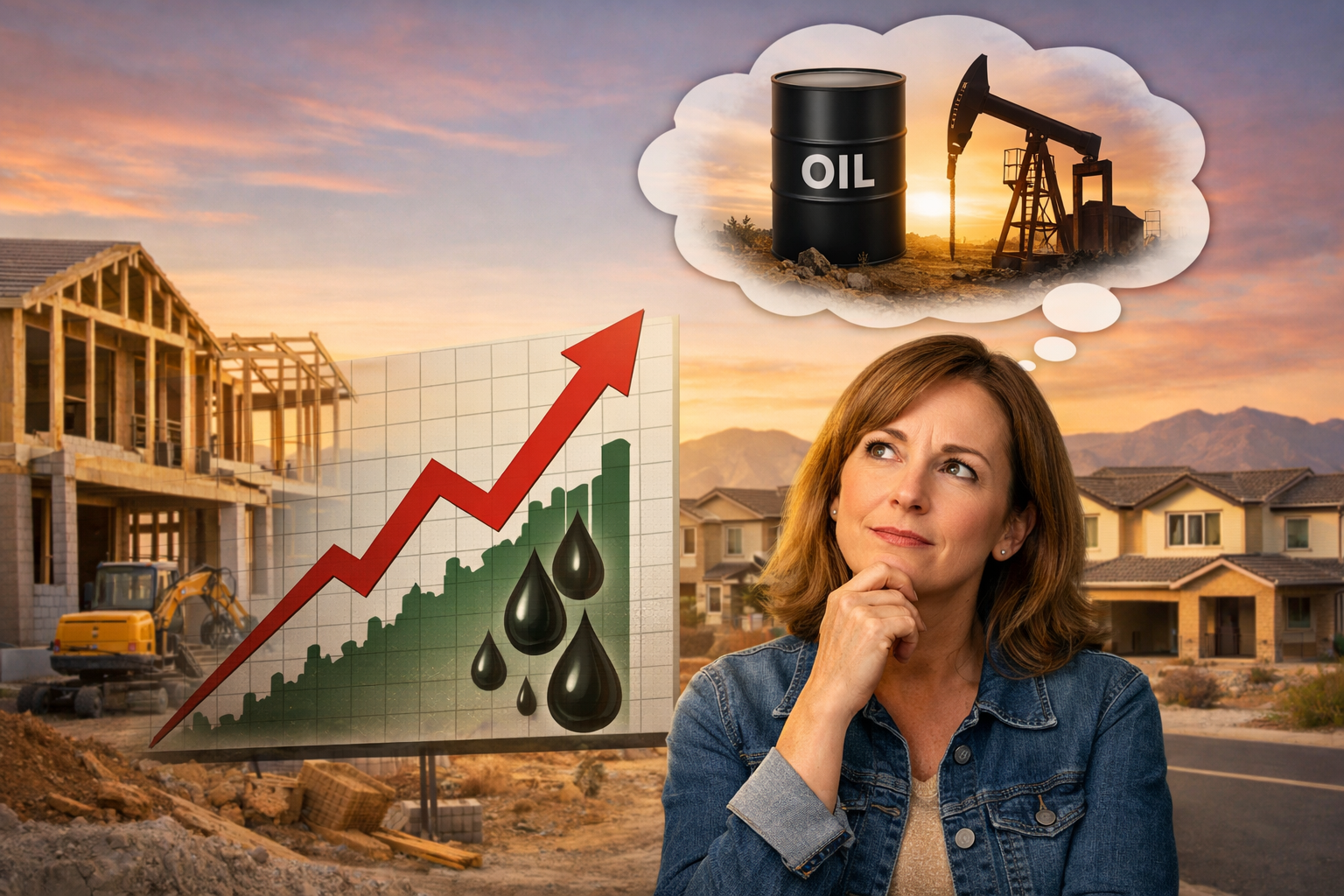
Why Oil Prices Are Back in the Conversation
Over the past several weeks, oil prices have moved higher as global tensions have increased. That tends to get attention quickly, especially when it shows up at the gas pump.
A common question that follows is a reasonable one:
Does this actually affect housing, or is it unrelated?
The connection is real, but it doesn’t happen all at once. It moves in stages, and understanding those stages can make it easier to see what may change—and what may not—over the next 6 to 12 months.
Where Oil Shows Up in Homebuilding (More Than Most People Realize)
When people think about oil, they usually think about fuel. In housing, it goes much further than that.
Oil is part of the production process for several key building materials:
- Plastics used in plumbing (PVC pipes), insulation, and sealants
- Asphalt used in roofing and road development
- Glass production, which requires significant energy input
- Fiber optics and wiring materials used in modern homes
- Transportation of nearly every material to the job site
According to the National Association of Home Builders, building materials and energy-related costs are closely tied, and fluctuations in energy prices can influence overall construction expenses (https://www.nahb.org/advocacy/top-priorities/building-materials-trade-policy/material-costs).
The U.S. Energy Information Administration also tracks how petroleum products are used across manufacturing sectors, including construction inputs (https://www.eia.gov/energyexplained/oil-and-petroleum-products/use-of-oil.php).
What this means:
Oil doesn’t just affect one part of the process—it touches both the materials themselves and the cost to produce and deliver them.
Timing Matters: Why You Don’t Always See Immediate Price Changes
Even when oil prices move quickly, housing costs usually don’t react the same way.
There are a few reasons for that:
- Builders often purchase materials months in advance
- Existing inventory may have been built with lower-cost inputs
- Supply contracts can delay price adjustments
Because of this, the impact tends to show up in phases:
- Short-term (0–3 months): Minimal visible change
- Mid-term (3–9 months): Cost pressures begin to surface
- Longer-term (9–12+ months): Pricing or incentive adjustments become more noticeable
This is one of the reasons housing trends can feel disconnected from headlines in the moment.
How Higher Material Costs Can Influence Home Prices
When construction costs increase, builders have a few different ways to respond.
They may:
- Adjust base home prices upward
- Reduce incentives, such as closing cost assistance or rate buydowns
- Limit upgrades or include fewer features at the same price point
In some cases, builders choose not to raise prices immediately. Instead, they adjust incentives, which can still affect your overall cost.
For resale homes, the effect is more indirect. If it becomes more expensive to build a new home, that can place a subtle floor under existing home values.
What this means:
Prices don’t always rise in a straight line—but affordability can still shift in less obvious ways.
The Bigger Link: Oil Prices, Inflation, and Interest Rates
This is where the conversation becomes more important for buyers.
Higher oil prices can contribute to broader inflation. Energy is part of the Consumer Price Index tracked by the Bureau of Labor Statistics (https://www.bls.gov/cpi/), and increases in energy costs can ripple through transportation, goods, and services.
When inflation rises, the Federal Reserve may adjust monetary policy in response (https://www.federalreserve.gov/monetarypolicy.htm).
Mortgage rates are influenced by inflation expectations and bond markets. Freddie Mac tracks weekly mortgage rate trends, which often move in response to those expectations (https://www.freddiemac.com/pmms).
What this means for you:
Even if home prices stay relatively stable, your monthly payment can change if interest rates move.
Will Builders Continue Offering Low Interest Rate Incentives?
Over the past few years, builders have frequently used interest rate buydowns to help buyers manage affordability.
Those incentives are not guaranteed to stay the same.
Builders balance several factors:
- Cost of construction
- Demand from buyers
- Financing conditions
If costs rise, builders may become more selective about incentives. In some cases, they may shift away from aggressive rate buydowns and instead adjust pricing or offer different concessions.
NAHB builder sentiment reports have shown that incentives often change depending on cost pressures and market conditions (https://www.nahb.org/news-and-economics).
What This Could Look Like Over the Next 6–12 Months
Rather than trying to predict a single outcome, it may be more helpful to look at a few possible directions.
If oil prices stabilize:
- Material costs may level out
- Builders may continue offering incentives
- Mortgage rates may remain within a relatively steady range
If oil prices continue rising:
- Construction costs could increase gradually
- Builder incentives may become more limited
- Interest rates could remain sensitive to inflation trends
In either case, changes tend to happen over time—not overnight.
What Buyers Can Do With This Information
If you’re planning a move, it’s understandable to feel like there are a lot of moving parts right now.
Here’s a simple way to think about it:
Focus on what affects you most directly
That usually comes down to your monthly payment, not just the home price.
Compare your options
- New construction vs. resale
- Builder incentives vs. market pricing
- Timing your purchase vs. locking in a rate
Stay flexible with your timeline
Markets adjust gradually. Having a plan can make those adjustments easier to navigate.
A Steady Approach Matters More Than Headlines
It’s easy for big economic headlines to create uncertainty.
In practice, housing tends to adjust in steps. Costs, rates, and incentives shift over time, not all at once.
Understanding how those pieces connect can help you make decisions that feel steady and well-informed, rather than reactive.
If you’d like help thinking through how this could affect your timeline or options here in Tucson, I’m always happy to talk through it with you.

Tom Krieger
| The TJK Team - Realty Executives Arizona Territory
or another way