
Categories
Southern Arizona DevelopmentPublished September 28, 2026
How Infrastructure, Employment, and Population Trends Are Shaping Southern Arizona

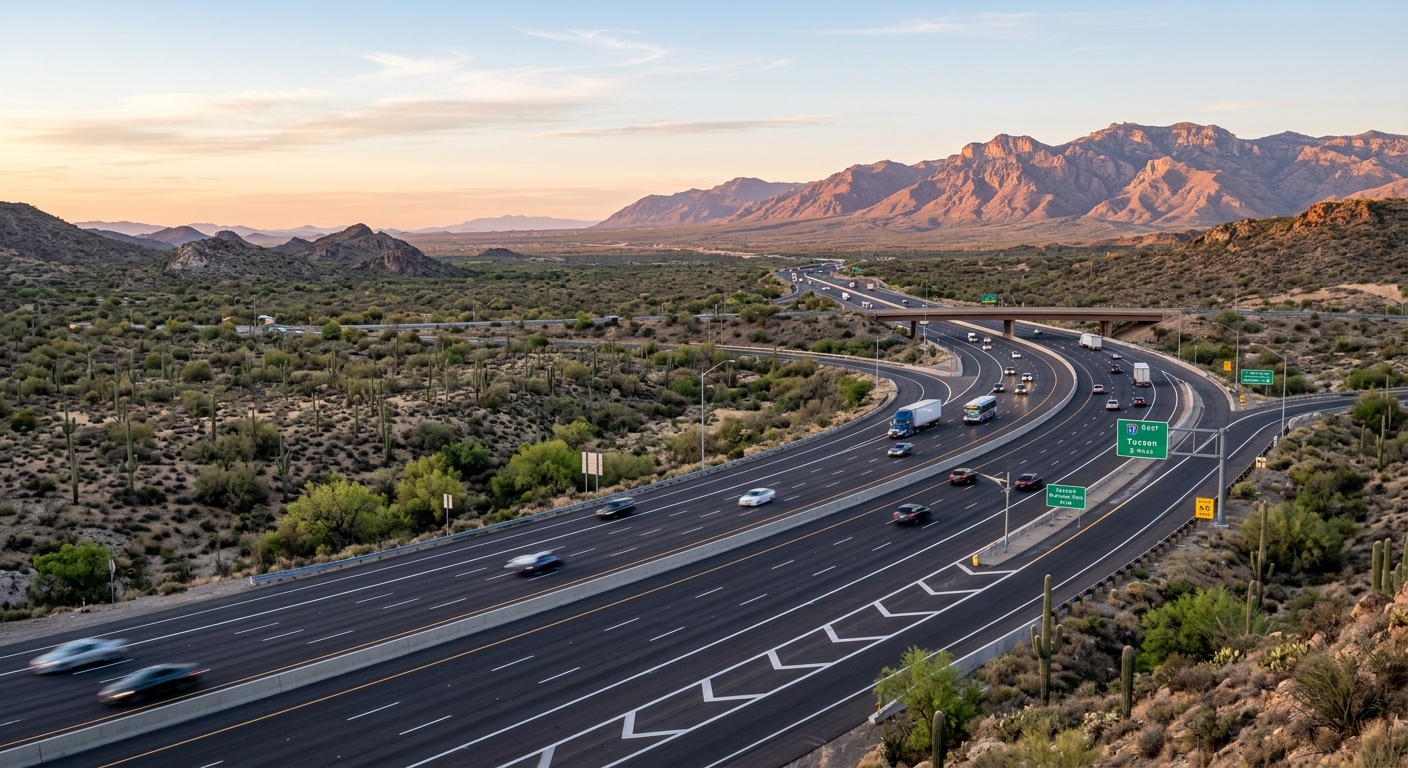
Southern Arizona’s growth trajectory is shifting from rapid expansion to a structured, long-term regional framework. Driven by shifting demographics, major infrastructure projects, evolving housing demands, and a diversifying economy, Pima County and its surrounding communities are preparing for sustainable long-term development. Understanding these shifting dynamics helps residents, buyers, and local business owners make sense of where the region is headed over the coming decades.
Long-Term Development Plans & Regional Frameworks
Regional planning in Southern Arizona centers on long-term sustainability, land-use efficiency, and economic resilience. Local municipalities and regional planning bodies—such as the Pima Association of Governments (PAG) and the Regional Transportation Authority (RTA)—collaborate to balance urban infill with outward development.
- Pima County & City of Tucson Comprehensive Plans: Guidance documents like Pima County Comprehensive Plan and PAG Long-Range Transportation Plan focus on directing growth toward designated corridor areas while preserving sensitive desert ecosystems, water resources, and open spaces.
- Northwest Expansion: Towns such as Marana and Oro Valley continue to execute multi-decade master plans that integrate commercial centers, residential neighborhoods, and municipal infrastructure.
- Southeast Growth: Communities like Vail, Sahuarita, and the Rita Ranch area are experiencing coordinated planning efforts to support expanded residential demand near industrial and technology hubs.
Transportation & Infrastructure Investments
Transportation infrastructure remains a foundational pillar for Southern Arizona’s long-term expansion, ensuring efficient movement of commuters, freight, and trade.
- Regional Transportation Authority (RTA) Initiatives: Long-term funding plans continue to deliver critical roadway widenings, intersection improvements, safety enhancements, and public transit expansions across the metro area.
- Interstate 11 (I-11) Corridor: The proposed I-11 corridor concept aims to establish a high-capacity trade route connecting Mexico through Arizona to Las Vegas and beyond, positioning Southern Arizona as a central inland trade hub.
- Local Corridor Upgrades: Ongoing improvements to major arterials, including Interstate 10 widenings, Sonoran Corridor planning (linking I-10 and I-19 near the Tucson International Airport), and east-west roadway expansions, aim to reduce transit times and support logistics hubs.
Population Growth & Demographic Trends
Southern Arizona continues to draw new residents due to its relatively accessible cost of living, outdoor lifestyle, and steady job market expansion.
- Steady In-Migration: According to projections from the Arizona Office of Economic Opportunity and local regional planning agencies, Pima County maintains steady, manageable population increases rather than unsustainable spikes, allowing infrastructure planning to keep pace.
- Demographic Inflow: While long popular with retirees, Southern Arizona is increasingly attracting working-age professionals, remote workers, and young families drawn by expanding technology, aerospace, and healthcare sectors.
- Regional Distribution: Growth is noticeably distributed into suburban and outer-ring communities, with Marana, Sahuarita, and unincorporated Pima County absorbing a significant portion of new residential expansion.
Employment Drivers & Economic Outlook
Southern Arizona's economic foundation continues to diversify beyond its historical bases of higher education, government, and tourism.
- Aerospace & Defense: Anchor employers such as Raytheon Missiles & Defense, Davis-Monthan Air Force Base, and associated supply-chain contractors continue to drive high-tech engineering and manufacturing employment.
- Bioscience & Healthcare: Tucson’s bioscience sector—supported by the University of Arizona, major hospital networks, and biotech incubators—is establishing the region as a competitive southwest innovation hub.
- Logistics & Renewable Energy: The region's proximity to the international border and major freight corridors fuels growth in logistics, warehousing, advanced manufacturing, and solar energy development.
Housing Trends & Residential Supply
To support population growth and changing household dynamics, Southern Arizona's housing market is adapting across both single-family resale and new construction sectors.
- Master-Planned Communities: New residential construction remains concentrated in master-planned developments in Marana, Vail, and Sahuarita, offering community amenities, modern energy standards, and integrated infrastructure.
- Infill & Higher Density: Within core Tucson, urban infill projects, transit-oriented developments, and accessory dwelling units (ADUs) are expanding options for higher-density living.
- Inventory & Affordability: Balancing housing supply with demand remains a priority for regional builders and planners. Efforts to streamline permitting and diversify housing types aim to preserve relative affordability compared to larger western metro areas.
Frequently Asked Questions
What are the primary drivers of growth in Southern Arizona? Population growth in Southern Arizona is primarily driven by steady job expansion in high-tech industries (aerospace, defense, bioscience), a favorable cost of living relative to neighboring states, and continuous investment in regional trade and transportation corridors.
Where is most of the new residential development occurring in the Tucson area? The majority of new master-planned residential construction is located in outer-ring communities, including Marana and Oro Valley to the northwest, and Vail, Rita Ranch, and Sahuarita to the east and south.
How does Southern Arizona plan for water sustainability as it grows? Long-term regional planning relies on active groundwater management, reclaimed water utilization, conservation policies, and state-mandated assured water supply requirements for new residential subdivisions.
What is the Sonoran Corridor project? The Sonoran Corridor is a planned transportation link designed to connect Interstate 10 and Interstate 19 south of the Tucson International Airport. It aims to streamline freight movement, reduce local traffic congestion, and support surrounding economic development zones.
Sources & Additional Resources
City of Tucson Planning and Development Services
Town of Marana Development Services
Pima Association of Governments (PAG)
Regional Transportation Authority (RTA)
Arizona Office of Economic Opportunity

Tom Krieger
| The TJK Team - Realty Executives Arizona Territory
or another way