
Categories
Home SellingPublished January 21, 2026
How Appraisers Value Homes When New Construction and Older Homes Compete Side by Side in Tucson, Marana, and Vail

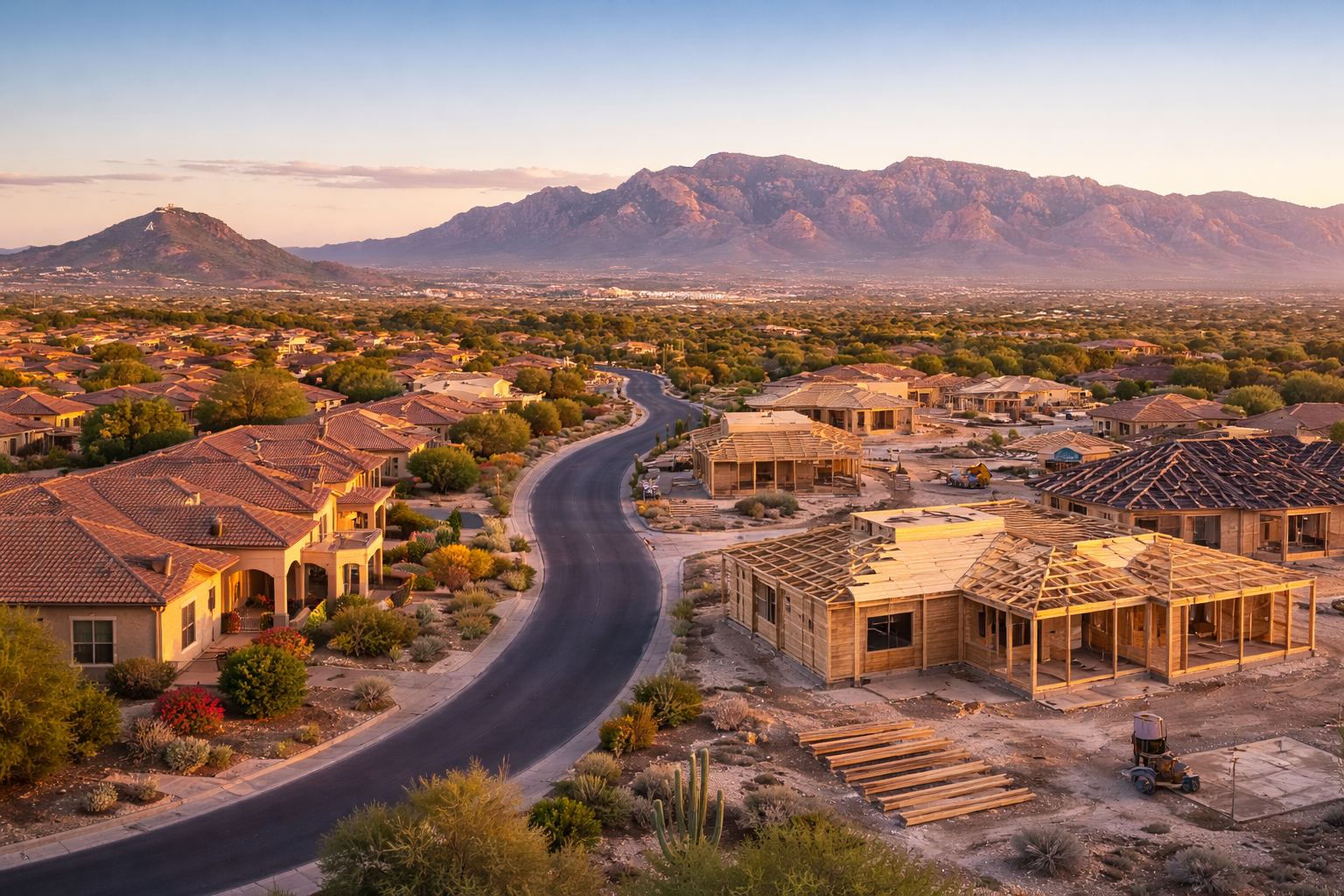
How Appraisers Value Homes When New Construction and Older Homes Compete Side by Side in Tucson, Marana, and Vail
Why This Question Comes Up So Often
If you’re looking at homes in Tucson, Marana, or Vail right now, there’s a good chance you’re seeing something that feels confusing at first. Brand-new homes with builder incentives are sitting right alongside resale homes that are 10, 15, or even 25 years old. Prices don’t always line up the way people expect. And when an appraisal comes in, it can raise more questions than answers.
Buyers often ask why a new home didn’t appraise at the contract price. Sellers wonder why nearby new construction didn’t automatically lift their value. Both reactions are understandable. Appraisals can feel unclear unless you understand what appraisers are actually required to look at — and what they must ignore.
This article explains how residential appraisers evaluate value in mixed-age neighborhoods across Southern Arizona, including how incentives are handled and why resale and new construction don’t always line up on paper.
How Residential Appraisals Actually Work (Plain English)
A residential appraisal is an independent opinion of value designed to protect the lender, not to justify a contract price. Appraisers are required to support their conclusions using **closed sales**, not list prices, not builder marketing materials, and not future expectations.
According to Fannie Mae’s Selling Guide, appraisers must analyze recent comparable sales and make adjustments based on market-supported differences such as age, condition, location, and concessions. They cannot simply “hit the number” needed for a transaction to move forward.
Source: https://singlefamily.fanniemae.com/originating-underwriting/appraisal-underwriting
Appraisers also define a **competitive market area**, meaning homes a typical buyer would reasonably consider as alternatives. In neighborhoods where new construction and resale homes exist side by side, both may be included — but they are not treated as identical.
**Q: Does an appraiser work for the buyer, seller, or builder?**
**A:** No. Appraisers are independent and work on behalf of the lender. Their role is to measure market-supported value, not to help a transaction succeed.
Why New Construction Creates Appraisal Challenges
New construction pricing is driven by a different model than resale housing. Builders price homes based on construction costs, absorption rates, competition within their own projects, and incentive flexibility. Appraisers, by contrast, must rely on **documented closed transactions**.
When incentives are used instead of price reductions, the contract price may not reflect the net economic value of the home. Freddie Mac’s appraisal guidance requires appraisers to consider whether concessions influence the reported sale price.
Source: https://guide.freddiemac.com/app/guide/section/5601.9
This difference is why a brand-new home can occasionally appraise below the contract price, even when buyer demand feels strong.
**Q: Why didn’t my new construction home appraise at the contract price?**
**A:** Because appraisers must rely on prior closed sales. If incentives reduced the buyer’s net cost, the appraiser may need to reflect that in the value conclusion.
Builder Incentives and How Appraisers Treat Them
Builder incentives are common throughout Tucson, Marana, and Vail and may include interest rate buydowns, closing cost credits, or upgrades. While these benefits matter to buyers, lenders require appraisers to determine whether incentives function as a form of price concession.
Fannie Mae and Freddie Mac both require concessions to be analyzed when they are significant enough to affect market value.
Sources:
https://singlefamily.fanniemae.com/originating-underwriting/appraisal-underwriting
https://guide.freddiemac.com/app/guide/section/5601.9
**Q: Do builder incentives lower appraised value?**
**A:** Not automatically. However, if incentives materially affect the buyer’s net price, the appraiser may need to adjust the value accordingly.
Resale Homes vs. New Homes: Apples, Oranges, and Adjustments
When appraisers compare resale homes to new construction, they make adjustments for differences such as age, condition, lot characteristics, and effective age. A 15-year-old home that has been well maintained or updated may compete favorably with new construction in certain market segments.
HUD appraisal guidance also emphasizes market reaction over age alone, particularly for FHA-insured loans.
Source: https://www.hud.gov/program_offices/housing/sfh/handbook_4000-1
**Q: Can a well-updated resale home appraise higher than new construction?**
**A:** In some cases, yes. Appraisers measure how buyers respond in the market, not just how new a home is.
What’s Happening Right Now in Marana, Vail, and Tucson
Across Southern Arizona, resale homes still provide the majority of closed comparable sales, even in areas with active new construction. In newer parts of Marana and Vail, resale data can be thinner, which may lead appraisers to take a more conservative approach. In established Tucson neighborhoods, deeper resale data often provides more valuation support.
Public housing data from the U.S. Census and Pima County supports these patterns by showing a wide range of housing ages across the region.
Sources:
https://www.census.gov/programs-surveys/acs
https://www.asr.pima.gov
**Q: Are appraisers seeing enough resale data in new construction-heavy areas?**
**A:** Sometimes. When data is limited, appraisers must work within stricter guidelines, which can limit value conclusions.
How Major Builders Influence the Appraisal Conversation
Builders such as Lennar, KB Homes, Meritage, Pulte Homes, Richmond American, and Century Communities operate at scale throughout Southern Arizona. Appraisers do not evaluate brand reputation. Instead, they observe patterns such as pricing consistency, incentive usage, and the volume of closed sales.
Public investor disclosures help explain why incentives are used, particularly in changing interest-rate environments.
Sources (examples):
https://www.lennar.com/investor-relations
https://investor.kbhome.com
https://investors.meritagehomes.com
https://investors.pultegroupinc.com
https://www.richmondamerican.com/company/investors
https://investors.centurycommunities.com
**Q: Do appraisers treat some builders differently than others?**
**A:** No. Appraisers rely on closed sales data and market behavior, not brand names.
What This Means for Buyers Choosing Between New and Resale
For buyers, appraisals are not judgments about whether a home is “worth it” to you personally. They are lender risk assessments. Understanding how incentives, resale data, and timing interact can help reduce surprises and support better decision-making.
Homes.com research consistently shows that buyers weigh affordability, payment structure, and long-term suitability differently when choosing between new and resale homes.
Source: https://www.homes.com/research
What This Means for Sellers Competing With New Construction
Sellers near new developments often worry they must match builder pricing. In reality, appraisers focus on recent resale transactions, condition, and market reaction — not builder marketing strategies.
**Q: Should sellers price their homes to match new construction pricing?**
**A:** Not necessarily. Appraisals are grounded in comparable resale sales, not incentive-driven builder pricing.
Conclusion: Clear Information Creates Better Decisions
Appraisals in neighborhoods with both new construction and resale homes can feel complicated, but they follow consistent rules. When buyers and sellers understand how appraisers evaluate data, incentives, and comparable sales, the process becomes easier to navigate.
If you’d like help thinking through how this applies to your specific situation, I’m always happy to talk it through.

Tom Krieger
| The TJK Team - Realty Executives Arizona Territory
or another way