
Categories
Southern Arizona DevelopmentPublished August 31, 2026
Southern Arizona Development Watch: Key Growth Projects in 2026

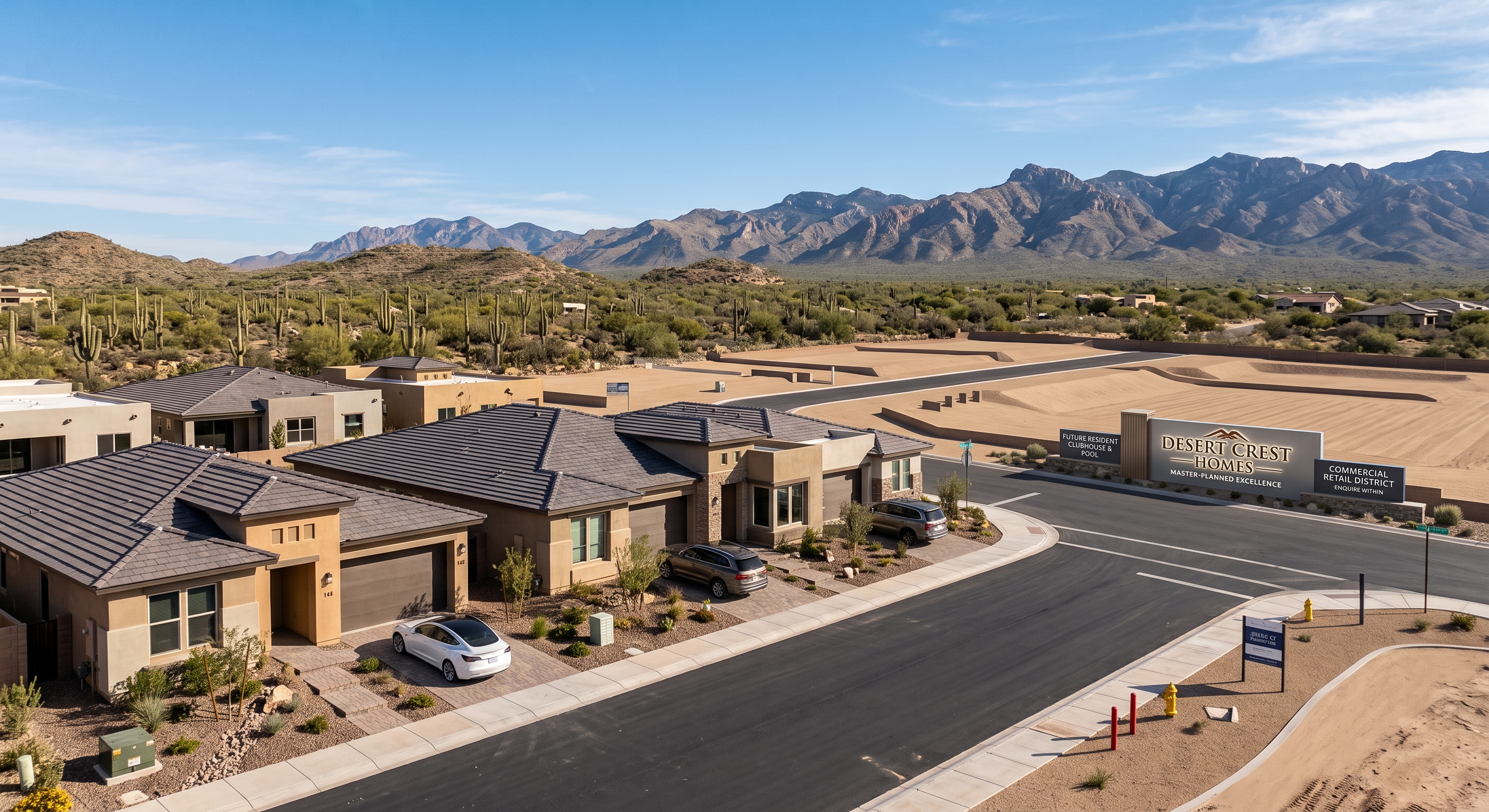
Southern Arizona’s real estate landscape continues to evolve rapidly as 2026 unfolds. Driven by steady population migration, industrial expansion, and commercial investment, communities across Pima County—from Marana and Oro Valley to Sahuarita and Tucson proper—are seeing significant infrastructure, retail, and residential activity.
Keeping track of active construction and long-term land development helps current homeowners, relocating families, and business owners better understand neighborhood trends, future commuting corridors, and local economic shifts.
Below is an educational overview of the major development categories shaping Southern Arizona today.
Largest Active Developments & Master-Planned Communities
Master-planned communities (MPCs) account for a major portion of residential growth in Pima County, combining long-term housing density with planned parks, commercial centers, and transportation improvements.
Northwest Corridor (Marana & Dove Mountain)
- Gladden Farms & Star Pass Area Expansion: Marana remains one of the fastest-growing municipalities in Arizona. Continued expansion in northern Marana includes ongoing residential build-outs paired with newly dedicated town parks and elementary school expansions.
- Dove Mountain & Tortolita Foothills: Higher-end master-planned phases continue along the foothill corridors, integrating commercial services near Tangelo Park and Moore Road to reduce commute times for daily necessities.
East & Southeast Corridor (Vail & Houghton Road Corridor)
- Rocking K: Located at the base of the Rincon Mountains near Saguaro National Park East, Rocking K continues its multi-phase residential deployment. The community design emphasizes preserved open space alongside integrated trail networks.
- Houghton Road Master Plan: Infrastructure widening along Houghton Road has unlocked extensive residential and mixed-use commercial parcels from Golf Links Road down to Interstate 10.
South Corridor (Sahuarita & Green Valley)
- Rancho Sahuarita: Phase-driven construction persists in the south valley, focusing on medium-density single-family housing, local trails, and expanding health-service facilities along Sahuarita Road.
Employment Projects & Industrial Growth
Southern Arizona's job market continues to shift beyond traditional service sectors toward logistics, aerospace, defense, and advanced manufacturing. Key employment infrastructure hubs include:
- Pima County Aerospace, Defense, and Technology Business Park: Located near Tucson International Airport and Raytheon Missiles & Defense, this sector remains a central focus for high-tech manufacturing and defense-related supply chain facilities.
- Port of Tucson & Logistics Hubs: Positioned along Interstate 10 and the Union Pacific Railroad, expanded distribution centers continue to absorb industrial acreage, leveraging Southern Arizona's position as a trade corridor connecting Mexico and the Southwest.
- Innovation Park (Oro Valley): Oro Valley’s primary bioscience and high-tech hub continues to attract investment in medical technology, research, and specialized office facilities near Innovation Park Drive and Tangerine Road.
Commercial Growth & Retail Updates
Commercial development in 2026 is heavily focused on "neighborhood-service" commercial hubs—placing grocery stores, healthcare clinics, dining, and daily services directly adjacent to large residential expansions.
| Regional Submarket |
Primary Retail & Commercial Focus |
Notable Activity / Infrastructure Focus |
|---|---|---|
| Marana (Cortaro & Ina Corridors) |
Infill retail, quick-service dining, and vehicle service hubs. |
Redevelopment of older commercial plazas near I-10; expanding logistics retail. |
| Tangerine Road Corridor |
Mixed-use commercial centers serving Marana and Oro Valley. |
Healthcare clinics, neighborhood grocery anchors, and local retail services. |
| East Tucson / Vail |
Houghton Town Center & Mary Ann Cleveland Way. |
Retail footprint expansions, medical office spaces, and localized dining options. |
| Midtown / Central Tucson |
Adaptive reuse of commercial buildings and infill projects. |
Modernizing older shopping centers; converting commercial space to mixed-use. |
Residential Housing Trends
The mix of new residential construction across Pima County reflects changing buyer demographics, interest rate environments, and land costs:
- Single-Family Detached Homes: Remains the predominant choice in master-planned communities across Marana, Sahuarita, and Vail.
- Build-to-Rent (BTR) Communities: Single-family rental neighborhoods have become a significant secondary housing option across Pima County, offering detached living without long-term mortgage commitments.
- Infill & Multi-Family Units: Central Tucson and areas near the University of Arizona continue to prioritize higher-density apartments and townhomes to optimize existing utility grid connections and public transit routes.
Frequently Asked Questions
How do I check if a proposed development is approved near my neighborhood?
Development proposals are tracked through local municipal planning departments. Pima County, the City of Tucson, the Town of Marana, and the Town of Oro Valley all maintain public GIS mapping portals and agendas for their Planning and Zoning Commissions, where public hearings are announced before zoning changes or site plans are approved.
What is the difference between a master-planned community and a standard subdivision?
A standard subdivision typically consists of a single homebuilder constructing a set number of homes on a single tract of land. A master-planned community covers a much larger geographic area, often spans multiple decades of development, involves multiple homebuilders, and integrates long-term land allocations for commercial retail, schools, parks, and major road infrastructure.
How does new commercial development impact local property infrastructure?
New developments are required to address their impact on local services through developer impact fees and infrastructure agreements. These contributions help fund off-site road widening, traffic signal installations, sewer line connections, and public safety coverage needed to support the added traffic and population.
Sources & Additional Resources
Town of Marana Development Services
Town of Oro Valley Community Development
City of Tucson Planning & Development Services
Pima County Development Services
Sun Corridor Inc. Regional Economic Development

Tom Krieger
| The TJK Team - Realty Executives Arizona Territory
or another way