
Categories
Southern Arizona DevelopmentPublished November 25, 2026
Why Businesses Keep Choosing Southern Arizona: A Look Back at 2026

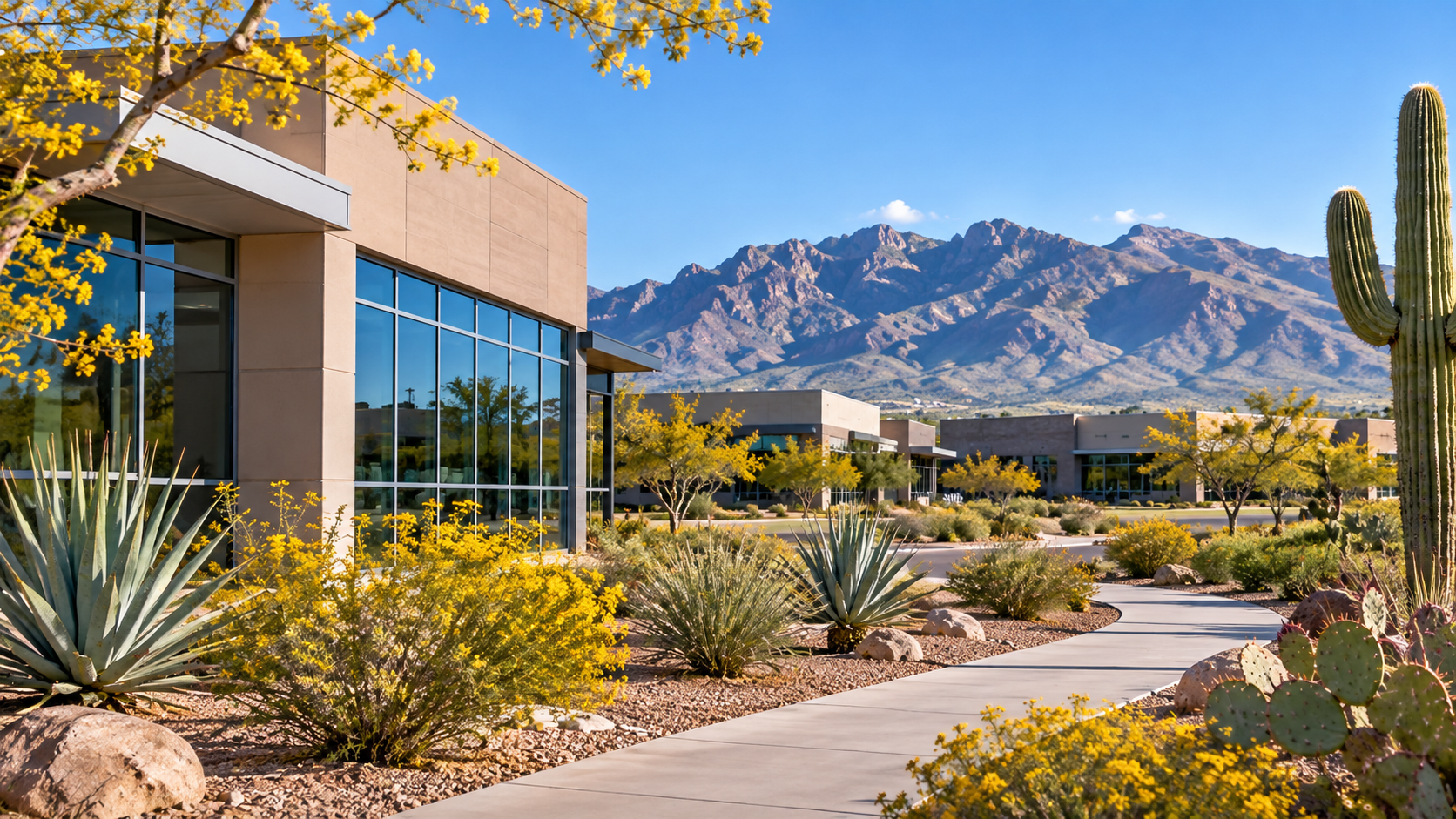
When you hear about a company expanding in Tucson or a new workforce training facility opening, it's easy to focus on the headline.
But I think the more useful question is: What's actually changing in Southern Arizona, and what do the numbers tell us?
As we approach the end of 2026, there are some developments worth paying attention to. We've seen new investments in workforce training, continued activity in aerospace and advanced manufacturing, and updated employment and population figures that help put the region's economy in perspective.
We've also seen some numbers that deserve a closer look rather than a victory lap.
That's what I want to cover here. Not predictions about where the economy or housing market is headed, but a practical review of what happened in 2026, what the official data shows, and what I'll be watching as we move into 2027.
What Were Southern Arizona's Biggest Economic Development Wins in 2026?
Southern Arizona's documented economic development milestones in 2026 included a semiconductor research facility at the University of Arizona and a new advanced-manufacturing training facility at Pima Community College. State economic development reporting also identified projects in Tucson, Marana, and Cochise County. These developments demonstrate business and workforce activity, although announcements do not necessarily represent completed hiring or investment.
University of Arizona Semiconductor Nano Fabrication Center
In February 2026, the University of Arizona and Arizona Commerce Authority celebrated the launch of a $35.5 million semiconductor nano fabrication center in Tucson.
According to the Arizona Commerce Authority's February announcement, the project expands semiconductor cleanroom capabilities and supports student training, faculty research, and industry collaboration.
Why does that matter?
Semiconductor manufacturing requires specialized equipment, technical expertise, and a trained workforce. A research and training facility helps develop those capabilities locally.
It doesn't mean Tucson suddenly gained thousands of semiconductor jobs. The value of this project is more specific: it provides infrastructure for education and research in a technically demanding industry.
That's an important distinction.
Pima Community College's Future48 Workforce Accelerator
Another milestone came in March, when Pima Community College opened its Flexible Industry Training Lab, also known as the FIT Lab.
The Arizona Commerce Authority's announcement describes the facility as an advanced-manufacturing training center designed to respond to employer workforce needs.
For businesses considering an expansion, access to trained employees is one part of the decision.
Facilities like this can help connect technical education with the skills employers are seeking.
Of course, opening a training center isn't the same thing as filling jobs. The results worth monitoring are training participation, employer partnerships, and eventual employment outcomes.
Business Expansion Across the Region
The Arizona Commerce Authority's fiscal year 2026 report identified business expansion activity in multiple Arizona communities, including Tucson, Marana, and Cochise County.
That matters because Southern Arizona's economy extends beyond Tucson's city limits.
Manufacturing, aviation, logistics, research, and related services operate across different parts of the region.
One example worth noting is Ascent Aviation Services in Marana. Its two new aircraft maintenance hangars opened in December 2025, rather than 2026. The company's expansion announcement described a $70 million investment in its Pinal Air Park operations.
The project is relevant to the region's current aviation infrastructure, but it shouldn't be counted as a new 2026 opening.
Tom's takeaway: When evaluating an economic development announcement, look for three things: what was announced, what has actually opened, and whether the reported jobs are projected or already filled.
How Is Southern Arizona's Population Changing?
Official Census estimates show that Pima County's population increased between the 2020 Census and July 2025, while Tucson's city population also grew over that period. The latest available estimates are not 2026 population counts. Population change can provide useful context for business planning, but it does not establish future demand or housing price trends.
What the Census Numbers Show
According to the U.S. Census Bureau's Pima County QuickFacts, the county's estimated population was 1,074,685 on July 1, 2025.
That's approximately 3.0% higher than its April 2020 estimates base.
For Tucson itself, the Census Bureau reported a July 2025 population estimate of 548,371, approximately 1.1% above its April 2020 estimates base.
Those figures tell us that both areas had more residents than in 2020.
But there's another detail worth noting: the Census Bureau's Pima County estimate for July 2025 is lower than its published July 2024 estimate from the earlier vintage.
That illustrates why it's important to look at the specific reporting period instead of assuming population growth happens at the same pace every year.
Why Businesses Pay Attention to Population
Population is one factor businesses may evaluate when considering a location.
Retailers and service providers might examine the number of potential customers. Employers may look at the available workforce. Companies also consider transportation, infrastructure, operating costs, and proximity to suppliers.
Still, a growing population doesn't automatically make every business location successful.
A company's actual decision depends on its industry, customers, employees, and financial requirements.
For homeowners, population figures are useful regional context. They don't tell us what an individual home is worth or what its price will do next year.
What Do Employment Trends Tell Us About Tucson's Economy?
Federal labor data shows a mixed employment picture for the Tucson metropolitan area in 2026. Preliminary October payroll employment was higher than a year earlier, but industry results varied. Education and health services showed gains, while manufacturing and leisure and hospitality recorded year-over-year declines. Employment statistics should be evaluated by reporting month, industry, and data type.
Tucson Employment Snapshot
The U.S. Bureau of Labor Statistics' Tucson Economy at a Glance, updated with data extracted November 20, 2026, provides a useful snapshot.
| Economic Indicator | Latest Available Figure | Reporting Period |
|---|---|---|
| Tucson metro nonfarm payroll jobs | 410,200 | October 2026, preliminary |
| Annual change in nonfarm payroll jobs | +0.9% | October 2025–October 2026, preliminary |
| Tucson metro unemployment rate | 4.8% | September 2026, preliminary; not seasonally adjusted |
| Education and health services employment change | +4.2% | October 2025–October 2026, preliminary |
| Professional and business services employment change | +2.1% | October 2025–October 2026, preliminary |
| Manufacturing employment change | −0.7% | October 2025–October 2026, preliminary |
| Leisure and hospitality employment change | −3.1% | October 2025–October 2026, preliminary |
Source: U.S. Bureau of Labor Statistics, Tucson Economy at a Glance. Payroll employment measures jobs; the unemployment rate comes from a separate labor-force survey. Figures are subject to revision.
Why the Industry Breakdown Matters
A single employment growth percentage doesn't tell the whole story.
For example, education and health services showed a year-over-year increase in October, while leisure and hospitality employment declined.
Those differences matter because businesses depend on different types of workers, customers, and economic conditions.
I also wouldn't use one month's employment data to make a broad claim about the strength of the entire Southern Arizona economy.
Monthly numbers can change, and preliminary estimates may be revised.
The better approach is to follow several reporting periods and pay attention to which industries are adding or losing jobs.
Announced Jobs Aren't the Same as Payroll Jobs
This is especially important when reading economic development announcements.
A company might announce plans to create 200 jobs over several years. That doesn't mean 200 people have already been hired.
The BLS payroll figures, meanwhile, measure jobs reported through its employment survey and estimates.
Those are different types of information, and they shouldn't be added together.
Tom's takeaway: I pay more attention to sustained employment trends and actual operating milestones than to a large projected job number in a press release.
What Business Incentives Are Available in Southern Arizona?
Arizona offers several business incentive programs that may apply to qualifying projects in Southern Arizona, including the Quality Jobs Tax Credit, Qualified Facility Tax Credit, research and development tax credits, and Foreign Trade Zone benefits. These programs have eligibility requirements, approval processes, and limitations. Their availability does not mean a particular business automatically receives financial assistance.
Quality Jobs Tax Credit
The Arizona Commerce Authority's Quality Jobs Tax Credit guidelines describe a program intended to encourage qualifying business investment and job creation.
Eligible businesses may receive up to $9,000 in state tax credits per qualifying net new job, generally distributed over three years.
But there's a catch worth understanding: businesses must meet program requirements related to job creation, investment, compensation, and other eligibility standards.
The credit isn't available simply because a business opens in Arizona.
Qualified Facility and Research Incentives
The Arizona Commerce Authority also lists a Qualified Facility Tax Credit for qualifying investments in establishing or expanding certain facilities.
Its business programs include a research and development tax credit for eligible activities conducted in Arizona.
These programs may be relevant to companies involved in manufacturing, technology, and research.
The specific benefits depend on the program rules and the company's circumstances.
Foreign Trade Zone Benefits
The Arizona Commerce Authority's Foreign Trade Zone information describes potential state property tax benefits for qualifying businesses operating in designated zones or subzones.
Again, location and eligibility matter.
A company doesn't receive those benefits merely by operating somewhere in Tucson or Pima County.
Why Incentives Matter — and Why They Aren't the Whole Story
Incentives can affect the cost of a qualifying business project.
But companies also need employees, appropriate facilities, transportation access, utilities, and customers.
A tax credit can't replace those basic operating requirements.
And from a community perspective, it's reasonable to ask what a project is expected to deliver and how those outcomes will be measured.
Tom's takeaway: Incentives are one piece of the economic development picture. They're not proof that a project will succeed, and they're not guaranteed benefits for every business.
What Should We Watch Heading Into 2027?
Looking toward 2027, the most useful indicators for Southern Arizona include whether announced projects reach operational milestones, how monthly employment figures change, and what new population estimates show. Arizona's updated Opportunity Zone designations are also scheduled to take effect in January 2027. None of these developments establishes a reliable forecast for regional growth or property values.
Follow Projects Through Their Next Milestones
For the University of Arizona's semiconductor facility and Pima Community College's FIT Lab, I'll be watching for additional information about how the facilities are being used.
That could include training programs, industry partnerships, and research activity.
For private-sector expansions, the important questions are whether construction is completed, operations begin, and announced hiring occurs.
Those milestones provide more concrete evidence than an initial announcement alone.
Watch Employment Data as It's Released
The Bureau of Labor Statistics will remain a useful source for tracking Tucson's monthly employment picture.
I would look at both total payroll employment and individual industries.
A broad regional number can conceal meaningful differences between sectors.
New Opportunity Zone Designations
One specific policy development already has a scheduled date.
According to the Arizona Commerce Authority's Opportunity Zone information, Arizona's newly approved second-generation Opportunity Zones are scheduled to take effect on January 1, 2027.
The program involves federal tax incentives associated with qualifying investments in designated areas.
That does not mean every property or business in a designated area will qualify for a benefit.
Anyone evaluating the program's tax implications should consult a qualified tax professional.
What About the 2027 Economic Outlook?
I wouldn't make a prediction based on a handful of announcements.
There are too many variables, including hiring decisions, construction schedules, business operating costs, and broader economic conditions.
What we can do is identify which projects have published milestones and monitor official data as it becomes available.
That's a more useful approach than declaring 2027 a boom year before it begins.
What Does This Mean for Southern Arizona Residents and Homeowners?
Economic development activity can help residents understand changes in local employment, infrastructure, and business services, but it does not establish how individual properties will perform. Homeowners and prospective buyers should evaluate property-specific conditions and verified local information rather than assuming business expansion or population growth will automatically increase home values.
If you own a home in Tucson or you're considering buying one, it's natural to wonder how all this economic activity connects to real estate.
The connection isn't always straightforward.
A new employer may affect commuting patterns or demand for nearby services. A training facility may create educational opportunities. Infrastructure projects may change how certain areas function.
But none of those developments guarantees that a particular neighborhood will see higher prices.
In real estate, property condition, location, comparable sales, available inventory, and individual circumstances all matter.
As agents, our role at TJK Team is to help clients understand those property-specific factors and navigate the buying or selling process.
We can also point clients toward official sources when they want to research local development.
What we shouldn't do is turn an economic development announcement into a promise about future home appreciation.
For me, that's the difference between useful local knowledge and speculation.
Frequently Asked Questions About Southern Arizona's Economy in 2026
Questions about Southern Arizona's 2026 economy often involve new business investment, population changes, job growth, incentive programs, and expectations for 2027. Official government and economic development sources provide useful answers, but the reporting periods differ. Readers should distinguish verified results from proposed projects and avoid treating economic indicators as forecasts for individual properties.
Did Southern Arizona attract new business investment in 2026?
Yes. The Arizona Commerce Authority's fiscal year 2026 report identified expansion projects in Tucson, Marana, and Cochise County. Individual project announcements should be reviewed to determine whether the investment was planned, underway, or completed.
What were some major economic development milestones in Tucson in 2026?
The University of Arizona launched a $35.5 million semiconductor nano fabrication center, and Pima Community College opened its advanced-manufacturing FIT Lab.
Is Pima County's population growing?
The Census Bureau estimates show Pima County's July 2025 population was approximately 3.0% above its April 2020 estimates base. That does not mean the population increased every individual year.
How many jobs are in the Tucson metropolitan area?
The Bureau of Labor Statistics reported approximately 410,200 nonfarm payroll jobs in October 2026, based on preliminary, not seasonally adjusted data.
Which industries gained employment in Tucson in 2026?
In preliminary October 2026 year-over-year figures, education and health services and professional and business services recorded employment gains. Other industries recorded declines.
Does Arizona offer incentives for businesses that expand?
Yes. The Arizona Commerce Authority administers or identifies several programs, including qualifying tax credits and other business assistance. Each program has specific eligibility and application requirements.
What economic developments should residents monitor in 2027?
Useful indicators include business project milestones, employment releases, new Census estimates, and the implementation of Arizona's updated Opportunity Zone designations.
Will business growth increase Tucson home values?
Not necessarily. Regional economic activity is only one part of a property's market context. It does not guarantee appreciation or determine the value of an individual home.
Final Thoughts
When I look back at Southern Arizona's economy in 2026, a few things stand out.
We saw meaningful investments in technical education and research. We saw documented business expansion activity across the region.
And we got updated population and employment data that tells a more detailed story than any single headline.
But I think it's important to keep the numbers in perspective.
A planned job isn't necessarily a filled job. A new facility doesn't automatically change the entire economy. And regional economic activity doesn't guarantee anything about future home prices.
What I do see is a region with ongoing business activity, workforce development efforts, and several measurable developments worth following.
As we head into 2027, I'll be paying attention to what gets completed, which employers actually add jobs, and what the next round of official data tells us.
That's the information that helps us understand Southern Arizona without getting ahead of the facts.
At TJK Team, we believe understanding the community is part of helping people make informed real estate decisions. Whether you're already living here or considering a move, we're always happy to help you understand the local housing process and point you toward reliable information.
This article is for general educational purposes and is not financial, tax, investment, or legal advice. Economic development announcements, employment estimates, and population figures are subject to updates and revisions. Consult qualified professionals for advice about specific financial, tax, or investment decisions.

Tom Krieger
| The TJK Team - Realty Executives Arizona Territory
or another way