
Categories
Homeowner GuidePublished July 30, 2026
The Benefits of Native Plants Around Your Home

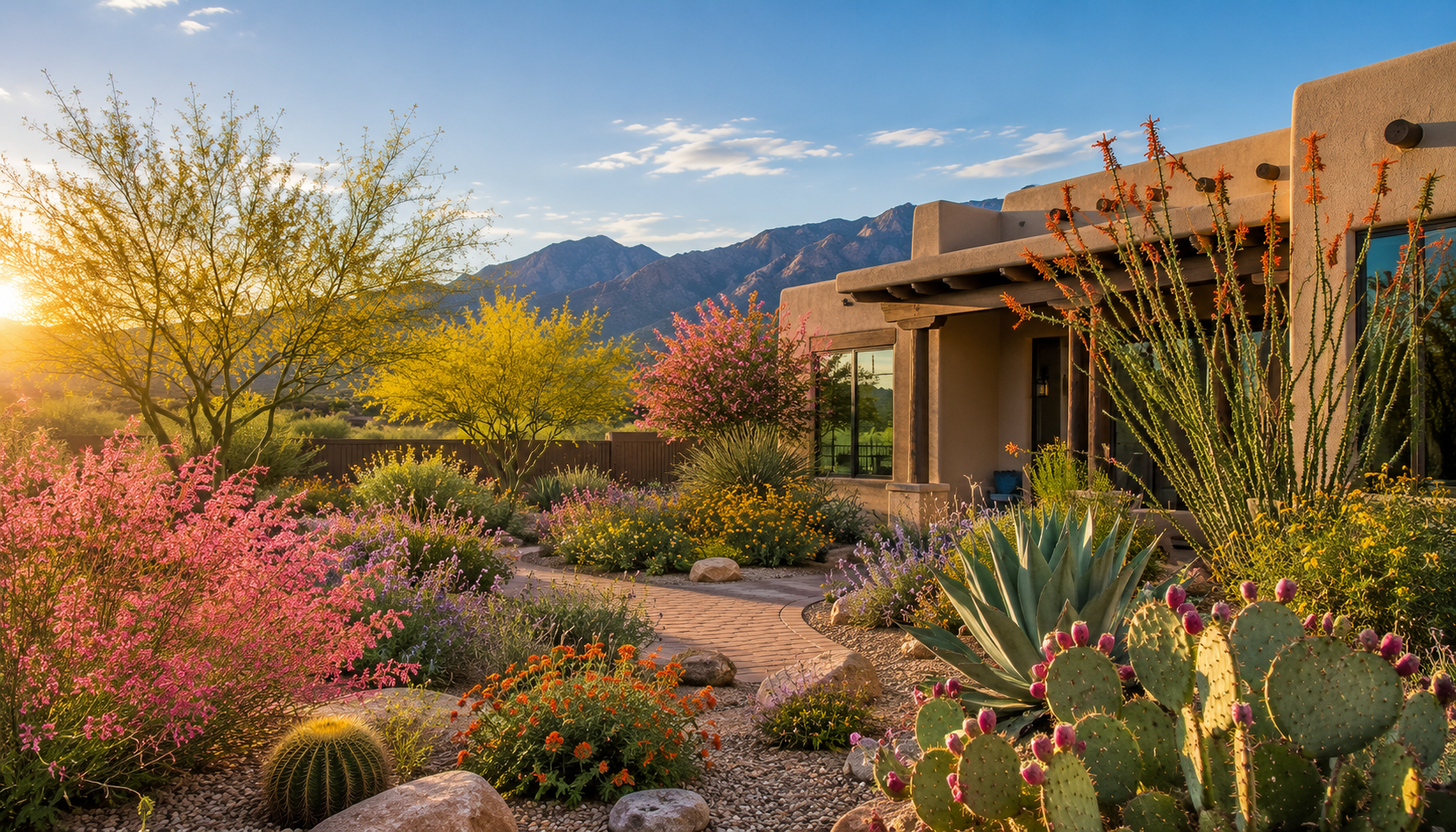
If you've spent any time exploring Southern Arizona, you've probably noticed that some of the most beautiful landscapes don't rely on lush green lawns or tropical plants. Instead, they're filled with palo verde trees, vibrant desert wildflowers, towering saguaros, and other plants that have naturally adapted to life in the Sonoran Desert.
For homeowners, choosing native plants isn't just about creating an attractive yard—it's about designing an outdoor space that works with our climate instead of against it. Native landscaping can help conserve water, support local wildlife, and often require less maintenance once established.
Whether you're planting a single tree or redesigning your entire yard, understanding the benefits of native plants can help you make informed decisions that are well suited to Southern Arizona.
What Are Native Plants?
Native plants are species that naturally occur in a particular region and have adapted over thousands of years to its climate, soils, and wildlife. In Southern Arizona, native plants are uniquely suited to the Sonoran Desert's hot summers, seasonal rainfall, and extended dry periods.
Because these plants evolved in our local environment, they're generally better equipped to handle Tucson's weather than species brought in from very different climates.
That doesn't mean every native plant thrives in every yard, but many require fewer resources to grow successfully once they've become established.
Why Native Plants Thrive in Southern Arizona
Native plants are naturally adapted to Southern Arizona's desert environment. Their ability to tolerate heat, drought, and local soil conditions often makes them a practical choice for homeowners looking to create resilient landscapes.
Unlike plants that require frequent watering or constant attention, many native species have developed deep root systems, drought tolerance, and natural defenses against our challenging climate.
Some potential advantages include:
- Lower supplemental water needs after establishment
- Better tolerance of extreme summer temperatures
- Adaptation to local soils
- Reduced need for fertilizers
- Often fewer maintenance requirements than non-native plants
While every landscape is different, choosing plants suited to the local environment can make long-term landscape care more manageable.
Benefits of Native Landscaping
Native landscaping offers environmental and practical benefits that extend beyond appearance. From conserving water to supporting pollinators, these landscapes can help homeowners create outdoor spaces that are both functional and beautiful.
| Benefit | Why It Matters |
|---|---|
| Water conservation | Many native plants require less supplemental irrigation once established. |
| Lower maintenance | Often involves less pruning, fertilizing, and ongoing care. |
| Supports pollinators | Provides nectar and habitat for bees, butterflies, and hummingbirds. |
| Climate resilience | Adapted to local weather patterns, including periods of drought. |
| Seasonal beauty | Offers changing blooms, textures, and colors throughout the year. |
| Local character | Reflects the natural beauty and identity of the Sonoran Desert. |
Native Plants Commonly Found Around Tucson
Southern Arizona is home to a remarkable variety of native plants that provide year-round interest while thriving in the Sonoran Desert climate. Homeowners often incorporate a mix of trees, shrubs, flowering perennials, and succulents to create balanced landscapes.
Some commonly used native plants include:
Palo Verde
Arizona's state tree is known for its green bark and bright yellow spring flowers that add vibrant seasonal color.
Desert Willow
Despite its name, Desert Willow isn't a true willow. It's appreciated for its colorful trumpet-shaped blooms that attract hummingbirds and pollinators.
Ironwood
A slow-growing desert tree valued for its dense canopy, spring flowers, and long lifespan.
Mesquite
Mesquite trees provide welcome shade while adapting well to desert conditions.
Brittlebush
Recognizable for its silver-gray foliage and cheerful yellow flowers that bloom in spring.
Fairy Duster
A favorite for many homeowners because of its soft pink blooms that attract hummingbirds.
Globe Mallow
Produces bright orange flowers and thrives in full sun with minimal supplemental water once established.
Penstemon
Known for colorful flower spikes that provide nectar for hummingbirds and native bees.
Agave
A striking architectural plant that adds texture and requires relatively little maintenance.
Prickly Pear
One of the Sonoran Desert's most recognizable cacti, offering colorful blooms followed by edible fruit on many varieties.
Ocotillo
Its tall, graceful stems and brilliant red flowers create dramatic visual interest each spring.
Creosote Bush
One of the desert's signature shrubs, famous for the distinctive scent that follows a summer rain.
Supporting Pollinators and Local Wildlife
Native plants play an important role in supporting healthy ecosystems by providing food, shelter, and habitat for many of Southern Arizona's birds, butterflies, bees, and other wildlife.
Because these plants evolved alongside local pollinators and animals, they naturally fit into the desert ecosystem.
Depending on the species you choose, native landscaping may help provide:
- Nectar for butterflies and native bees
- Food sources for birds
- Shelter for beneficial insects
- Habitat for hummingbirds
- Greater biodiversity in residential landscapes
Even adding a few native flowering plants can contribute to a more wildlife-friendly yard.
Things to Consider Before Planting
Thoughtful planning helps native plants thrive. Before planting, consider your property's growing conditions, available space, irrigation needs, and any neighborhood landscaping guidelines that may apply.
Before selecting plants, consider:
- Sun exposure throughout the day
- Mature height and width
- Soil drainage
- Existing irrigation systems
- HOA landscape requirements, if applicable
- Proper spacing between plants
- Watering needs during establishment
Although native plants are often lower maintenance once established, they still benefit from appropriate planting, occasional pruning, and seasonal care.
Common Misconceptions About Native Landscaping
Native landscapes are sometimes misunderstood. While they are often associated with drought tolerance, they can also provide vibrant color, seasonal blooms, and a wide variety of textures throughout the year.
Some common myths include:
"Native landscapes are just cactus."
In reality, Southern Arizona's native plant palette includes flowering shrubs, shade trees, grasses, wildflowers, and many other plant types.
"Native plants don't need maintenance."
All landscapes require some care. Native plants generally need less maintenance once established, but pruning, monitoring, and seasonal cleanup are still important.
"Water-wise landscaping looks barren."
Many native gardens feature colorful blooms, layered plantings, and year-round visual interest.
"Native plants only work in natural desert settings."
Native species can complement a variety of landscape styles, from contemporary homes to traditional Southwestern designs.
Why Native Plants Matter
Landscaping with native plants allows homeowners to create outdoor spaces that reflect Southern Arizona's unique environment while making thoughtful use of local resources.
Choosing plants that naturally thrive in the Sonoran Desert can help reduce water use, support pollinators, and create landscapes that remain attractive throughout the seasons.
Native landscaping also celebrates the distinctive beauty of our region. Rather than trying to recreate landscapes from different climates, many homeowners find that working with the desert creates outdoor spaces that feel both timeless and uniquely Southern Arizona.
Frequently Asked Questions
What are native plants?
Native plants are species that naturally occur in a region and have adapted over time to its climate, soils, and wildlife.
Do native plants require less water?
Many native plants require less supplemental irrigation after they become established, although watering needs vary by species and growing conditions.
Are native plants only cactus?
No. Southern Arizona's native plants include trees, shrubs, flowering perennials, grasses, succulents, and cacti.
Do native plants attract wildlife?
Yes. Many native plants provide food and habitat for birds, butterflies, hummingbirds, native bees, and other beneficial wildlife.
Are native landscapes maintenance-free?
No. While native landscapes often require less maintenance than traditional landscapes, they still benefit from regular care, pruning, and seasonal attention.

Tom Krieger
| The TJK Team - Realty Executives Arizona Territory
or another way