
Categories
Homeowner GuidePublished August 28, 2026
A Tucson Homeowner's Guide to Roof Types: Tile, Shingle, and Flat Roofs

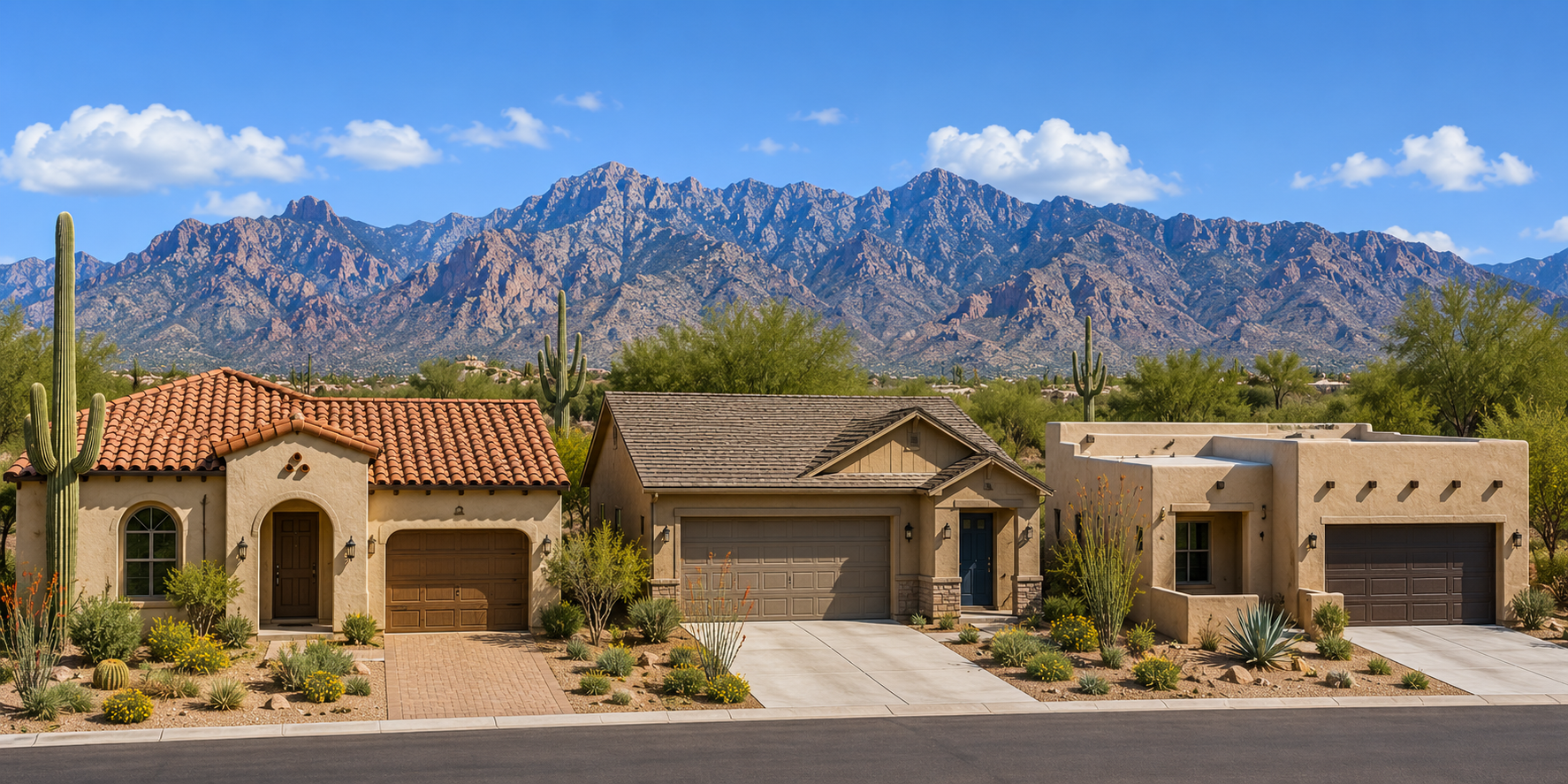
One of the things you start noticing after spending time around Tucson homes is just how many different kinds of roofs we have.
Drive through one neighborhood and you'll see rows of red or earth-toned tile roofs. A few streets away, asphalt shingles may be more common. Then you get into some of Tucson's Pueblo Revival, Territorial, adobe-inspired, or mid-century architecture and suddenly the roofline looks almost completely flat.
Each style fits into Southern Arizona housing a little differently.
But there's something homeowners should understand from the beginning:
The material you see from the street isn't necessarily the whole roof system.
A tile roof is more than its tiles. A shingle roof depends on more than the visible shingles. And what Tucson homeowners commonly call a “flat roof” usually isn't supposed to be perfectly flat at all.
The roof is an assembly of materials, flashing, penetrations, drainage features, and structural components working together to protect the home.
That's especially important in Tucson, where roofing systems have to deal with intense sunshine, high summer temperatures, wind, and periods of heavy monsoon rainfall. The National Weather Service Tucson lists normal June and July highs above 100°F, while its monsoon resources document the seasonal shift that brings thunderstorms and rainfall into Southern Arizona.
So rather than asking which Tucson roof type is “best,” I think there's a more useful question:
How does each type work, and what should homeowners understand about maintaining it?
Let's take a look.
What Roof Types Are Common on Tucson Homes?
Tucson homes commonly use tile, asphalt shingle, and low-slope roofing systems, although materials and construction vary considerably by a home's age and architectural design. Each system manages weather differently, and its condition depends on the entire roof assembly—including coverings, underlayment or membranes, flashing, penetrations, drainage, installation, maintenance, and previous repairs.
You'll find plenty of variation as you move around Tucson.
Tile is common on many Southwestern, Mediterranean-influenced, and newer homes.
Asphalt shingles appear on homes from many different periods and architectural styles.
Low-slope roofs are closely associated with some of the adobe, Pueblo Revival, Territorial, and modern designs that are part of Tucson's architectural identity.
You'll also encounter homes that combine roof systems.
For example, one portion of a house might have tile over a pitched roof while an addition or patio area uses a low-slope roofing system.
That matters because different sections of the same house may have completely different maintenance needs.
The City of Tucson adopted the 2024 International Residential Code with local amendments effective in 2026, and Pima County also identifies the 2024 building codes as current beginning January 1, 2026. Pima County Building Permit Resources
Those codes establish construction requirements, but they don't mean every existing Tucson roof was built under today's standards.
A home's age matters.
So do renovations and previous roof work.
How Do Tile Roofs Work?
A tile roof uses individual clay or concrete tiles as part of a larger sloped roofing assembly. The visible tiles help shed water and protect underlying components, but they aren't the only weather-resistant element. Underlayment, flashing, valleys, penetrations, fasteners, roof slope, and installation details all contribute to how the complete system performs.
Tile is probably one of the roof types people most strongly associate with Arizona.
And I understand why.
It works visually with a lot of Southwestern architecture, and those rows of overlapping tiles are easy to recognize.
But there's an important misconception worth clearing up:
The tiles aren't the entire roof.
There are components underneath and around them that matter just as much.
Depending on the specific roof system, those can include underlayment, flashing, fasteners, battens, valleys, and details around vents or other penetrations.
That distinction becomes particularly important when someone says, “It's a tile roof, so the roof should last a very long time.”
Maybe—but which part of the roof are we talking about?
Individual tiles and the materials beneath them aren't necessarily going to age at exactly the same rate.
That's why I prefer not to attach one universal lifespan number to a tile roof.
When evaluating one, the better question is:
What is the condition of the entire roofing system?
What Should Homeowners Watch for on Tile Roofs?
Tile-roof maintenance involves more than looking for visibly broken tiles. Homeowners and qualified roof professionals may also monitor displaced or cracked tiles, flashing, valleys, penetrations, debris accumulation, drainage paths, and the condition of underlying components when accessible. Walking on tile can damage it, so roof access should be handled appropriately.
Broken tiles are certainly worth noticing.
But they're not the only thing that matters.
Water has to move across the roof and away from vulnerable areas.
That means details around roof penetrations—such as vents, pipes, skylights, or other openings—can be important.
Valleys and flashing matter.
Drainage matters.
And the condition of materials underneath the tiles matters.
One thing I wouldn't recommend is climbing onto a tile roof just because you want a closer look.
Tiles can crack under foot traffic, and roof work creates obvious fall hazards.
From a homeowner's perspective, knowing what questions to ask is usually more useful than trying to diagnose the roof yourself.
How Are Asphalt Shingle Roofs Different?
Asphalt shingle roofs use overlapping shingles installed on a sloped roof to shed water toward the roof edges and drainage system. Shingles are only one part of the assembly; underlayment, flashing, roof decking, penetrations, ventilation, edge details, installation quality, and maintenance can all affect how the roof performs over time.
Shingles are familiar to homeowners from all over the country.
They're also easy to misunderstand because the visible surface gets most of the attention.
If a shingle is missing, curled, cracked, or visibly damaged, that's easy to spot.
But just as with tile, the visible covering isn't the entire system.
Flashing around penetrations matters.
Roof edges matter.
The condition beneath the shingles matters.
And the way the system was installed matters.
Tucson's climate adds another consideration: sun exposure.
National Weather Service climate normals show average daily highs around 100°F during June and July in Tucson. National Weather Service Tucson
A roof surface receives direct solar exposure for hours at a time, so heat and ultraviolet exposure are part of the environment roofing materials experience here.
That doesn't mean every shingle roof ages the same way.
Roof orientation, shade, material, installation, ventilation, maintenance, and other factors all play a role.
What Should Homeowners Watch for on Shingle Roofs?
Shingle roofs should be evaluated as complete systems rather than by looking at shingles alone. Visible concerns may include missing, damaged, lifted, or deteriorated shingles, while flashing, penetrations, roof edges, drainage, underlayment, ventilation, and previous repairs may also warrant attention. Property-specific conditions should be evaluated by qualified professionals.
After wind or a strong storm, shingles can be one of the easier roof coverings to inspect visually from the ground.
You might notice a section that suddenly looks different.
You might see debris.
Or you may find material on the ground after a storm.
But visual observations have limits.
A roof can look fairly normal from the sidewalk and still have areas that deserve professional evaluation.
The reverse is also true: something that looks unusual to an untrained eye isn't automatically a major defect.
That's why photographs, maintenance records, inspection reports, and qualified evaluations are more useful than guessing based on appearance alone.
What Does “Flat Roof” Actually Mean in Tucson?
What Tucson homeowners commonly call a flat roof is generally a low-slope roof designed to move water toward drains, scuppers, canales, or roof edges. Because water doesn't shed as rapidly as it does from a steeply pitched roof, drainage design, surface condition, flashing, penetrations, seams, and maintenance are especially important.
Here's one of my favorite roofing misconceptions:
A flat roof isn't necessarily flat.
At least, it shouldn't be thought of as a giant level tabletop where rainwater is expected to sit.
Low-slope roofs are designed with drainage in mind.
Depending on the home, water may move toward roof edges, scuppers, canales, or drains.
You'll see this style throughout Tucson because it works naturally with several architectural traditions associated with the Southwest.
Those clean horizontal rooflines are part of the visual language of many adobe-inspired, Pueblo Revival, Territorial, and modern homes.
But from a maintenance standpoint, low-slope roofs deserve particular attention to where the water goes.
That's especially relevant during monsoon season.
The National Weather Service Tucson explains that Southern Arizona's summer monsoon brings a seasonal increase in moisture and thunderstorms, and rainfall can vary considerably across the region.
When rain arrives quickly, a roof's drainage features need to be able to do their job.
How Do Low-Slope Roof Systems Protect a Home?
Low-slope roofs rely on a continuous weather-resistant roofing system rather than overlapping steep-slope materials alone. Depending on the roof, that system may involve membranes, built-up roofing, modified materials, coatings, flashing, and other components. The exact assembly matters because different products have different installation, inspection, maintenance, and repair requirements.
This is where saying “I have a flat roof” doesn't tell us quite enough.
Two houses can look similar from the street and have very different roofing systems.
One might use a membrane.
Another might have a built-up system.
Another may have a roof coating as part of its assembly or maintenance history.
And older Tucson homes may have gone through several generations of roofing work.
That's why identifying the actual roofing material and understanding its maintenance history is useful.
It's also why I wouldn't assume that seeing a fresh-looking coating automatically tells us the condition of everything beneath it.
A coating can be one component of a roof system.
It isn't a substitute for understanding the overall roof condition.
Why Are Drainage and Ponding Important on Low-Slope Roofs?
Drainage is particularly important on low-slope roofs because rainfall must reach scuppers, canales, drains, or roof edges without unnecessary obstruction. Debris, altered drainage paths, or areas where water remains for extended periods can warrant evaluation. The cause and significance of ponding should be determined by a qualified roofing or building professional.
If I had to pick one concept for Tucson homeowners with low-slope roofs to understand, it would be drainage.
Where does the water go?
Are the drainage openings clear?
Has debris accumulated?
Has previous work changed the way water moves?
Does water appear to remain in one area after the surrounding roof has dried?
Those are useful observations.
They're not diagnoses.
A homeowner shouldn't look at one puddle and immediately conclude that the roof has failed. There are technical definitions and system-specific considerations involved in evaluating drainage and ponding.
But noticing how your roof behaves after rain can give you useful information to discuss with a qualified professional.
How Does Tucson Weather Affect Roofs?
Tucson roofs are exposed to intense solar heating, high summer temperatures, seasonal monsoon thunderstorms, wind, and localized heavy rainfall. These conditions don't affect every roofing material or property identically, but they make weather exposure, drainage, flashing, penetrations, attachment, and routine observation important parts of understanding a roof's condition.
Tucson is dry.
But “dry” doesn't mean easy on roofs.
Our sunshine is intense.
Summer temperatures are high.
Then monsoon season arrives and a roof may suddenly have to handle wind and a burst of heavy rain.
The National Weather Service's 1991–2020 Tucson climate normals show average highs of 101.2°F in June, 100.2°F in July, and 98.6°F in August. National Weather Service Tucson
Monsoon thunderstorms can also bring strong wind. The National Weather Service notes that thunderstorm-generated winds can become severe, while historical Tucson monsoon reports document events involving roof and tree damage.
That combination makes Tucson roofing interesting.
A roof may go weeks under intense sunshine and then suddenly experience wind-driven rain.
So when homeowners think about roof maintenance, it's useful to think beyond leaks.
Weather exposure affects the entire system.
Why Do Roof Penetrations and Flashing Matter?
Roof penetrations interrupt the otherwise continuous surface of a roofing system, which makes the details around vents, pipes, skylights, HVAC-related components, and similar openings important. Flashing and compatible roofing materials help manage water at transitions and penetrations, and their condition can matter regardless of whether a roof uses tile, shingles, or a low-slope system.
Roofs would be simpler if nothing ever had to pass through them.
But real houses need vents, pipes, mechanical components, skylights, and other features.
Every one of those creates a transition in the roofing system.
That's why a roofing inspection shouldn't focus only on the broad open areas.
The little details matter.
So do transitions between different roof sections.
If an addition meets the original house, for example, there may be a change in roof slope or material.
Those transition areas deserve the same attention as the rest of the roof.
Tile vs. Shingle vs. Low-Slope Roofs
Tile, shingle, and low-slope roofs manage water differently and have different components to monitor. Tile and shingles typically shed water across pitched surfaces, while low-slope systems depend heavily on continuous roofing materials and designed drainage. None is automatically the best choice for every Tucson home; design, installation, condition, and maintenance matter.
| Roof Type | Common Characteristics | Items to Monitor |
|---|---|---|
| Tile | Clay or concrete tiles on a sloped roof assembly | Broken or displaced tiles, underlayment, flashing, valleys, penetrations |
| Asphalt Shingle | Overlapping composition shingles on a sloped roof | Missing or damaged shingles, surface deterioration, flashing, edges, penetrations |
| Low-Slope / “Flat” | Membrane, built-up, modified, or coated systems designed with drainage | Surface condition, seams, flashing, penetrations, scuppers, canales, drains, ponding |
| Combination Roof | Two or more roofing systems on one home | Transitions between materials plus maintenance needs of each individual system |
I intentionally haven't included a “lifespan” column.
That's because a single number can give homeowners a false sense of certainty.
The age of the visible material isn't always the age or condition of every component underneath it.
And two roofs installed in the same year can have very different maintenance histories.
How Often Should a Tucson Roof Be Inspected?
There isn't one inspection schedule that applies to every Tucson roof. Appropriate timing depends on roof type, age, condition, manufacturer guidance, maintenance history, previous repairs, weather exposure, and property-specific concerns. Homeowners may also consider evaluations after significant weather events or when they notice changes such as leaks, damage, or drainage problems.
This is another area where I don't love universal rules.
You'll sometimes hear that every roof should be inspected on an exact schedule.
That's easy advice to remember, but houses aren't that uniform.
A newer roof with good records may have different needs from an older low-slope roof with several previous repairs.
A roof that has just gone through a significant storm may deserve attention even if it was inspected fairly recently.
And if you notice a leak, damaged material, unusual staining, debris, or a drainage issue, the calendar becomes less important than the condition you're seeing.
Maintenance documentation can also be incredibly useful.
Keep invoices.
Keep inspection reports.
Keep warranties where applicable.
Keep photographs of major repairs.
Years later, that information can make understanding the roof much easier.
Should Tucson Homeowners Inspect Their Own Roofs?
Homeowners can make useful observations from safe locations, but climbing onto a roof creates fall hazards and can damage certain roofing materials. Tile in particular may break under foot traffic. Detailed condition assessments, repairs, structural concerns, and questions about remaining service life are better handled by appropriately qualified roofing or inspection professionals.
You don't need to walk around on your roof to pay attention to it.
There are plenty of things you can notice safely.
From the ground, you may be able to see:
- Missing or displaced roofing material
- Storm debris
- Damaged roof edges
- Blocked visible drainage openings
- Changes in appearance
- Tree branches contacting the roof
- Water flowing somewhere unexpected during rain
Inside the house, you might notice staining or other signs that deserve further investigation.
But once the question becomes why something is happening—or what repair is needed—that's where professional evaluation becomes important.
The Arizona Registrar of Contractors provides official resources homeowners can use when researching contractor licensing in Arizona.
For work that requires a licensed contractor, verifying the contractor's current license status is a much better approach than relying only on an advertisement, referral, or online review.
What Should Buyers Know About a Tucson Home's Roof?
Buyers should consider the roof as a complete system rather than relying only on its visible material or stated age. Useful due diligence may include reviewing available permits, invoices, warranties, seller disclosures, inspection findings, repair history, and professional evaluations while clarifying which roof components were actually repaired or replaced.
Here's a phrase I'd be careful with when buying a home:
“The roof is new.”
What exactly does “new” mean?
Was everything replaced?
Was only the visible roof covering replaced?
Was new underlayment installed beneath existing tile?
Was one section repaired?
Was a low-slope roof recoated?
Was flashing replaced?
Were penetrations addressed?
Those details matter.
A receipt or permit can often tell you much more than a simple statement about roof age.
Buyers can also use the inspection period and available property information to better understand what they're purchasing.
A real estate professional can help identify records and questions, but determining whether a roof is properly installed, watertight, structurally sound, or likely to need a particular repair is outside the normal scope of real estate expertise.
Those conclusions belong with qualified inspectors and roofing professionals.
Does One Roof Type Make a Tucson Home Better?
No roof type automatically makes a Tucson home better, more valuable, or more desirable. Tile, shingle, and low-slope systems can all perform appropriately when they are properly designed, installed, and maintained. The more useful considerations are the condition of the specific roof, its maintenance history, drainage, installation, and compatibility with the home's design.
It's tempting to rank everything in real estate.
Tile versus shingle.
Flat versus pitched.
New versus old.
But roofing isn't that simple.
One homeowner might appreciate the architectural appearance of tile.
Another may own a historic-style home where a low-slope roof is integral to the design.
Another home may have a straightforward shingle roof that has been consistently maintained.
The roofing material alone doesn't tell you which house has the better roof.
Condition beats assumptions.
That's the part I think homeowners and buyers should remember.
Frequently Asked Questions About Tucson Roof Types
Which roof type is best for Tucson?
There isn't one roof type that is automatically best for every Tucson home. Tile, asphalt shingle, and low-slope roofing systems all appear locally. Appropriate performance depends on design, installation, materials, drainage, maintenance, exposure, and the specific property.
How long does a tile roof last in Tucson?
There isn't one reliable lifespan number for an entire tile roofing system. Individual tiles, underlayment, flashing, penetrations, fasteners, and other components may age differently. A roof's actual condition and maintenance history are more informative than a universal lifespan estimate.
Do tile roofs have material underneath the tiles?
Yes. Tile is part of a roofing assembly rather than the only component protecting the structure. The specific assembly varies, but underlayment and other components beneath and around the tiles can play important roles.
Are Tucson flat roofs actually flat?
What homeowners commonly call a flat roof is generally a low-slope roof designed to drain water toward scuppers, canales, drains, roof edges, or other drainage points.
Does coating a flat roof mean it is waterproof?
A coating can be one component of a low-slope roofing system, but seeing a coating doesn't establish the condition of the entire roof. The underlying assembly, seams, flashing, penetrations, drainage, preparation, and installation all matter.
Does one broken roof tile mean the roof needs replacement?
Not necessarily. A damaged tile is one condition that can be evaluated, but it doesn't by itself determine the condition of the entire roofing system or what repair may be appropriate.
How often should I have my Tucson roof inspected?
There isn't a universal schedule for every roof. Roof type, age, condition, maintenance history, manufacturer recommendations, weather events, and observed concerns can all affect when an evaluation makes sense.
What should I ask about a roof when buying a Tucson home?
Ask about the roof type, available installation or repair dates, what components were actually replaced, permits where applicable, invoices, warranties, previous leaks or repairs, seller disclosures, and inspection findings. Qualified professionals can evaluate property-specific roofing conditions.
How can I verify an Arizona roofing contractor?
The Arizona Registrar of Contractors provides official contractor licensing information and homeowner resources. Homeowners should verify current licensing and other applicable information before hiring a contractor.
Final Thoughts
Roofing isn't usually the first thing people get excited about when they think about Tucson homes.
But it's one of those subjects that becomes much more interesting once you understand what you're actually looking at.
A row of clay or concrete tiles isn't the whole roof.
Neither are shingles.
And a flat-looking roof isn't simply a flat surface sitting on top of the house.
Each is a system designed to manage Tucson's particular combination of sun, heat, wind, and seasonal rainfall.
That's why I think homeowners are better served by understanding the system rather than memorizing a lifespan number or trying to decide which material is universally best.
Know what kind of roof you have.
Understand how it drains.
Keep records of work that's been completed.
Pay attention to changes.
And when something needs to be evaluated, use the appropriate qualified professional rather than trying to diagnose the problem from the ground—or from an online checklist.
Tucson's rooflines are part of what makes our housing stock so visually distinctive.
Understanding how those roofs work is simply another part of understanding the home beneath them.
Educational Note
This article provides general educational information and is not intended as roofing, construction, structural, engineering, code, insurance, or legal advice. Roof systems, installation requirements, permits, maintenance needs, warranties, and property conditions vary. Property-specific questions should be evaluated using current records and appropriately qualified professionals.

Tom Krieger
| The TJK Team - Realty Executives Arizona Territory
or another way