Categories
Tucson & Southern Arizona Local NewsPublished November 6, 2026
What's Happening With Tucson's Older Shopping Centers? A Look at Redevelopment

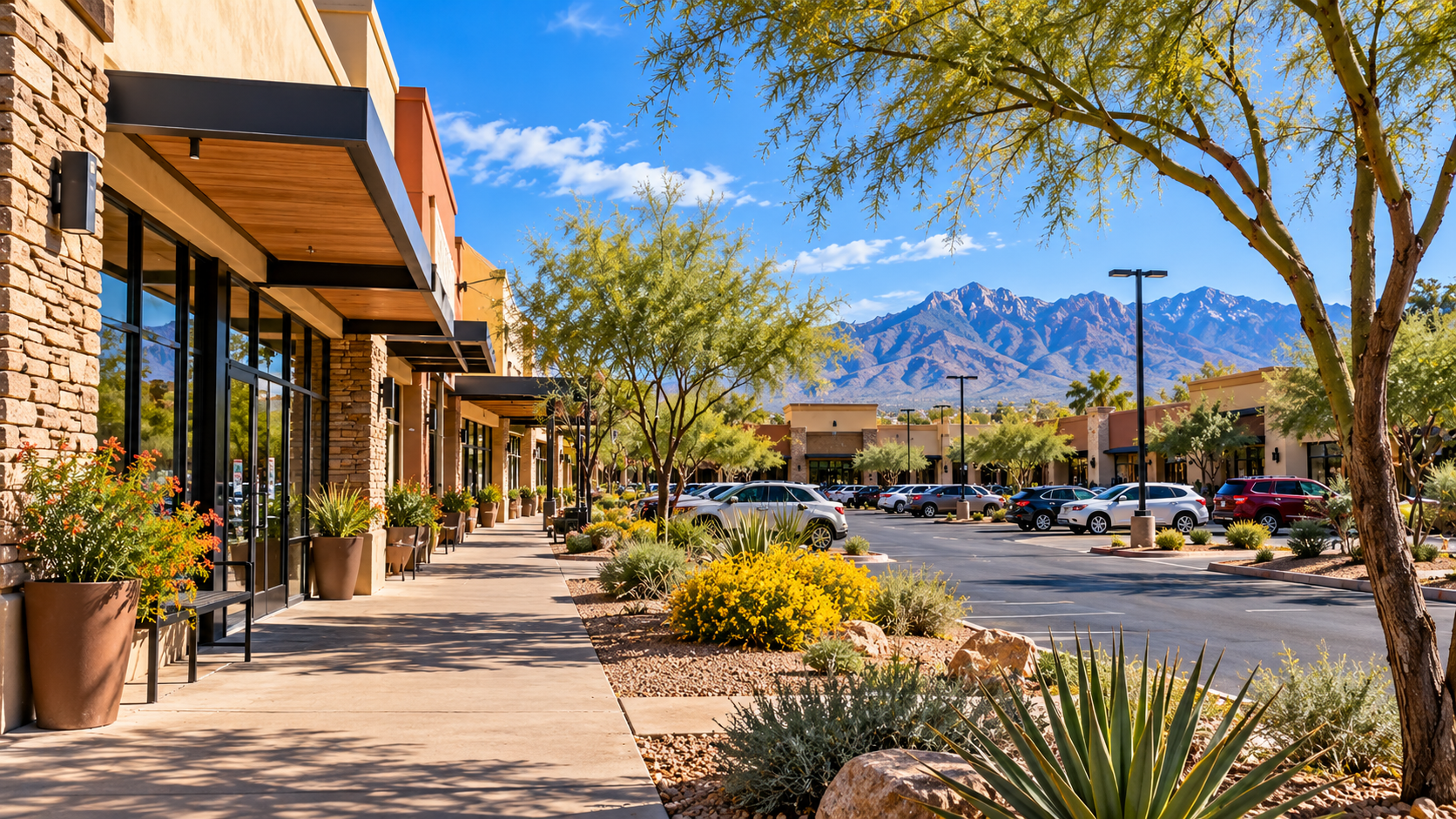
Have you ever driven past a Tucson shopping center you've known for years and noticed something changing?
Maybe a familiar storefront has a new tenant. Maybe the building's exterior is getting an update. Or perhaps you've heard that a shopping center could eventually become something completely different.
It's a topic I've been paying attention to because Tucson has so many established commercial corridors, and the buildings along them are part of the city's everyday landscape.
But here's something worth knowing: not every shopping center that's changing is being demolished or completely redeveloped.
Some property owners are updating existing buildings. Others are exploring new uses. And the City of Tucson has introduced planning tools that address how underused commercial properties might be repurposed.
Let's look at what the official records actually tell us.
Why Are Tucson's Older Shopping Centers Changing?
Tucson's older shopping centers can change through building renovations, new tenants, expanded retail space, or proposals for entirely different uses. The City of Tucson has also introduced planning tools addressing underused commercial properties, including vacant strip malls and large parking areas. Individual projects still have different requirements, approval processes, and timelines.
If you've lived in Tucson for a while, you know that some shopping centers have been around for decades. Their original buildings and parking areas may still be in use, even as the businesses occupying them change.
When owners consider updates, they have several possible approaches.
They might renovate storefronts, adjust parking and pedestrian access, reconfigure existing retail space, or explore whether the property could support another use.
The City of Tucson has formally recognized the potential for reusing underutilized commercial properties.
In its 2025 Year in Review and 2026 Preview, the Planning and Development Services Department discussed its Community Corridors Tool, which addresses opportunities to repurpose vacant lots, empty strip malls, and large parking areas.
That doesn't mean every older shopping center is headed for redevelopment.
It means the city has established a planning framework that can be relevant when qualifying properties are considered for new uses.
What's the Difference Between Renovation, Reuse, and Redevelopment?
Renovation generally updates an existing building without fundamentally changing its use. Adaptive reuse involves adapting an existing property for a different purpose. Redevelopment is a broader term that can include substantial site changes, new buildings, or changes in land use. Tucson permit records help show which activities are actually proposed or authorized.
These terms sometimes get used interchangeably, but they don't always describe the same work.
For example, a shopping center might receive new exterior finishes and patios while retaining its existing retail buildings. That's very different from a proposal to replace commercial space with residential buildings.
Here's a simple comparison.
| Type of Change | What It Can Involve | What to Verify |
|---|---|---|
| Renovation | Updated facades, storefronts, building systems, or outdoor areas | Commercial alteration permits |
| Tenant improvement | Interior changes for a new or existing business | Tenant improvement permits and approved use |
| Retail expansion | Enlarging a store or combining neighboring spaces | Building permits and development plans |
| Adaptive reuse | Converting an existing building to another permitted use | Zoning, building permits, and use approvals |
| Redevelopment | Significant changes to a property, potentially including new buildings or uses | Development packages, zoning records, and construction permits |
The City of Tucson's permit classification guide distinguishes commercial alterations, additions, new buildings, and demolition.
That's useful because the word redevelopment alone doesn't tell you how much of a property is changing.
What Are Some Documented Tucson Shopping Center Projects?
Tucson's public development records show several different approaches to existing retail properties. Rancho Center on East Speedway has documented renovation work, another shopping center project involves expanding an existing Walmart into neighboring retail space, and a Wrightstown Road property has a pre-application record for possible residential redevelopment. Their recorded statuses are not identical.
Rather than relying on speculation about which shopping centers might change next, I think it's more helpful to look at examples with actual city records.
Here are three that illustrate different possibilities.
| Property or Project | Documented Activity | Status Reflected in Records |
|---|---|---|
| Rancho Center, 3302 E. Speedway Boulevard | Existing shopping center renovation, including exterior changes and patio improvements | Relevant development package marked complete |
| Existing shopping center with Walmart expansion | Proposed expansion of Walmart into adjoining retail spaces | Building permit approved; inspections and conditions recorded |
| 7850 E. Wrightstown Road | Pre-application inquiry about converting a commercial shopping center to multifamily residential | Pre-application process completed; not proof of construction approval |
Rancho Center: Updating an Existing Shopping Center
Rancho Center is a particularly useful example because the City of Tucson's property records identify it as a retail property with buildings constructed between 1950 and 1995.
The records describe improvements involving the existing shopping center, including facade and colonnade changes and seasonal patio areas.
Importantly, the building permit description states that the existing shopping center and building areas would remain.
The associated development package is marked complete, with final engineering and zoning inspections passed in October 2025.
That's a good illustration of how an older retail property can be updated without replacing the entire shopping center.
An Existing Walmart Expansion: Reworking Retail Space
Another City of Tucson commercial permit describes a project to expand an existing Walmart into some neighboring stores within a shopping center.
The permit is marked approved and includes inspection activity and outstanding conditions. This example shows a different approach: changing how existing retail space is used. It also demonstrates why permit status matters.
An approved building permit is not automatically the same thing as a fully completed project with every final inspection closed.
Wrightstown Road: Exploring a Residential Use
At 7850 E. Wrightstown Road, the city records identify a January 2023 pre-application conference concerning redevelopment of a commercial shopping center into multifamily residential use. That's a meaningful record, but it requires careful interpretation.
A completed pre-application conference means that an early planning step occurred. It does not establish that the proposed residential development received every necessary approval, that construction began, or that the shopping center was replaced.
This is exactly why checking the actual records is so important.
Could Older Tucson Shopping Centers Become Housing?
Some underused commercial properties in Tucson may be considered for residential or mixed-use redevelopment, depending on their location and applicable requirements. The city's Community Corridors Tool addresses opportunities involving vacant strip malls, commercial lots, and parking areas. However, eligibility under a planning framework does not mean a particular shopping center has an approved housing project.
This is probably one of the more interesting questions surrounding older commercial properties.
Can a site that was originally designed for shopping eventually serve a different purpose?
In some cases, that's something property owners and developers may explore.
The City of Tucson's Community Corridors initiative is relevant here.
The city's planning department describes the tool as a way to facilitate redevelopment of underutilized sites along commercial corridors, including opportunities for housing and mixed-use development.
That doesn't mean a particular shopping center is automatically eligible or that residential construction is inevitable. Projects still need to meet applicable development requirements. And there is an important distinction between a city adopting a planning tool and an individual developer submitting a complete, approved project.
The Wrightstown Road pre-application record is a good example of that distinction. The possibility of a residential use was documented, but that record alone doesn't establish the project's eventual outcome.
What Happens When a Shopping Center Is Proposed for Redevelopment?
Shopping center redevelopment in Tucson can involve early discussions with city staff, zoning and land-use review, development plans, building permits, and inspections. The required steps depend on the proposal and the property's existing approvals. A preliminary application is not the same as permission to begin construction, and an approved permit may still have outstanding conditions.
When you hear that a shopping center is being redeveloped, the first question I would ask is: What stage is the project actually in?
There's a big difference between an idea being discussed and construction being authorized. In general, the process may involve preliminary meetings, planning reviews, development packages, building permits, and inspections.
The specific requirements depend on the property and proposed work.
Tucson's Property Research Online system can help residents follow those steps.
For example, the system may show whether an application is under review, approved, complete, or associated with outstanding inspections. It's also important to remember that these labels apply to particular applications or permits.
One completed development package doesn't necessarily mean every building permit associated with a larger project has been finalized.
How Can Tucson Residents Research a Shopping Center Project?
Tucson residents can research commercial redevelopment through the city's Property Research Online system, Planning and Development Services resources, and available public planning records. Searching by property address can reveal permit descriptions, application dates, zoning information, and review statuses. For properties outside city limits, residents should check the appropriate jurisdiction's records.
If you're curious about a shopping center near your home, you don't have to rely entirely on social media posts or conversations about what might be coming.
Start with the property address.
Then use the City of Tucson Property Research Online portal to look for relevant records.
Here are the details I would pay attention to:
- Project description: What work is actually being proposed?
- Application type: Is this an early planning inquiry, a development package, or a building permit?
- Application date: How recent is the information?
- Status: Is the application under review, approved, or complete?
- Related permits: Are there separate applications for construction, site work, or changes in use?
You can also consult the City of Tucson Planning and Development Services Department for information about development procedures.
If a property is outside Tucson city limits, the applicable county or municipal records may be different.
And if a project is still under review, it's best to describe it as a proposal rather than an established outcome.
What Does Shopping Center Redevelopment Mean for Nearby Homeowners?
Shopping center redevelopment can change a property's buildings, permitted uses, parking layout, access points, and surrounding activity. The actual effects depend on the approved project and how it operates. A renovation or redevelopment announcement does not establish whether nearby home values, traffic conditions, or business activity will increase or decrease.
For homeowners, it's natural to be curious when a familiar commercial property begins changing. You might want to know whether the existing buildings are staying, whether access points will change, or whether the proposal involves a new type of use.
Those are reasonable questions, and many can be researched through development plans. But I would be careful about assuming that any one project will have a particular effect on the surrounding real estate market.
Redevelopment does not automatically mean nearby home prices will rise or fall.
Property values depend on many factors, and a permit application alone isn't enough to establish a future outcome. For anyone considering buying or selling near a commercial corridor, the most useful starting point is understanding what's currently approved, what's proposed, and what remains uncertain.
That's information you can evaluate without relying on predictions.
Frequently Asked Questions About Tucson Shopping Center Redevelopment
Tucson shopping center redevelopment can involve renovations, expanded retail uses, or proposals to convert commercial properties to other uses. City records can help identify what is planned and how far an application has progressed. Residents should verify individual projects rather than assuming that vacant storefronts indicate demolition or that preliminary plans will proceed.
Are Tucson's older shopping centers being demolished?
Some commercial properties may be considered for major redevelopment, but not every older shopping center is being demolished. Rancho Center's documented improvements, for example, retained existing retail buildings.
Can an old shopping center become apartments?
A property owner may explore residential redevelopment where applicable land-use requirements allow it. Tucson's Community Corridors initiative addresses some underused commercial properties, but individual projects still require appropriate review and approvals.
Does an empty storefront mean redevelopment is planned?
No. A vacant storefront alone does not establish that a redevelopment project has been proposed or approved. Check official planning and permit records for documented activity.
What's the difference between a proposed project and an approved project?
A proposed project may still be in preliminary discussions or review. An approved application has completed a particular approval step, but additional permits, conditions, or inspections may still be required.
Where can I find Tucson shopping center redevelopment plans?
Start with the City of Tucson's Property Research Online system and Planning and Development Services Department. Search by address and review the application descriptions and statuses.
Will shopping center redevelopment affect nearby property values?
A redevelopment announcement does not establish future property-value changes. Those outcomes depend on multiple factors and should not be predicted from a proposal or permit alone.
Can residents participate in the redevelopment process?
Public participation opportunities depend on the type of application and required review process. Residents can consult the city for information about public notices, meetings, and applicable procedures.
Final Thoughts
Tucson's older shopping centers aren't all headed in one direction. Some are getting exterior updates. Others are being reconfigured for different retail uses. And some properties are being considered for changes that could look very different from their original purpose.
What I find especially interesting is how much of this story you can uncover through official city records.
You don't have to guess whether a project is approved, assume a building will be demolished, or treat an early proposal as a finished plan.
You can look at the actual application and see what's documented.
And as Tucson continues evaluating how existing commercial properties can be used, I think that distinction will remain important.
For homeowners and residents, understanding the process is often more valuable than trying to predict what a shopping center will look like five years from now.
Local Development Information Note: Information is current as of October 2026 and reflects the cited City of Tucson planning and permit records. Application statuses, project scopes, approvals, and construction schedules may change. This article is for general educational purposes and does not provide legal, zoning, investment, or property valuation advice. Verify property-specific information with the appropriate public agency and qualified professionals.

Tom Krieger
| The TJK Team - Realty Executives Arizona Territory
or another way