
Categories
Homeowner GuidePublished September 18, 2026
What’s the Difference Between Tucson, Pima County, and Unincorporated Tucson?

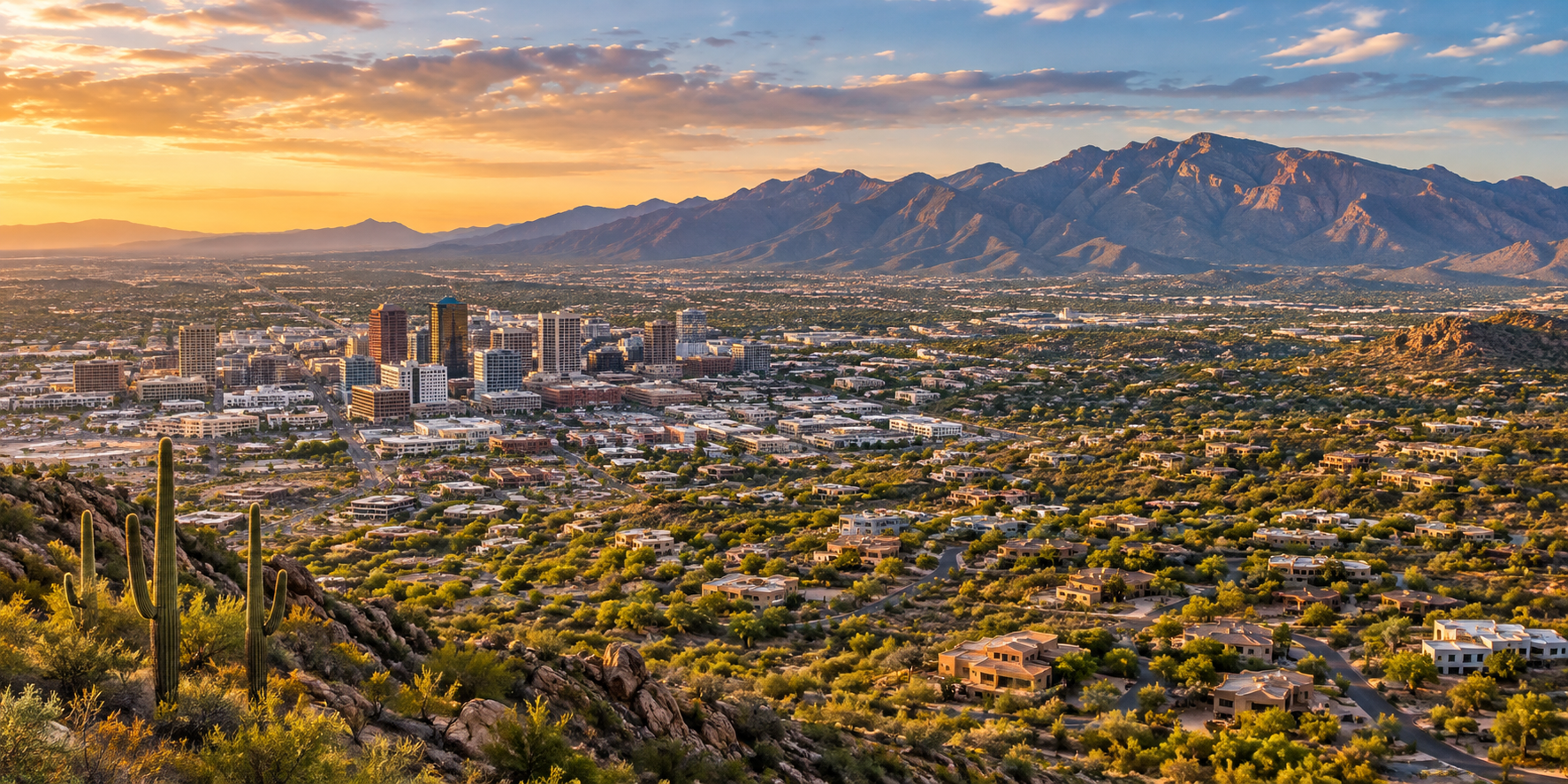
One of the more confusing things about living in the Tucson area is that “Tucson” can mean different things depending on the conversation.
Someone might say they live in Tucson because their mailing address says Tucson, they work in Tucson, and they think of themselves as part of the Tucson community.
But their home may not actually be inside the City of Tucson.
Instead, it could be in unincorporated Pima County.
That distinction can matter when you're buying or owning a home because government boundaries help determine which jurisdiction handles things like zoning, building permits, certain roads, law enforcement, and some local services.
And then there are utilities and property taxes, which make the picture a little more complicated because they don't always line up neatly with city boundaries.
So let's break it down.
What’s the Basic Difference Between Tucson and Pima County?
The City of Tucson is an incorporated municipality located within Pima County. Pima County is the larger county government encompassing Tucson, other incorporated municipalities, and substantial unincorporated territory. A Tucson property can therefore be both within Pima County and within the City of Tucson, while another Tucson-addressed property may be in Pima County but outside Tucson city limits.
This is the first distinction that makes everything else easier to understand.
Tucson and Pima County aren't competing geographic labels.
Tucson is inside Pima County.
If your home is within Tucson city limits, you are still a Pima County resident. You simply live within an incorporated municipality inside the county.
Pima County also contains other incorporated municipalities, including Oro Valley, Marana, Sahuarita, and South Tucson, along with large areas that aren't incorporated into any city or town.
Arizona government resources distinguish between property located within an incorporated city or town and property outside those municipal boundaries, where the county is the applicable local jurisdiction for certain purposes. Arizona Department of Revenue
That brings us to the term people often find confusing.
What Does “Unincorporated Tucson” Actually Mean?
“Unincorporated Tucson” is a convenient conversational description, not a separate incorporated city. In most cases, people using the term mean an area with a Tucson mailing address or Tucson identity that lies outside the City of Tucson’s municipal boundaries. Governmentally, that property is generally described as being in unincorporated Pima County.
This distinction is worth getting right.
There isn't another municipality called Unincorporated Tucson sitting next to the City of Tucson.
Instead, there are parts of metropolitan Tucson that fall outside the city's incorporated boundary.
Those properties are in unincorporated Pima County.
And this is where people sometimes get tripped up:
Your mailing address can say:
Tucson, AZ
without answering the jurisdiction question by itself.
A mailing address is useful for delivering mail. It should not be treated as proof that a property falls within Tucson city limits.
That's why, when I'm looking at a property-specific question, I don't like relying on what the address happens to say.
I want to know the actual jurisdiction.
Can You Have a Tucson Address Without Living in the City of Tucson?
Yes. A property can use Tucson as its mailing city while being located outside the incorporated City of Tucson. Mailing geography and municipal jurisdiction serve different purposes, so buyers and homeowners should verify a parcel’s jurisdiction through official government property and mapping resources rather than assuming that “Tucson, AZ” in an address means the property is within city limits.
This is probably the biggest takeaway from the entire article.
Tucson mailing address does not automatically equal City of Tucson jurisdiction.
That can feel strange if you're moving here from somewhere with simpler municipal boundaries.
You might tour two homes that both say “Tucson, AZ” online.
One could be inside the City of Tucson.
The other could be in unincorporated Pima County.
From a day-to-day standpoint, both homeowners might tell friends they live in Tucson.
From a government standpoint, however, the properties can be subject to different local jurisdictions.
That's why the address should be the beginning of your research—not the end of it.
Why Does the City-versus-County Distinction Matter for a Home?
Municipal boundaries can affect which government administers zoning, building permits, code requirements, road maintenance, law enforcement, and other public functions. They do not determine every service by themselves, however. Water, sewer, fire protection, trash service, special districts, taxes, and private restrictions may require separate property-specific research.
Here's a simplified way to think about it:
| Topic | City of Tucson Property | Unincorporated Pima County Property |
|---|---|---|
| Local municipal/county jurisdiction | City of Tucson + Pima County | Pima County |
| Primary zoning authority | City of Tucson | Pima County |
| Building/permitting authority | City of Tucson for applicable city permits | Pima County for applicable county permits |
| Local law enforcement | Tucson Police for applicable city jurisdiction | Pima County Sheriff for applicable county jurisdiction |
| Road maintenance | Depends on road ownership/jurisdiction | County maintains qualifying county roadways; verify specific road |
| Water | Verify provider | Verify provider |
| Sewer/wastewater | Verify service | Verify service |
| Fire protection | Verify provider/district | Verify provider/district |
| Trash/recycling | Verify service | Verify service |
| Property taxes | Based on applicable taxing jurisdictions | Based on applicable taxing jurisdictions |
| HOA / deed restrictions | Property-specific | Property-specific |
The important word in this table is verify.
It would be very easy to oversimplify this into:
City property gets City services. County property gets County services.
But that's not always how Tucson works.
Utilities and service boundaries can cross governmental boundaries.
Tucson Water is a great example. City information shows that its service area extends outside Tucson's municipal boundaries, meaning living outside the city does not automatically mean you can't be a Tucson Water customer. City of Tucson Water Service Area
So jurisdiction tells us a lot.
It just doesn't tell us everything.
Who Controls Zoning in Tucson Versus Unincorporated Pima County?
Properties within Tucson city limits are generally subject to the City of Tucson’s Unified Development Code, while zoning and development in unincorporated Pima County are generally administered through Pima County. Because zoning is parcel-specific and may include overlays, conditions, or other requirements, owners should verify the current zoning and applicable rules before planning a project.
This is one of the places where jurisdiction becomes especially important.
The City of Tucson states that its Unified Development Code applies to development and land uses within the City of Tucson. City of Tucson Zoning Code
For applicable properties in unincorporated Pima County, Pima County Development Services handles county planning, zoning, permitting, and related development functions.
Why does that matter?
Imagine you're considering:
- Adding a guest house or accessory dwelling unit
- Building a garage
- Adding onto the home
- Changing how a property is used
- Dividing land
- Constructing another structure
The answer to “Can I do this?” shouldn't come from a general statement about Tucson.
It starts with the specific parcel, its jurisdiction, zoning, and any other applicable restrictions.
And zoning isn't the only thing to investigate.
An HOA, deed restriction, easement, floodplain requirement, or other regulation could also affect a particular property.
That's why I would never assume that living outside the city means “fewer rules” or that you can automatically do more with the property.
You have to research the actual parcel.
Who Handles Building Permits?
Building and development permits are generally handled by the government with jurisdiction over the property: City of Tucson Planning and Development Services for applicable properties within Tucson and Pima County Development Services for applicable properties in unincorporated Pima County. The permits required depend on the specific project, property, zoning, and applicable codes.
This is a practical detail that can become important after someone buys a house.
Let's say you're planning a remodel.
Before assuming you need a City of Tucson permit because your address says Tucson, first determine whether the property is actually inside city limits.
Pima County Development Services specifically provides tools for determining zoning and jurisdiction and for researching permit requirements.
For properties inside Tucson, City of Tucson Planning and Development Services administers applicable city planning and permitting processes.
For a homeowner, the lesson is simple:
Start with jurisdiction, then research the project.
Don't start construction based on what happened at a friend's house across town.
Their property may be governed by a different jurisdiction, zoning classification, or set of restrictions.
Who Provides Police and Law-Enforcement Services?
Within the City of Tucson, the Tucson Police Department provides municipal police services within its jurisdiction. In unincorporated Pima County, the Pima County Sheriff’s Department provides law-enforcement services within its jurisdiction. Other agencies may also have authority in particular situations or locations, so property-specific and incident-specific circumstances can matter.
This is another difference people sometimes don't think about until they need a government service.
Inside the City of Tucson, the Tucson Police Department is the municipal police department.
In unincorporated Pima County, the Pima County Sheriff’s Department provides law-enforcement services within county jurisdiction.
This isn't a question of one being “better” than the other.
It's simply a jurisdiction question.
And because this article is about understanding government boundaries—not evaluating neighborhood safety—I wouldn't use police jurisdiction to make assumptions about how safe or desirable a particular area is.
Those are separate questions that consumers should research independently using appropriate official information.
Who Maintains the Roads?
Road maintenance depends on who owns or has responsibility for a particular roadway, so city or county location alone does not answer every road question. Pima County maintains nearly 2,200 miles of roadway in unincorporated areas, while other roads may fall under municipal, state, federal, private, HOA, or other responsibility.
This is another area where broad assumptions can cause problems.
Pima County says its Maintenance and Operations Division maintains nearly 2,200 miles of roadways in unincorporated Pima County, performing services including pavement preservation, pothole repair, road grading, street sweeping, vegetation management, and storm cleanup. Pima County Roadways & Pavement Maintenance
But that doesn't mean every road outside Tucson city limits is automatically a county-maintained road.
Some roads may be private.
Some may be maintained by another government agency.
Some may have different arrangements.
So if road maintenance is important to a property you're considering—especially if you're looking at an unpaved or private road—verify that specific road rather than assuming responsibility based solely on the mailing address.
What About Water, Sewer, Trash, and Fire Service?
Utility and service areas do not always follow Tucson’s municipal boundary. A property outside city limits may receive a service associated with the City of Tucson, while another property may use a different provider, district, private company, septic system, or other arrangement. Water, wastewater, trash, and fire protection should therefore be verified individually for each property.
This is probably where the simple city-versus-county explanation breaks down the fastest.
Take water.
Tucson Water has a service boundary that extends beyond the City of Tucson. Its official service-area information specifically recognizes customers and service commitments outside municipal limits. Tucson Water
So this statement would be wrong:
“If you're outside Tucson city limits, you don't have Tucson Water.”
Some people outside the city do.
The same principle applies when you're researching other services.
Depending on the property, questions might include:
Who provides the water?
Is the property connected to public sewer or does it use an onsite wastewater system?
Who provides trash collection?
Which fire department or fire district serves the property?
Those are property-specific due-diligence questions.
A city-limit map alone isn't enough.
Are Property Taxes Lower in Unincorporated Pima County?
You should not assume that property taxes are automatically lower simply because a home is outside Tucson city limits. Arizona property taxes reflect the property’s assessed value and the combined rates of applicable taxing jurisdictions, which can include county, school, community-college, municipal, and special taxing districts. Compare actual parcel tax information instead.
This is one of the claims I hear people make too casually.
“It's outside the city, so the taxes are lower.”
Maybe the tax bill is different.
But jurisdiction alone doesn't give you enough information to make that conclusion about a particular home.
The Arizona Department of Revenue explains that property tax is calculated using assessed value and an overall tax rate determined by the taxing jurisdictions that apply to the property.
Those jurisdictions can include more than simply “city” or “county.”
That's why two properties with similar market values can have different tax circumstances.
If you're comparing homes, look at the actual parcel's tax information and applicable taxing districts rather than relying on a general rule about city limits.
And for questions about how a specific property's taxes could change, consult the appropriate taxing authority or tax professional.
Does Pima County Still Matter If You Live Inside Tucson?
Yes. Tucson residents also live in Pima County, so county government remains relevant even inside city limits. Pima County administers countywide and regional functions alongside municipal services provided by Tucson. Living within an incorporated city adds a municipal layer of government; it does not remove the property or resident from the county.
This is another useful way to picture it.
Think of the governments as layers.
If you're inside Tucson:
Arizona → Pima County → City of Tucson
If you're in an unincorporated part of Pima County:
Arizona → Pima County
There can also be additional districts, authorities, utilities, school districts, and other entities layered onto a particular property.
That's why the question isn't really:
“Am I in Tucson or Pima County?”
If you're inside the City of Tucson, you're in both.
The more precise question is:
“Am I inside an incorporated municipality, and if so, which one?”
That wording clears up a lot of confusion.
How Can You Tell Whether a Property Is Actually Inside Tucson City Limits?
The most reliable approach is to check the specific parcel using official government property and mapping tools. Do not rely solely on the mailing city, an online real-estate portal, or a general neighborhood name. Official parcel resources can help identify jurisdiction, zoning, taxing information, and other property-specific details that matter during due diligence.
This is what I would actually do if I were trying to answer the question for a specific property.
First, identify the parcel.
The Pima County Assessor provides property and parcel information.
For properties within Tucson jurisdiction, the City also provides parcel-search tools that can display jurisdiction and City zoning information. City of Tucson Parcel Search
Pima County Development Services also provides resources for answering the basic question:
What's my zoning and jurisdiction? Pima County Development Services
Once you've established jurisdiction, you can research the things that matter for that particular property:
- Zoning
- Permits
- Utilities
- Road responsibility
- Fire service
- Taxing districts
- HOA or deed restrictions
- Other applicable property requirements
That is much more reliable than assuming the answer from the ZIP code.
Can Unincorporated Property Become Part of Tucson Later?
Yes, some unincorporated property adjacent to Tucson can potentially become part of the city through annexation, but annexation is governed by Arizona law and specific procedural requirements. It is not automatic simply because a property is near city limits. Property configuration, contiguity, petitions, ownership support, and governmental action can all matter.
This is called annexation.
The City of Tucson describes annexation as the process cities use to add adjacent property to their jurisdiction. City of Tucson Annexation
Arizona law establishes specific requirements for that process.
According to the City's current explanation, an annexation area generally must meet requirements involving contiguity with existing city limits and property-owner support before Mayor and Council can adopt an annexation ordinance. City of Tucson Annexation Process
So I wouldn't look at a property near the city boundary and assume:
“Tucson will eventually annex this.”
That's a prediction we can't responsibly make.
If a specific property has an active or proposed annexation issue, that's something to research through the City, County, and appropriate professional advisors.
A Simple Way to Think About Tucson-Area Jurisdictions
Think of “Tucson” as both a formal municipality and a broader geographic identity. The City of Tucson has defined municipal boundaries, while the larger Tucson metropolitan area extends into unincorporated Pima County and other municipalities. For property questions, use the legal jurisdiction—not the casual geographic label—to determine which rules and agencies apply.
Here's the shorthand I use:
“Tucson” in conversation can mean the broader Tucson area.
“City of Tucson” means the incorporated municipality.
“Pima County” is the county containing Tucson and surrounding communities.
“Unincorporated Tucson” usually means a Tucson-area location outside an incorporated municipality and governed locally as part of unincorporated Pima County.
Once you separate those ideas, the map starts making a lot more sense.
And for real estate, there's one final rule worth remembering:
Verify the parcel, not the label.
Frequently Asked Questions
Is unincorporated Tucson a separate city?
No. “Unincorporated Tucson” is generally an informal way of describing Tucson-area property outside the incorporated City of Tucson. The governmental jurisdiction is typically unincorporated Pima County.
Can my address say Tucson if I don't live within Tucson city limits?
Yes. A Tucson mailing address does not by itself establish that a property is within the incorporated City of Tucson. Verify the parcel's jurisdiction through official government records.
Is Tucson part of Pima County?
Yes. The City of Tucson is located within Pima County. A person living within Tucson city limits is therefore also a Pima County resident.
Who handles zoning in unincorporated Pima County?
Pima County administers zoning and development requirements for applicable property in unincorporated Pima County. Property-specific zoning should be verified with Pima County Development Services.
Who handles permits inside the City of Tucson?
City of Tucson Planning and Development Services administers applicable planning and development permitting within City jurisdiction.
Are property taxes always lower outside Tucson city limits?
No. Property taxes depend on assessed value and the combined tax rates of the jurisdictions and districts applicable to the property. Compare actual parcel tax information rather than assuming unincorporated property will have lower taxes.
Does unincorporated Pima County mean there are no zoning rules?
No. Unincorporated property can still be subject to Pima County zoning, building codes, permitting requirements, and other regulations. Private restrictions such as HOA rules or deed restrictions may also apply.
Does living outside Tucson mean I can't have Tucson Water?
No. Tucson Water's service area extends beyond City of Tucson boundaries. Water service should be verified for the individual property.
Who provides police service in unincorporated Pima County?
The Pima County Sheriff's Department provides law-enforcement services within its applicable county jurisdiction. Tucson Police provides municipal police services within City of Tucson jurisdiction.
How should a buyer verify whether a home is in the City of Tucson?
Start with the property's parcel information and official City or County mapping resources. Confirm jurisdiction first, then verify zoning, utilities, taxes, permits, road responsibility, fire service, and any other property-specific considerations that matter to the purchase.
Final Thoughts
If there's one thing I want people to take away from this, it's this:
A Tucson address doesn't necessarily tell you which local government has jurisdiction over the property.
And that's not necessarily good or bad.
It's simply something to understand.
A home inside the City of Tucson and a home in unincorporated Pima County can have different zoning authorities, permitting processes, law-enforcement jurisdictions, road responsibilities, taxing districts, and service arrangements.
But you don't want to make assumptions in either direction.
Don't assume unincorporated means fewer rules.
Don't assume city limits determine every utility.
Don't assume one jurisdiction automatically has lower property taxes.
And don't assume that two homes with “Tucson, AZ” addresses are governed exactly the same way.
When you're researching a property, start with the parcel.
Find out where it actually is from a jurisdiction standpoint.
Then you can ask the right questions about the things that matter for that specific home.
Property Information Note
Government boundaries, zoning, permitting requirements, taxing districts, utility service areas, annexations, and other property-specific conditions can change. This article is for general educational purposes and is not legal or tax advice. Verify current information for a specific property with the City of Tucson, Pima County, applicable utility or service providers, taxing authorities, and appropriate licensed professionals.

Tom Krieger
| The TJK Team - Realty Executives Arizona Territory
or another way