
Categories
Southern Arizona DevelopmentPublished August 24, 2026
Why Companies Choose Southern Arizona: Growth, Infrastructure, and Incentives

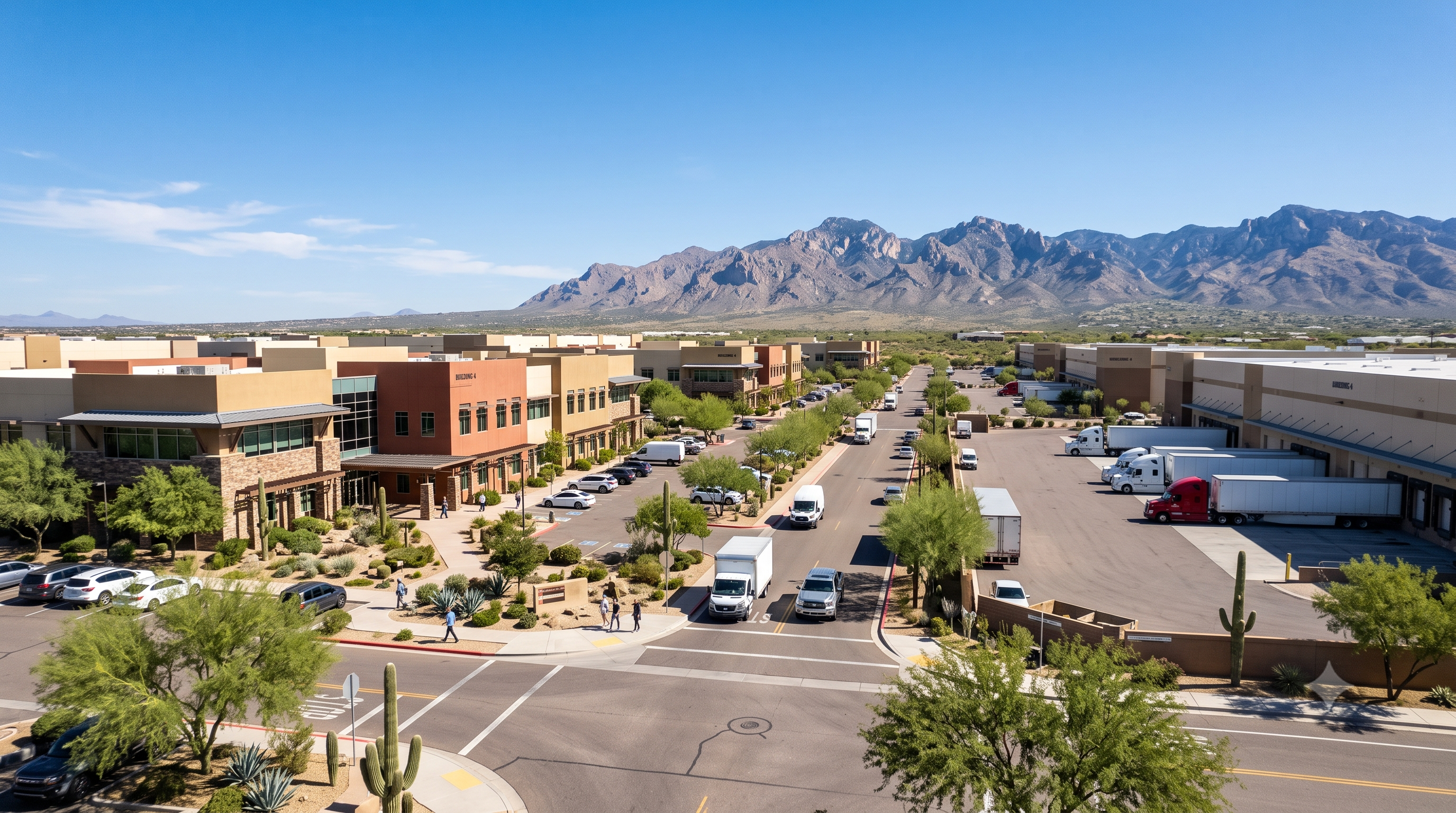
Southern Arizona is experiencing sustained economic growth as national and international companies expand their operations into the region. This steady influx is driven by a combination of rapid population growth, strategic infrastructure investments, targeted business incentives, and a highly skilled workforce. For local residents and prospective homebuyers, this economic momentum points toward a strong employment market and continued community development.
Over the past decade, the economic landscape of Southern Arizona has fundamentally shifted. Communities like Tucson, Marana, Oro Valley, and Vail are no longer just known for their natural beauty and high quality of life; they have become highly competitive destinations for corporate investment. From aerospace and defense to biotechnology and logistics, businesses are increasingly choosing Pima County as their operational base.
Understanding why these companies are investing heavily in the region provides valuable insight into where our local economy is heading and how it impacts the broader community.
A Growing Population and a Deep Talent Pool
One of the primary factors attracting businesses to Southern Arizona is the region's steady population growth. As more people relocate to Tucson and its surrounding communities in search of a better cost of living and favorable climate, the local talent pool expands. For a company deciding where to build a new facility or open a regional headquarters, the availability of skilled labor is often the deciding factor.
The presence of the University of Arizona and Pima Community College creates a direct pipeline of educated professionals, particularly in engineering, optics, and technology. Businesses recognize that by establishing operations close to these institutions, they can partner on research initiatives and recruit top-tier graduates before they leave the state. As the population grows, it creates a cyclical effect: more talent attracts more businesses, which in turn brings more jobs and amenities to the local area.
Targeted Economic Development and Employment
Southern Arizona’s economic expansion is highly intentional. Regional leadership and organizations like Sun Corridor Inc. have focused on attracting specific, high-wage industries that align with the region's existing strengths.
Aerospace and defense remain cornerstones of the local economy, anchored by established employers and the presence of Davis-Monthan Air Force Base. However, the region has heavily diversified. We are seeing significant investments in autonomous vehicle testing, renewable energy manufacturing, biotechnology, and mining technology. By attracting companies in these advanced sectors, Southern Arizona is building an employment base that is resilient to economic downturns. For local homeowners, a diverse and high-paying job market translates directly into a stable housing market and vibrant local commerce.
Strategic Infrastructure Advancements
Companies rely on efficient logistics to move goods and people, making regional infrastructure a critical component of any relocation decision. Southern Arizona is geographically positioned to serve as a major logistics hub, acting as a gateway between the deep-water ports of Mexico and the broader United States market.
Recent and ongoing infrastructure projects have significantly boosted the region's appeal. Upgrades and widenings along the Interstate 10 corridor—particularly through Marana and northwest Tucson—have streamlined freight movement and daily commuting. The Port of Tucson, an active inland port facility, allows companies to seamlessly transfer freight between rail and truck, drastically reducing shipping costs. Additionally, continued investments in the Tucson International Airport ensure that corporate travel and air cargo remain highly accessible. When businesses see a region actively investing in its roads, rails, and runways, they see a community preparing for long-term success.
Business Incentives and Local Support
While geography and talent are crucial, financial realities ultimately drive corporate decisions. Southern Arizona has remained highly competitive by offering a structured framework of business incentives.
Programs like the Primary Jobs Incentive offered by the City of Tucson and Pima County provide financial benefits to companies that create high-paying jobs and invest in local facilities. Furthermore, specific areas within the region are designated as Foreign Trade Zones (FTZ). Companies operating within an FTZ can defer, reduce, or eliminate customs duties on imported goods, which is a massive financial advantage for manufacturers and distributors.
These incentives are not simply corporate giveaways; they are carefully negotiated agreements that require companies to meet strict benchmarks for job creation and capital investment. The return on investment for the community comes in the form of increased tax revenues, enhanced public services, and thousands of new jobs.
The Future Outlook
The economic trajectory for Southern Arizona remains highly positive. As coastal markets become increasingly expensive and heavily regulated, the Southwest will continue to capture corporate relocations. Moving forward, the region’s success will rely on managing this growth responsibly. Balancing new commercial development with water conservation, housing availability, and infrastructure maintenance will be the primary focus for local municipalities.
For those living in or moving to Southern Arizona, the continued business investment signals a maturing economy. The region is successfully blending its rich cultural heritage and comfortable lifestyle with a dynamic, forward-looking business environment.
Frequently Asked Questions
What industries are driving job growth in Southern Arizona? The region is experiencing strong growth in aerospace, defense, optics, biotechnology, logistics, and renewable energy manufacturing.
How does population growth impact the local economy? A growing population provides a larger, more diverse talent pool, which attracts employers. It also increases local consumer spending, supporting small businesses, restaurants, and retail throughout the community.
What is a Foreign Trade Zone (FTZ) and why does it matter? A Foreign Trade Zone is a designated area where companies can handle imported goods without paying standard customs duties until the products enter the U.S. market. This significantly lowers operational costs for manufacturing and logistics companies, making Southern Arizona highly attractive for international trade.
How is the local infrastructure supporting this business boom? Investments in the I-10 corridor, the Port of Tucson (an inland rail facility), and Tucson International Airport allow companies to efficiently move products across the country and internationally, particularly leveraging the nearby trade routes with Mexico.
Where can businesses find more information about relocating to Southern Arizona? Organizations such as Sun Corridor Inc., the Arizona Commerce Authority, and local municipal economic development offices provide comprehensive data, site selection assistance, and information regarding available incentives.
Sources & Additional Resources
Sun Corridor Inc.
Arizona Commerce Authority
City of Tucson Economic Development
Pima County Economic Development

Tom Krieger
| The TJK Team - Realty Executives Arizona Territory
or another way