
Categories
Southern Arizona DevelopmentPublished August 11, 2026
Why New Construction Is Concentrated on Tucson's Northwest and Southeast Sides

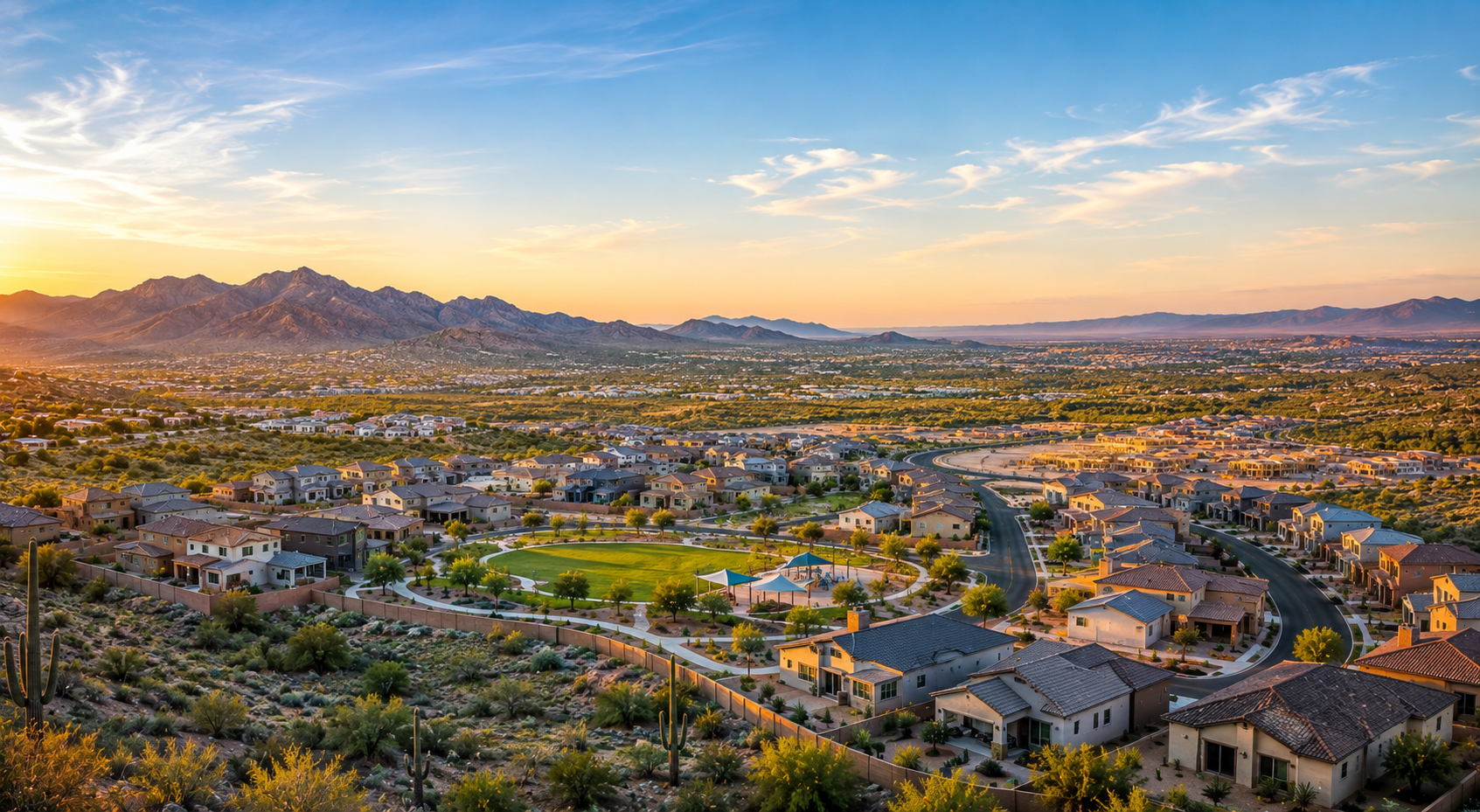
Why New Construction Is Concentrated on Tucson's Northwest and Southeast Sides
Data Current as of August 2026
If you've spent time looking at new homes around Tucson, you've probably noticed a pattern.
Many of the area's newest neighborhoods are located in places like Marana, Oro Valley, Vail, Rita Ranch, and other parts of the northwest and southeast metro area. Meanwhile, large-scale new subdivisions are much less common in central Tucson.
At first glance, it might seem like builders simply prefer one part of town over another.
In reality, the answer is much more interesting.
Where new homes are built is largely shaped by decades of community planning, available land, transportation infrastructure, utility systems, and the geography of the Sonoran Desert. These factors work together to influence where large residential developments are practical—and where they aren't.
Understanding how those pieces fit together provides a better picture of how Tucson has grown and why today's new construction is concentrated in certain parts of the metropolitan area.
Why Growth Doesn't Happen Everywhere
New residential communities are typically built where sufficient land is available, infrastructure can support additional homes, and local planning policies allow future development. Existing neighborhoods, protected lands, and natural geography all influence where large-scale construction can realistically occur.
Unlike building a single custom home on an individual lot, creating an entire neighborhood requires hundreds—or sometimes thousands—of acres that can be planned as one coordinated project.
Developers must consider far more than simply purchasing land.
Large communities often require:
- Streets and intersections
- Water and sewer infrastructure
- Electrical service
- Drainage systems
- Parks and open space
- Schools and public services
- Long-term planning approvals
Finding locations where all of these elements can come together is one of the biggest reasons new construction tends to cluster in certain areas.
Available Land Plays a Major Role
One of the biggest factors influencing new construction is the availability of large, undeveloped parcels of land. These sites provide the space needed for master-planned communities, neighborhood amenities, and supporting infrastructure.
Much of central Tucson has been developed for decades.
Existing neighborhoods, commercial districts, and established road networks leave relatively few large vacant parcels available for entirely new subdivisions.
By comparison, portions of the northwest and southeast metro area historically included:
- Larger undeveloped properties
- Former agricultural land
- Arizona State Trust land in some areas
- Land that could be planned as cohesive communities
This made it easier for developers and local governments to coordinate long-range residential projects.
Infrastructure Comes Before Homes
New neighborhoods depend on infrastructure. Roads, water, sewer, utilities, and public services typically need to be planned and expanded before large residential developments can move forward.
When a new community is proposed, planners evaluate whether existing infrastructure can accommodate future growth or whether improvements are needed.
Infrastructure considerations often include:
- Road capacity
- Water availability
- Wastewater systems
- Electrical service
- Stormwater management
- Public safety access
- School planning
These investments are a significant part of why new development often occurs in areas identified for long-term growth.
Long-Range Planning Shapes Growth
Communities throughout the Tucson metropolitan area use long-range planning to guide future development. These plans help coordinate land use, transportation, utilities, and public services over many years rather than responding to growth one project at a time.
Places such as Marana, Oro Valley, Vail, and portions of unincorporated Pima County have adopted planning strategies that identify areas where future residential growth may occur.
This planning helps coordinate:
- Residential neighborhoods
- Commercial services
- Parks
- Schools
- Transportation corridors
- Public infrastructure
Long-range planning doesn't guarantee development, but it provides a framework for how growth can occur over time.
Tucson's Geography Influences Development
Southern Arizona's natural landscape plays an important role in determining where new neighborhoods can be built. Mountains, washes, protected lands, and existing development all shape how the metropolitan area grows.
Unlike cities surrounded by flat open land, Tucson is bordered by several mountain ranges and contains significant areas dedicated to conservation and recreation.
Development patterns are influenced by features such as:
- Saguaro National Park
- Coronado National Forest
- Mountain ranges
- Desert washes
- Public lands
- Existing urban development
These natural and developed areas help explain why expansion isn't evenly distributed around the metropolitan area.
Why Central Tucson Looks Different
Central Tucson continues to evolve, but growth there often takes the form of redevelopment, renovation, and infill projects rather than large master-planned neighborhoods.
Many of Tucson's central neighborhoods were established decades ago.
Instead of creating entirely new subdivisions, development often focuses on:
- Redeveloping existing properties
- Modernizing commercial areas
- Building on smaller vacant lots
- Renovating older homes
- Adaptive reuse of existing buildings
This type of growth helps strengthen existing neighborhoods while making efficient use of available land.
New Construction Isn't About One Area Being "Better"
The location of new construction reflects planning and land availability—not a ranking of neighborhoods. Every part of Tucson offers different characteristics, and the best fit depends on an individual's lifestyle, preferences, and housing needs.
Some buyers appreciate:
- Brand-new homes
- Modern floor plans
- Energy-efficient construction
- Community amenities
Others prefer:
- Established neighborhoods
- Mature landscaping
- Historic architecture
- Walkable areas
- Larger shade trees
- Homes with unique character
Neither approach is inherently better—they simply offer different living experiences.
Factors That Influence Where New Neighborhoods Are Built
Large residential developments are influenced by a combination of planning, infrastructure, land availability, and geography rather than a single factor.
| Factor | Influence on New Construction |
|---|---|
| Large undeveloped land | High |
| Water and sewer infrastructure | High |
| Transportation access | High |
| Long-range planning | High |
| Existing neighborhoods | Often limits large new subdivisions |
| Mountains and protected land | Can limit expansion |
| Utilities | Essential for development |
| Environmental considerations | Important during planning |
No single factor determines where new communities are built. Successful developments typically result from many planning elements working together.
Looking Toward the Future
Growth patterns change over time as infrastructure, land availability, and community planning evolve. Because these factors continue to change, future development will depend on decisions made by local governments, property owners, and regional planning organizations.
Rather than expanding equally in every direction, cities often grow where conditions make new development practical.
That pattern has been true throughout Tucson's history and continues today.
Understanding the reasons behind these development patterns provides helpful context for anyone exploring Southern Arizona—whether they're longtime residents or just beginning to learn about the region.
Final Thoughts
One of the things I find most interesting about Tucson is how its geography and history continue to shape the way it grows.
The concentration of new construction in the northwest and southeast isn't simply the result of market demand or builder preference. It's the product of available land, infrastructure, thoughtful planning, and the natural landscape that surrounds our community.
At the same time, every part of Tucson has its own story.
Some areas continue to grow through new neighborhoods, while others evolve through renovation, redevelopment, and preservation of established communities.
Understanding those differences offers a deeper appreciation for how Tucson has developed—and why each part of our city contributes something unique to the region.
Frequently Asked Questions
Why are so many new homes being built in Northwest and Southeast Tucson?
These areas have historically offered larger undeveloped parcels, infrastructure planning, and land-use policies that make large residential developments more practical.
Why isn't as much new construction happening in central Tucson?
Central Tucson is already extensively developed, so growth there often occurs through redevelopment, infill projects, and renovation rather than large new subdivisions.
Does new construction mean one area is better than another?
No. New construction generally reflects where land and infrastructure support development. Every Tucson neighborhood offers its own characteristics, history, and lifestyle.
What role does geography play in Tucson's growth?
Mountains, washes, protected lands, and existing development all influence where future neighborhoods can be built.
Can Tucson's growth patterns change over time?
Yes. Growth patterns evolve as infrastructure expands, planning decisions change, and land becomes available for future development.

Tom Krieger
| The TJK Team - Realty Executives Arizona Territory
or another way