
Categories
Neighborhood GuidesPublished August 6, 2026
Why Some Tucson Neighborhoods Feel Cooler Than Others

Why Some Tucson Neighborhoods Feel Cooler Than Others
Data Current as of August 2026
If you've spent much time exploring Tucson, you've probably noticed something interesting.
You might leave your home on a hot summer afternoon, drive across town, and suddenly realize the temperature feels noticeably different. Maybe a neighborhood near the foothills feels a little cooler, or an area with mature trees seems more comfortable than a nearby commercial district covered in pavement.
It isn't just your imagination.
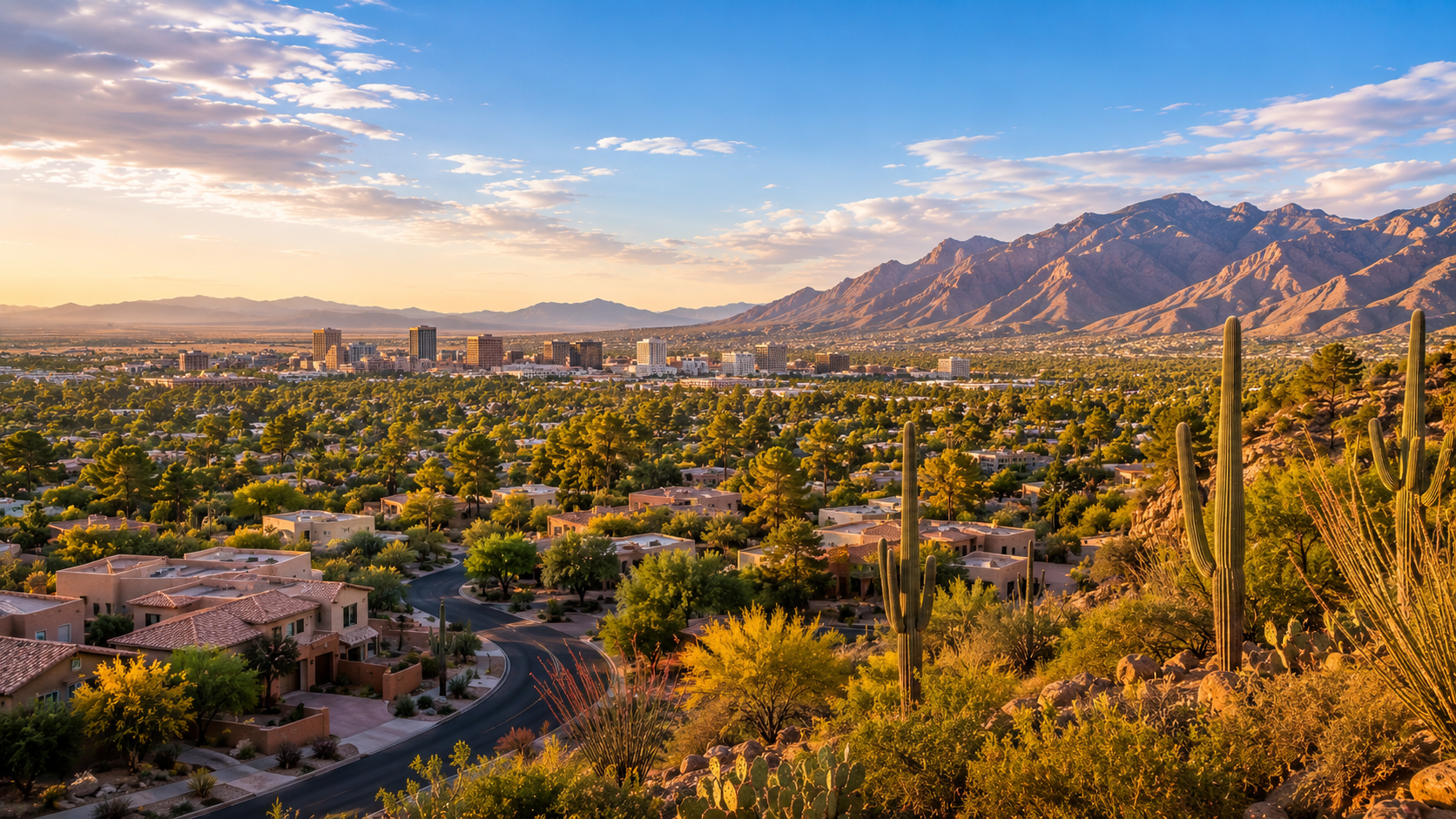
While weather forecasts often provide a single temperature for Tucson, our city is made up of many microclimates—small areas where local conditions create subtle differences in temperature, shade, wind, and overall comfort.
These variations are part of what makes Southern Arizona such an interesting place to live. Understanding why they occur can help homeowners better appreciate the landscapes and neighborhoods that make Tucson unique.
Tucson Is Home to Many Microclimates
Tucson's surrounding mountains, changing elevations, vegetation, desert washes, and patterns of urban development all contribute to local microclimates. These small variations can influence daytime temperatures, nighttime cooling, airflow, and how warm or cool a neighborhood feels throughout the year.
Unlike many cities built on relatively flat terrain, Tucson sits within a broad desert basin surrounded by several mountain ranges known as the Sky Islands.
As you travel across the metro area, changes in elevation, nearby open space, and the amount of pavement or vegetation can create noticeable differences in local conditions.
While these temperature changes are often only a few degrees, they can influence how comfortable a neighborhood feels—especially during the summer months.
Elevation Can Influence Temperature
Higher elevations are often slightly cooler than lower elevations because air temperatures generally decrease as elevation increases. In Tucson, neighborhoods at higher elevations may experience modest temperature differences compared to areas on the valley floor.
Communities near the foothills or higher elevations frequently experience slightly cooler afternoons and evenings than neighborhoods located deeper within the basin.
Examples include portions of:
- Catalina Foothills
- Oro Valley
- Vail
- Areas near the Santa Catalina Mountains
Elevation alone doesn't determine a neighborhood's climate, but it is one of several factors that contribute to Tucson's diverse weather patterns.
Trees and Vegetation Make a Difference
Shade provided by trees and other vegetation can help reduce surface temperatures and improve outdoor comfort. Landscapes with mature trees, native plants, and natural vegetation often feel cooler than areas with little shade.
Tree canopies block direct sunlight from reaching sidewalks, streets, and buildings.
Native plants also contribute by creating shade and helping moderate ground temperatures.
Neighborhoods with:
- Mature shade trees
- Community parks
- Desert preserves
- Natural landscaping
- Riparian vegetation
often feel more comfortable for walking and spending time outdoors, particularly during the warmer parts of the day.
Understanding the Urban Heat Island Effect
Urban heat islands occur when buildings, roads, parking lots, and other hard surfaces absorb and retain heat throughout the day. These materials slowly release that heat after sunset, causing some parts of a city to remain warmer than surrounding areas.
Large expanses of:
- Asphalt
- Concrete
- Rooftops
- Parking lots
absorb significant amounts of solar energy.
As the sun goes down, these surfaces continue releasing stored heat into the surrounding air.
Areas with more trees, landscaped open space, or natural desert vegetation often experience less of this effect than heavily developed commercial corridors.
The result isn't necessarily a dramatic temperature difference, but it can influence how comfortable an area feels during summer evenings.
Mountains Shape Local Weather
The mountain ranges surrounding Tucson help influence airflow, temperatures, and seasonal weather patterns. They also play an important role during Arizona's summer monsoon season.
The Santa Catalina Mountains, Rincon Mountains, Tucson Mountains, and Santa Rita Mountains all contribute to the area's unique geography.
These mountains influence:
- Air movement
- Afternoon breezes
- Storm development
- Elevation changes
- Temperature patterns
During the summer, it's not uncommon for one side of town to receive rainfall while another remains completely dry.
These localized weather patterns are another example of Tucson's diverse microclimates.
Open Desert and Desert Washes
Natural open spaces and desert washes can influence local temperatures by preserving native vegetation and allowing air to circulate more freely than in densely developed areas.
Many Tucson neighborhoods border:
- Natural desert preserves
- Washes
- Hiking areas
- Open space corridors
These areas often contain native vegetation that provides habitat for wildlife while helping maintain the natural character of the Sonoran Desert.
Although every location is different, neighborhoods near preserved open space may experience different airflow and cooling patterns than more densely developed areas.
What This Means for Homeowners
Understanding Tucson's microclimates can help homeowners better appreciate how geography, landscaping, and neighborhood design influence everyday comfort. These differences are one of the many characteristics that make Southern Arizona unique.
Local conditions may affect experiences such as:
- Walking outdoors
- Gardening
- Outdoor entertaining
- Landscaping choices
- Seasonal enjoyment of patios and yards
Rather than assuming every part of Tucson experiences identical weather, it's helpful to recognize that small differences in elevation, shade, and development can contribute to noticeably different experiences.
Factors That Can Influence Neighborhood Temperatures
No single feature determines how warm or cool a neighborhood feels. Instead, multiple environmental factors work together to shape local conditions.
| Factor | Potential Influence |
|---|---|
| Higher elevation | Often slightly cooler temperatures |
| Mature trees | Increased shade and improved outdoor comfort |
| Native vegetation | Helps reduce exposed surface temperatures |
| Open desert | May allow for better nighttime cooling |
| Dense pavement | Can retain heat after sunset |
| Mountain proximity | May influence breezes and local weather |
| Desert washes | Support natural vegetation and localized airflow |
Every neighborhood has its own unique combination of these characteristics.
Common Misconceptions
While Tucson's neighborhoods experience different local conditions, there are several common misconceptions about what causes those differences.
"Tucson has the same temperature everywhere."
Weather stations provide a general forecast, but local conditions often vary across the metro area.
"Higher elevation always means dramatically cooler weather."
Elevation can make a difference, but vegetation, shade, wind, and development also play important roles.
"Desert landscaping always feels hotter."
Many native trees and desert plants provide meaningful shade while requiring less water than non-native landscapes once established.
"New neighborhoods are always warmer."
Temperature differences depend on many factors, including landscaping, building materials, tree canopy, open space, and surrounding development—not simply the age of the neighborhood.
Final Thoughts
One of the things I appreciate most about living in Southern Arizona is how much variety exists within a single metropolitan area.
From mountain foothills and desert preserves to established neighborhoods with mature trees and vibrant urban districts, Tucson offers a wide range of environments—each with its own character and seasonal rhythms.
While no two neighborhoods experience the desert in exactly the same way, that's part of what makes Tucson such a fascinating place to explore.
Understanding how elevation, vegetation, mountains, and urban development influence local temperatures can help us better appreciate the unique landscape we call home.
Frequently Asked Questions
Why does one part of Tucson feel cooler than another?
Small differences in elevation, tree canopy, open space, and urban development create local microclimates that can influence temperature and comfort.
What is a microclimate?
A microclimate is a localized area where weather conditions differ slightly from the surrounding region because of factors such as elevation, vegetation, buildings, or nearby landforms.
Does elevation affect temperatures in Tucson?
Yes. Higher elevations are often slightly cooler than lower elevations, although other factors such as shade, vegetation, and development also influence local conditions.
What is the urban heat island effect?
The urban heat island effect occurs when pavement, buildings, and other hard surfaces absorb heat during the day and release it slowly after sunset, making developed areas feel warmer.
Do trees really make a difference?
Yes. Mature trees provide shade, reduce direct sunlight on surfaces, and can improve outdoor comfort during Tucson's warmer months.

Tom Krieger
| The TJK Team - Realty Executives Arizona Territory
or another way