
Categories
Homeowner GuidePublished November 27, 2026
Winterizing Your Tucson Home: HVAC, Insulation, and Utility Tips That Matter

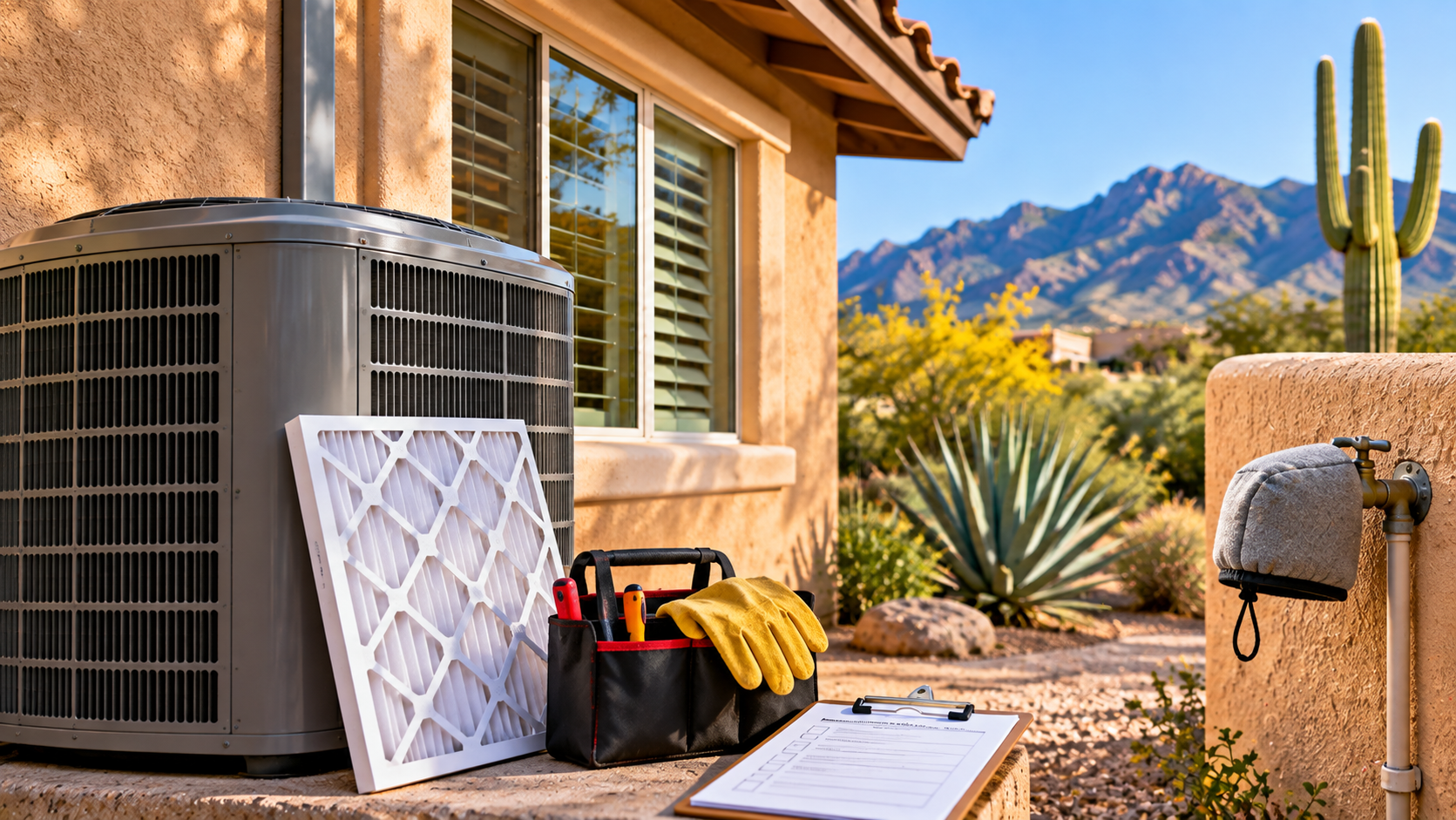
When people think about winterizing a home, they usually picture snow, frozen driveways, and temperatures that stay below freezing for days.
That's not the typical Tucson winter.
But that doesn't mean we can ignore seasonal maintenance.
Here in Southern Arizona, we can have comfortable afternoons followed by surprisingly cold nights. Your heating system may sit unused for months before you need it, and exposed pipes or irrigation equipment can be vulnerable when temperatures drop.
The good news is that preparing your Tucson home for winter doesn't have to mean tackling a long list of expensive projects.
I recommend starting with a few practical questions: Is your heating system ready? Is your home losing conditioned air through avoidable gaps? Are your outdoor water connections protected? And do you understand how your utility bills might change?
Let's walk through what matters.
Does Your Tucson Home Really Need Winterizing?
Yes, Tucson homes can benefit from winter preparation even though the region generally experiences milder winters than many parts of the country. Occasional freezing temperatures, cooler overnight conditions, and seasonal heating needs make HVAC maintenance, air sealing, exposed-pipe protection, and utility planning worthwhile. The appropriate work depends on the home's equipment, construction, and location.
Tucson's Winter Weather Can Catch Homeowners Off Guard
One thing I always remind people is that Southern Arizona has considerable variation in elevation and overnight temperatures.
Conditions in central Tucson may be different from those in outlying valleys or higher-elevation communities.
The National Weather Service Tucson office issues local forecasts and freeze warnings when conditions warrant. In November 2026, for example, the office identified freezing conditions in parts of southeastern Arizona.
That doesn't mean every Tucson home faces the same level of risk.
It does mean homeowners should pay attention to their specific location rather than assuming winter temperatures will always stay comfortably above freezing.
Start With the Home You Actually Have
Not every house needs the same preparation.
A newer home with a recently serviced heat pump may need little more than routine checks. An older home with drafty doors, aging ductwork, or exposed plumbing may need more attention.
I'd begin by reviewing what you know about your home's systems.
When was the HVAC equipment last serviced? Have you noticed uneven temperatures between rooms? Are there exterior faucets or irrigation components that could be exposed to freezing air?
Those answers will help you prioritize.
Tom's takeaway: Winterizing in Tucson is about addressing your home's actual vulnerabilities, not following a checklist designed for a completely different climate.
What HVAC Maintenance Should Tucson Homeowners Do Before Winter?
Tucson homeowners should check HVAC filters, confirm that the heating system operates normally, keep vents and accessible equipment unobstructed, and consider professional seasonal servicing. ENERGY STAR recommends regular filter inspections and annual pre-season maintenance. Gas furnaces, heat pumps, and other heating systems have different service requirements, so follow the manufacturer's instructions and use qualified professionals for technical work.
Test the Heat Before You Really Need It
Here's a simple step that can prevent an unpleasant surprise: make sure your heating system actually works before the first especially cold night.
Set the thermostat to the appropriate heating mode and follow the equipment manufacturer's instructions for a normal operational check.
If the system doesn't respond, makes unusual noises, produces unexpected odors, or doesn't heat properly, contact a qualified HVAC professional.
Don't attempt to repair gas connections, electrical components, burners, or refrigerant systems yourself.
The ENERGY STAR HVAC maintenance checklist recommends professional pre-season checkups, including checks of system controls and safe operation.
Check Your Air Filter
This is one of the easiest maintenance tasks to overlook.
A dirty filter can restrict airflow and make heating and cooling equipment work harder.
ENERGY STAR recommends checking filters monthly, especially during periods of heavier use, and cleaning or replacing them according to the system's requirements.
In Tucson, dust is another practical reason to stay on top of filter maintenance.
Just make sure you're using the correct filter type and size for your equipment.
Know Whether You Have a Heat Pump or Furnace
Not every Tucson home heats the same way.
Some homes use electric heat pumps, which provide both heating and cooling. Others use natural-gas furnaces or different heating equipment.
That distinction matters when it comes to thermostat settings and maintenance.
For example, the U.S. Department of Energy's heat pump guidance explains that abrupt temperature adjustments can cause some heat pump systems to use less-efficient supplemental heating.
If you have a heat pump, ask your HVAC professional about appropriate thermostat operation for your particular system.
Schedule Professional Service When Needed
A professional HVAC inspection can address components that homeowners shouldn't service themselves.
Depending on the system, that may include electrical connections, airflow, operating controls, and combustion-related safety checks.
ENERGY STAR's maintenance guidance identifies these as important parts of a professional checkup.
Tom's takeaway: Check the simple things yourself, but don't turn heating-system maintenance into an electrical or gas repair project.
How Can Insulation and Air Sealing Help During Tucson Winters?
Insulation and air sealing can help Tucson homes maintain more consistent indoor temperatures during both winter and summer.
Homeowners should first identify drafts and possible air leaks, especially around doors, windows, and attic openings. ENERGY STAR recommends addressing attic air leakage before adding insulation and having potentially hazardous or complicated work evaluated by qualified professionals.
Don't Assume You Need More Insulation Right Away
If a room feels cold, it's tempting to assume the house needs additional insulation.
Sometimes that may be true.
But air leaks can also contribute to uncomfortable temperatures.
ENERGY STAR explains that significant air leaks are often hidden in attics and other building cavities, even when the most noticeable drafts are near doors and windows.
Before paying for insulation upgrades, it's worth understanding where conditioned air may be escaping.
Check Doors, Windows, and Weatherstripping
Start with areas you can inspect safely.
Look for damaged weatherstripping, gaps around exterior doors, and windows that don't close properly.
Weatherstripping or appropriate caulking may help address some straightforward leaks.
However, not every gap should be sealed. Certain openings provide required ventilation, drainage, or combustion air.
If you're unsure what an opening does, ask a qualified professional before closing it.
Pay Attention to the Attic
Attics are especially important in Tucson because they affect indoor comfort during both hot and cool weather.
ENERGY STAR's attic guidance recommends sealing attic air leaks before adding insulation.
It also cautions against blocking required ventilation.
If your attic contains ducts, electrical components, fuel-burning equipment, or unfamiliar insulation materials, professional evaluation is the safer approach.
Don't disturb insulation that may contain asbestos or other hazardous material.
Don't Forget the Ductwork
If your home has central heating and cooling, ductwork matters too.
Leaky, damaged, or disconnected ducts can affect airflow and comfort.
According to ENERGY STAR's duct improvement guidance, a qualified contractor can inspect duct connections, evaluate airflow, and identify repairs or insulation improvements.
That may be particularly relevant when ducts run through an unconditioned attic.
Tom's takeaway: Find the problem before paying for the solution. A home energy assessment or professional inspection may help identify which improvements actually make sense.
How Should You Prepare for Winter Utility Costs in Tucson?
Tucson homeowners can prepare for winter utility expenses by reviewing past energy use, understanding their electricity or gas service, checking applicable pricing plans, and maintaining heating equipment. Tucson Electric Power offers usage-tracking tools, pricing options, and Budget Billing. Actual costs vary by household, and billing programs do not necessarily reduce the total amount of energy purchased.
Start With Your Own Usage History
I wouldn't recommend estimating winter utility costs based on what someone else pays.
Two similar-looking homes can have different bills because of equipment, insulation, household habits, and utility plans.
Instead, review your own past statements.
Tucson Electric Power's My Account tools allow customers to review electricity usage over time.
If you have enough billing history, compare recent winter months with the same months in previous years.
Look at energy consumption, not just the total dollar amount.
That can help you distinguish a change in usage from a change in pricing.
Understand Your TEP Pricing Plan
TEP offers multiple residential electricity pricing options.
Some plans include time-of-use pricing, where electricity costs depend partly on when energy is consumed.
For example, TEP's Time-of-Use residential plan identifies winter on-peak periods on qualifying weekdays.
But the best way to evaluate a plan is to use your own household usage information and review the utility's current terms.
Don't assume a particular pricing plan will save every homeowner money.
Know About the December 2026 Rate Change
There's also a timely development Tucson homeowners should know about.
In November 2026, TEP announced that the Arizona Corporation Commission had approved new electricity rates scheduled to take effect December 1, 2026.
The utility's official rate announcement explains that the impact varies by usage and pricing plan.
If you're preparing a household utility budget, review the current rate information rather than relying only on last winter's dollar amounts.
Consider Budget Billing for Predictability
TEP offers a Budget Billing program that spreads estimated annual electricity charges across monthly payments.
That may make expenses easier to plan for.
But there's an important distinction: Budget Billing is not an energy discount.
Customers remain responsible for the electricity they use, and payment amounts may be adjusted to account for actual usage.
Review Assistance Programs if Needed
If utility costs are becoming difficult to manage, check directly with your provider.
TEP publishes information about payment assistance and available programs.
For homes with natural-gas service, Southwest Gas is an appropriate starting point for current billing, energy-efficiency, and assistance information.
Tom's takeaway: Review your actual bills, understand your plan, and focus on practical energy management instead of assuming a single thermostat adjustment will produce a particular savings amount.
What Outdoor Home Features Need Protection From Freezing Temperatures?
When freezing temperatures are forecast, Tucson homeowners should pay attention to exposed outdoor plumbing, hose connections, irrigation equipment, and other water-carrying components. Vulnerability depends on the equipment and installation. Review manufacturer guidance, identify the home's water shutoff location, and contact a qualified plumber or irrigation professional when protection or repairs require specialized work.
Check Exterior Faucets and Hose Connections
An outdoor faucet may be easy to overlook until a cold night arrives.
Before freezing weather, inspect exposed hose connections and identify whether your home's plumbing setup requires additional protection.
Disconnecting and storing hoses may be appropriate where recommended by the equipment manufacturer.
For exposed pipes or faucets, use protection suitable for the installation and expected conditions.
Avoid assuming that a simple cover will protect every configuration.
Review Irrigation Equipment
Tucson homes often have irrigation systems serving desert landscaping.
Depending on the system, exposed valves, backflow-prevention assemblies, and other components may require attention during freezing conditions.
The right approach depends on the equipment.
If you're unfamiliar with your irrigation system, ask a qualified irrigation professional what seasonal preparation is appropriate.
Don't operate or modify backflow-prevention equipment without understanding the manufacturer's instructions and applicable requirements.
Know Where to Find Reliable Weather Information
Use the National Weather Service Tucson forecast to monitor freeze warnings and overnight conditions for your area.
If you experience a water-service issue or need utility-specific guidance, Tucson Water's official contact page provides customer-service and emergency contact information.
Homeowners should also know where their property's water shutoff valve is located before an emergency occurs.
Tom's takeaway: A little preparation before a freeze warning is easier than trying to figure out your plumbing and irrigation setup in the middle of a cold night.
What Should Be on Your Tucson Winter Home Maintenance Checklist?
A practical Tucson winter checklist should prioritize heating-system readiness, filter maintenance, draft inspections, attic and duct evaluation, utility account reviews, and exposed-water protection. Many initial checks can be performed by homeowners, while gas, electrical, HVAC, insulation, and plumbing repairs may require qualified professionals. Complete time-sensitive tasks before colder weather arrives.
Here's the checklist I'd use as a starting point.
| Maintenance Task | When to Check | Who Should Handle It |
|---|---|---|
| Test normal heating operation | Before regular winter use | Homeowner; professional if problems appear |
| Inspect HVAC filter | Monthly or per equipment guidance | Homeowner, if accessible and safe |
| Schedule HVAC maintenance | Before or early in heating season | Qualified HVAC professional |
| Inspect door and window weatherstripping | Before colder nights | Homeowner or maintenance professional |
| Evaluate attic insulation and air leaks | During seasonal maintenance | Qualified professional for complex or hazardous conditions |
| Check duct condition and airflow | If comfort or airflow problems occur | Qualified HVAC professional |
| Review electricity usage and rate plan | Before winter billing changes | Homeowner |
| Check exposed faucets and irrigation | Before a forecast freeze | Homeowner or plumbing/irrigation professional |
| Locate water shutoff valve | Before an emergency | Homeowner; ask a professional if uncertain |
| Review smoke and carbon monoxide alarms | According to manufacturer guidance | Homeowner or qualified professional |
Maintenance guidance is based on ENERGY STAR, the National Weather Service, and official utility resources. Specific requirements depend on the property and equipment.
What Should You Prioritize First?
If you have limited time, I'd start with the heating system and anything exposed to freezing temperatures.
Next, look at obvious drafts and check your utility usage.
Bigger projects, like attic insulation improvements or duct repairs, deserve a little more evaluation before you commit to the expense.
And if you discover a safety issue, don't put it on the back burner just because the weather is mild.
Frequently Asked Questions About Winterizing a Tucson Home
Tucson homeowners commonly ask whether winterizing is necessary, how often HVAC filters should be checked, whether attic insulation helps, how to prepare for utility bills, and what to do before freezing weather. The answers depend on the home's systems and location, but official weather, energy-efficiency, and utility guidance provide a reliable starting point.
1. Do homes in Tucson really need winterizing?
Yes, some preparation is worthwhile. Tucson's generally mild winters can still include freezing temperatures, particularly overnight and in surrounding areas. Check the National Weather Service Tucson office for local forecasts and warnings.
2. When should I have my HVAC system checked for winter?
ENERGY STAR recommends professional heating-system maintenance before the heating season. If you haven't scheduled service yet, contact a qualified contractor rather than waiting for a system problem.
3. How often should I change my HVAC filter?
ENERGY STAR advises checking filters monthly, especially during heavy use. Clean or replace them according to the equipment and filter manufacturer's instructions.
4. Does attic insulation matter in Tucson?
Yes. Proper insulation and air sealing can support indoor comfort during both heating and cooling seasons. ENERGY STAR recommends sealing attic air leaks before adding insulation.
5. Can weatherstripping help keep my Tucson home warmer?
It may help reduce drafts where exterior doors and windows have unwanted air leaks. ENERGY STAR identifies windows and doors among common air-leak locations.
6. How can I prepare for winter electricity bills?
Review your electricity usage history, check your applicable pricing plan, and read current utility notices. TEP provides usage tracking and pricing resources.
7. Does TEP Budget Billing lower my electricity costs?
Not by itself. TEP explains that Budget Billing spreads estimated annual charges across monthly payments. It does not reduce the total amount charged for electricity used.
8. What should I do before freezing temperatures arrive?
Review the local forecast, inspect exposed water connections, identify your shutoff valve, and follow appropriate equipment-specific protection guidance. Contact a qualified professional if your plumbing or irrigation setup requires specialized work.
Final Thoughts
Winter in Tucson isn't usually about preparing for weeks of snow and ice.
It's about making sure your home is ready for cooler nights, occasional freezes, and the seasonal change in how you use your heating system.
My recommendation is to keep it simple.
Start with your HVAC system. Check for drafts. Pay attention to attic insulation and ductwork if you're having comfort problems. Review your utility usage and current pricing information. And don't forget the exposed plumbing and irrigation components outside.
You don't need to replace equipment or spend money on major upgrades just because winter is approaching.
You need to understand your home's condition and address the items that actually need attention.
At TJK Team, we spend a lot of time helping people understand homes throughout Tucson and Southern Arizona. Seasonal maintenance is part of being an informed homeowner, whether you've lived here for decades or recently purchased your first property.
A little preparation now can make the cooler months easier to manage.
This article is for general educational purposes only. Home systems, maintenance requirements, and utility costs vary. Consult qualified HVAC, electrical, plumbing, insulation, or other appropriate professionals for property-specific work. TJK Team does not provide technical repair services or guarantee energy savings.

Tom Krieger
| The TJK Team - Realty Executives Arizona Territory
or another way