
Categories
Buyer EducationPublished August 26, 2026
Understanding Closing Costs: A Guide for Tucson Home Buyers and Sellers

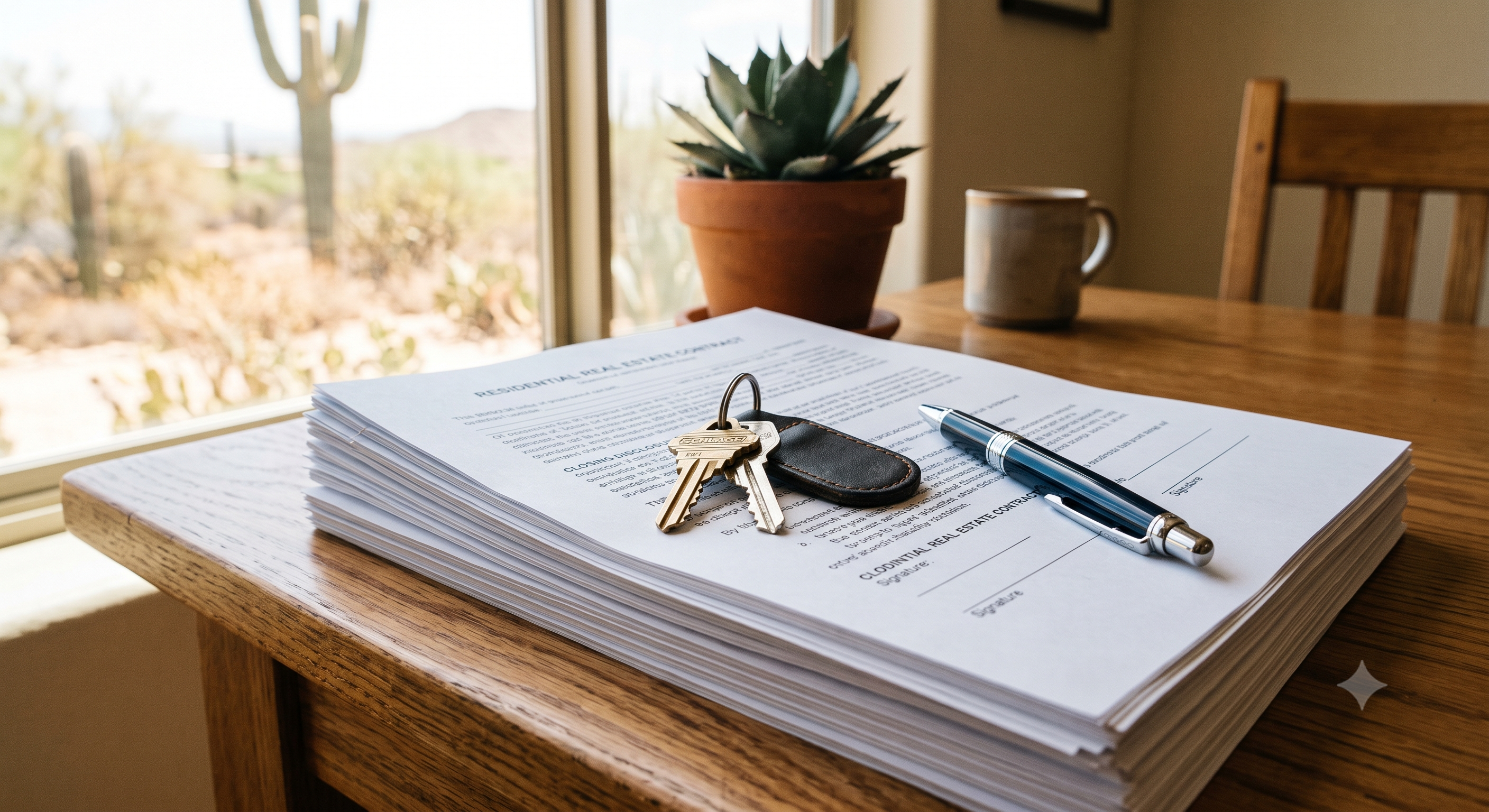
Whether you are buying your first home or selling your third, the final step of a real estate transaction involves a process known as closing. While the concept is simple—transferring ownership and funds—the paperwork and associated fees can sometimes feel like a black box.
Closing costs represent the various administrative, legal, and financial expenses required to finalize a real estate transaction. By understanding exactly what these fees cover and who customarily pays for them in Southern Arizona, you can budget accurately and avoid last-minute surprises at the signing table.
Demystifying Escrow and Title
To understand closing costs, it is helpful to first understand the roles of escrow and title in Arizona.
Escrow is a neutral third party that acts as the secure holding area for the transaction. The escrow officer ensures that no funds change hands and no property ownership is transferred until every condition of the purchase contract has been met. Escrow fees cover the administrative work of coordinating with lenders, paying off existing mortgages, pro-rating property taxes, and facilitating the final signing.
Title refers to your legal right to own and use the property. Before closing, the title company conducts a deep search of public records to ensure the seller actually has the right to sell the property and that there are no hidden liens, unresolved permits, or legal judgments attached to it. Title insurance is then issued to protect against any future claims that might have been missed in the public record.
In Tucson and the surrounding communities, the title and escrow processes are typically handled by the same company, though they serve distinct functions.
Who Pays What? A Quick Reference
While every real estate contract is fully negotiable, there are customary practices in Pima County regarding how closing costs are divided between buyers and sellers.
| Cost Category |
Customarily Paid By |
Description |
|---|---|---|
| Escrow Fees |
Split 50/50 |
The administrative fee paid to the title/escrow company for managing the transaction. |
| Owner’s Title Policy |
Seller |
An insurance policy that protects the buyer's future ownership rights against past title defects. |
| Lender’s Title Policy |
Buyer |
An insurance policy that protects the mortgage lender’s financial interest in the property. |
| Recording Fees |
Buyer & Seller |
Nominal fees paid to the Pima County Recorder’s Office to make the transfer public record. |
| Appraisal Fee |
Buyer |
A fee paid to an independent appraiser to verify the property's market value for the lender. |
Typical Buyer Costs
For buyers, closing costs are largely driven by the financing process. If you are purchasing a home with cash, your closing costs will be significantly lower.
When securing a mortgage, you can expect costs to fall into three main categories:
- Loan Origination and Processing Fees: These are the fees charged by your lender for evaluating, processing, and approving your loan. It may also include "discount points," which are optional upfront fees paid to lower your long-term interest rate.
- Third-Party Services: Lenders require external verification to protect their investment. This includes the appraisal, credit report fees, flood certification, and the lender's title insurance policy.
- Prepaids and Escrow Accounts: Lenders often require buyers to establish an escrow account to ensure future property taxes and homeowners insurance premiums are paid. You will typically prepay several months of these expenses at closing, alongside any prorated homeowner's association (HOA) dues.
Typical Seller Costs
Sellers generally have fewer line-item fees than buyers, but their overall costs are often higher because they are typically responsible for compensating the real estate professionals who facilitated the sale.
Standard seller costs include:
- Real Estate Brokerage Compensation: The fees paid to the listing brokerage for marketing and selling the property. As a reminder, all real estate compensation is fully negotiable and is not set by law.
- Owner’s Title Insurance Policy: In Arizona, it is customary for the seller to purchase the owner's title policy on behalf of the buyer to prove they are transferring a clean and clear title.
- HOA Disclosure Fees: By Arizona law, sellers in HOA-governed communities are responsible for paying the HOA to generate and deliver the required disclosure documents to the buyer.
- Mortgage Payoff and Reconveyance: If the seller has an existing mortgage, there may be small fees associated with wiring the payoff amount to the lender and recording a "Deed of Reconveyance" to formally release the old loan.
The Role of Recording Fees
Recording fees are the final step in making the transaction official. Paid to the Pima County Recorder’s Office, these fees ensure that the new deed, the buyer's new mortgage (Deed of Trust), and the release of the seller's old mortgage are permanently entered into the public record. Without this step, the transfer of ownership is not legally recognized by the county. Both buyers and sellers pay recording fees, depending on which documents pertain to their side of the transaction.
General Budgeting Expectations
As a rule of thumb, buyers financing their purchase should budget between 2% and 5% of the home's purchase price for closing costs. Sellers can generally expect their closing costs (including standard real estate compensation and title fees) to range between 6% and 9% of the sales price.
Your lender and your escrow officer will provide you with precise, itemized estimates well before your closing date so you know exactly what to expect.
Frequently Asked Questions
What is a Closing Disclosure (CD)?
A Closing Disclosure is a standardized five-page document provided by your lender at least three business days before closing. It details the final terms of your loan, your projected monthly payments, and an exact line-by-line breakdown of your closing costs.
Can closing costs be rolled into my mortgage?
It depends on the type of loan you are using. Some loan programs, like VA or USDA loans, allow certain closing costs to be financed into the loan amount. However, for most conventional loans, closing costs must be paid out-of-pocket at the closing table.
Who chooses the escrow company in Tucson?
While the choice of the title and escrow company is negotiable between the buyer and the seller, it is customary in Southern Arizona for the seller (or the seller's agent) to open escrow with their preferred company when listing the home.
Are closing costs tax-deductible?
Some closing costs, such as prepaid property taxes and mortgage interest points, may be tax-deductible in the year you buy the home. Administrative fees and appraisal costs generally are not. Always consult with a licensed tax professional regarding your specific situation.
Standard Financing Disclaimer: The TJK Team provides real estate brokerage services and does not offer financial, legal, or tax advice. The estimates and processes described above are for educational purposes. Always consult with your mortgage lender, escrow officer, or CPA for detailed estimates and advice regarding your specific real estate transaction.
Sources & Additional Resources
Pima County Recorder’s Office
Consumer Financial Protection Bureau (CFPB) – What is a Closing Disclosure?

Tom Krieger
| The TJK Team - Realty Executives Arizona Territory
or another way